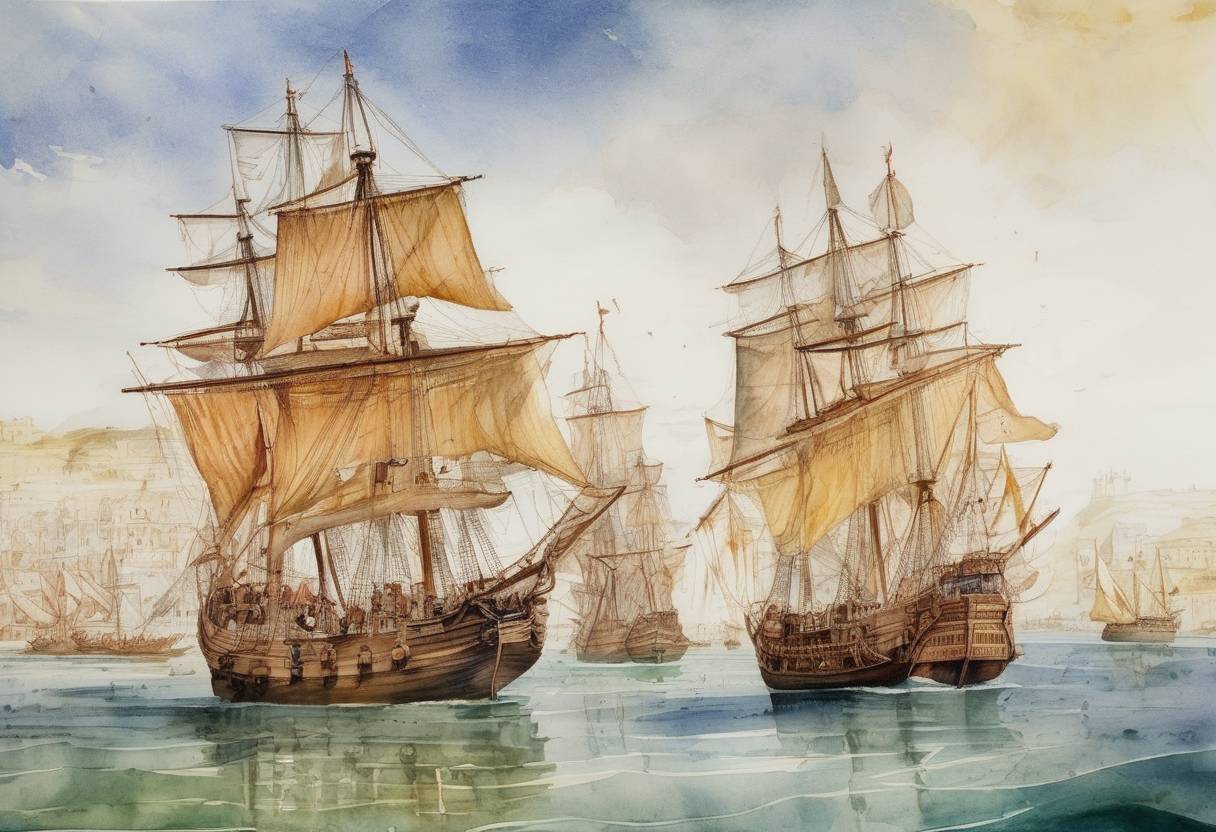
Ferdinand Magellan’s Expedition: The First Circumnavigation of the Earth
On September 20, 1519, Portuguese explorer Ferdinand Magellan embarked on a historic voyage from Sanlúcar de Barrameda, Spain. This expedition would ultimately achieve the first successful circumnavigation of the Earth, marking a significant milestone in the Age of Exploration.
Background
Ferdinand Magellan, born in Portugal around 1480, was a skilled navigator and sailor. Despite his Portuguese origins, he sought the support of Spain for his ambitious plan to find a westward route to the Spice Islands (modern-day Maluku Islands in Indonesia). At the time, these islands were highly coveted for their valuable spices, such as cloves and nutmeg.
The Fleet
Magellan’s fleet, known as the “Armada de Molucca,” consisted of five ships:
- Trinidad (flagship)
- San Antonio
- Concepción
- Victoria
- Santiago
The fleet carried about 270 men, including sailors, soldiers, and navigators from various European countries.
The Voyage
Departure and Atlantic Crossing
- September 20, 1519: The fleet set sail from Sanlúcar de Barrameda, navigating the Atlantic Ocean. The journey was fraught with challenges, including storms and the need to maintain discipline among the crew.
South America and the Strait of Magellan
- December 1519: The fleet reached the coast of South America. Magellan spent several months exploring the coastline, searching for a passage through the continent.
- October 1520: The fleet discovered a navigable strait at the southern tip of South America, later named the Strait of Magellan. This passage allowed them to enter the Pacific Ocean.
Pacific Crossing
- November 1520: After navigating the strait, Magellan’s fleet entered the vast Pacific Ocean. The crossing was arduous, with the crew suffering from scurvy and starvation due to the lack of fresh food and water.
- March 1521: The fleet reached the island of Guam and later the Philippines, where Magellan became involved in local conflicts.
Magellan’s Death and the Journey’s Continuation
- April 27, 1521: Magellan was killed in the Battle of Mactan in the Philippines. Leadership of the expedition passed to Juan Sebastián Elcano.
- September 6, 1522: The ship Victoria, under Elcano’s command, returned to Spain, completing the first circumnavigation of the Earth. Only 18 of the original crew survived the journey.
Significance and Legacy
Magellan’s expedition proved that the Earth could be circumnavigated by sea, providing valuable information about the world’s geography and the vastness of the Pacific Ocean. It also demonstrated the potential for global maritime trade routes, which would have profound implications for European colonialism and global commerce.
The voyage remains a testament to human endurance and the spirit of exploration, forever marking Magellan and his crew in the annals of history.