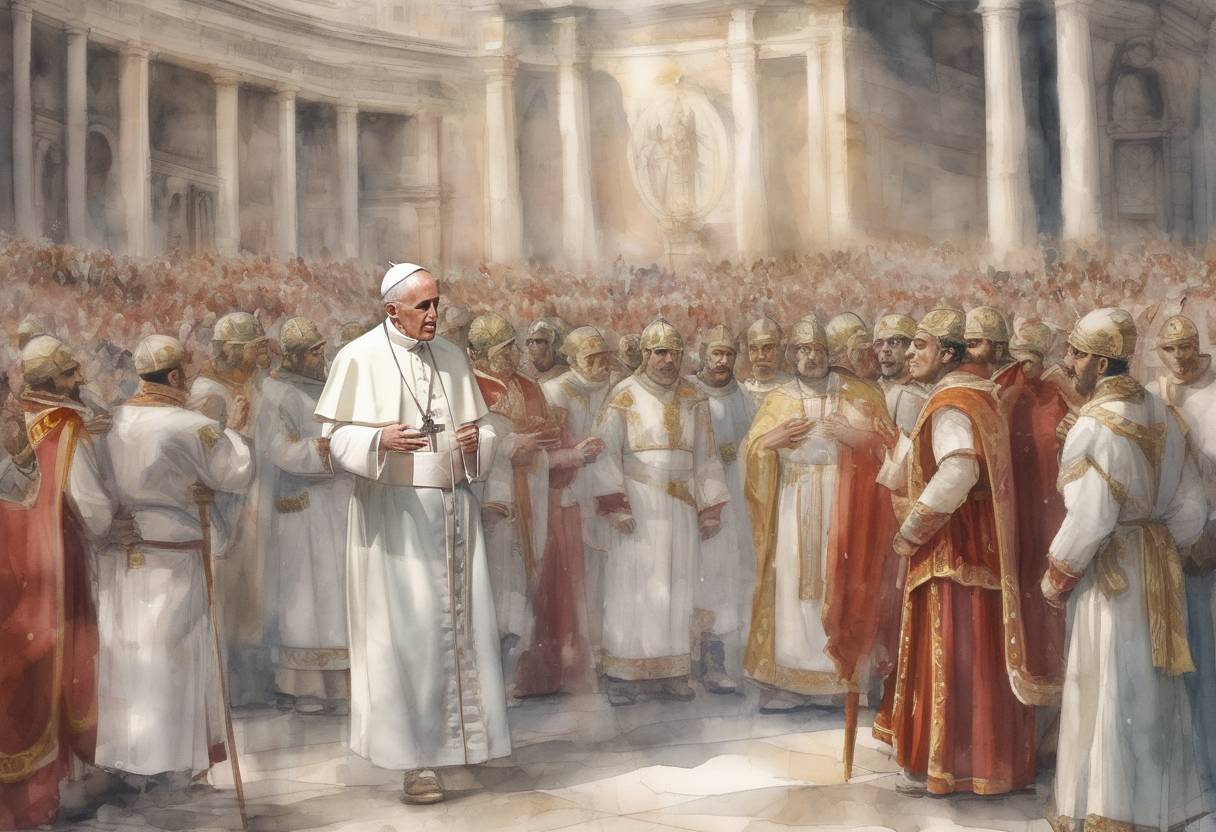
The Death of Pope Paul I - June 28, 767
Pope Paul I, who served as the Bishop of Rome from 757 until his death on June 28, 767, was a significant figure in the history of the Papacy and the broader Christian world. His papacy was marked by efforts to maintain the independence of the Papal States and his staunch support for the veneration of icons during the period of Byzantine Iconoclasm.
Context and Background
Early Life and Ascension: Born around 700, Paul was the brother of Pope Stephen II, whom he succeeded. Before becoming pope, he served as a deacon and was deeply involved in the administration of the Church.
Papal States: The Papal States were territories in the Italian Peninsula under the sovereign direct rule of the pope. During Paul’s papacy, the independence of these states was threatened by the Lombards, a Germanic people who sought to expand their territory in Italy.
Byzantine Iconoclasm: This was a period of religious conflict within the Byzantine Empire characterized by the rejection and destruction of religious images and icons. The movement began in the early 8th century and was a significant theological and political issue.
Key Events During His Papacy
Diplomatic Efforts: Pope Paul I worked tirelessly to maintain the independence of the Papal States. He sought alliances with the Frankish Kingdom, ruled by Pepin the Short, to counter the Lombard threat. This alliance was crucial in preserving the Papal States’ autonomy.
Support for Icon Veneration: Paul I was a fervent supporter of the veneration of icons, opposing the iconoclastic policies of the Byzantine Emperor Constantine V. He provided refuge to Greek monks who fled the Byzantine Empire due to persecution, thereby reinforcing the Western Church’s stance on the issue.
Church Reforms and Administration: Paul I continued the work of his predecessors in reforming the Church’s administration and strengthening its spiritual and temporal authority.
Death and Legacy
Death: Pope Paul I died on June 28, 767. His death marked the end of a papacy that was pivotal in shaping the relationship between the Papacy and the Frankish Kingdom, setting the stage for the future alliance between the Papacy and the Carolingian Empire.
Legacy: Paul I’s efforts to maintain the independence of the Papal States and his support for the veneration of icons had lasting impacts on the Church. His papacy helped to solidify the Papal States as a political entity and reinforced the Western Church’s theological positions against Byzantine Iconoclasm.
In summary, Pope Paul I’s papacy was a period of significant political and religious activity. His actions not only preserved the Papal States but also contributed to the broader Christian tradition, particularly in the context of the veneration of icons. His legacy is reflected in the continued independence of the Papal States and the theological stances that would influence the Church for centuries.