The Sixth Ecumenical Council (Third Council of Constantinople) Closes - January 12, 681
681 · Constantinople, Byzantine Empire
The Sixth Ecumenical Council (Third Council of Constantinople) closes, having condemned Monothelitism.
February 8, 0870
The Fourth Council of Constantinople closes, which was the eighth ecumenical council of the Christian Church.
Constantinople, Byzantine Empire | Christian Church
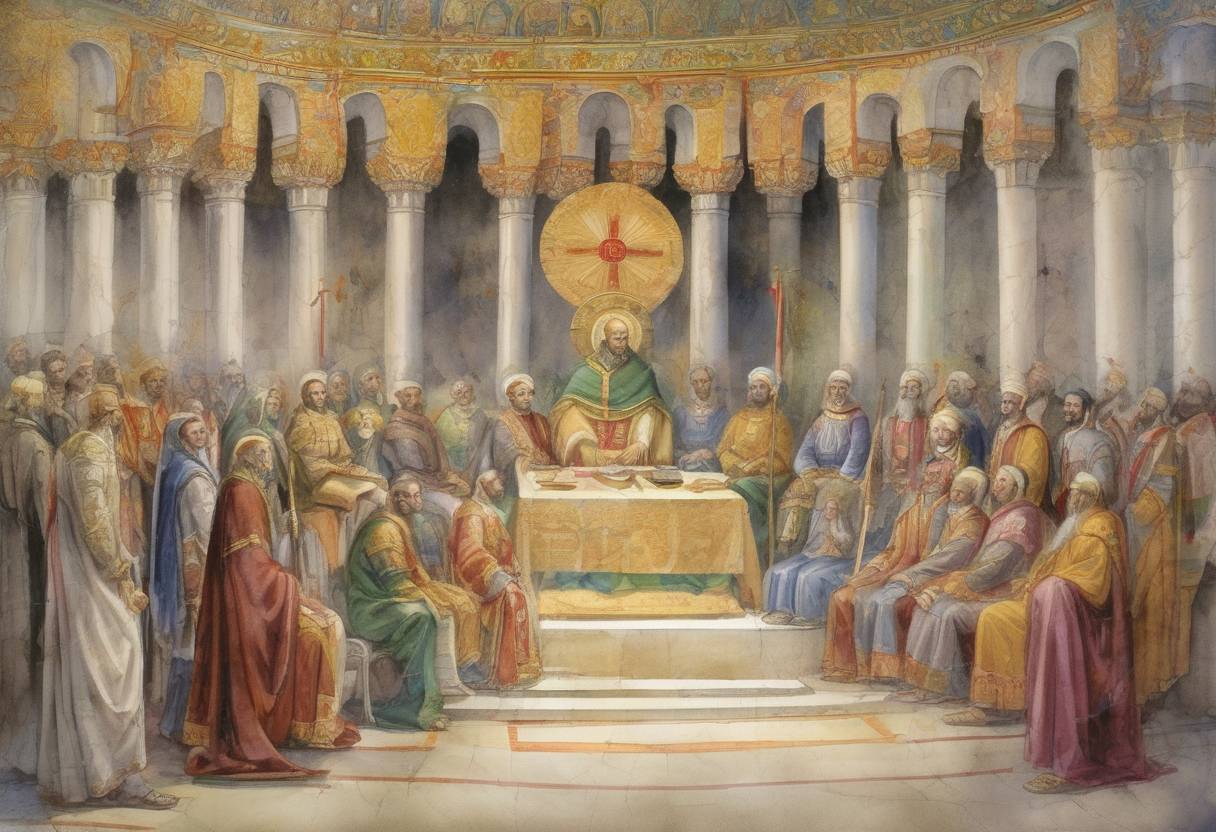
The Fourth Council of Constantinople, which concluded on February 8, 870, is recognized as the eighth ecumenical council by the Roman Catholic Church. This council was pivotal in addressing significant theological and ecclesiastical disputes within the Christian Church during the 9th century.
The council was convened in the context of the ongoing Photian Schism, a major conflict between the Eastern and Western branches of Christianity. The schism was named after Photius, the Patriarch of Constantinople, whose appointment in 858 had been contested by Pope Nicholas I. The controversy centered around issues of ecclesiastical authority and jurisdiction, particularly concerning the role of the Pope and the legitimacy of Photius’ position.
Photius’ Appointment: Photius was appointed as Patriarch of Constantinople after the deposition of his predecessor, Ignatius. This appointment was not recognized by Pope Nicholas I, leading to a rift between the Eastern and Western Churches.
Excommunication and Schism: In 863, Pope Nicholas I excommunicated Photius, exacerbating tensions and leading to a formal schism between the two branches of Christianity.
Political Context: The Byzantine Empire, under Emperor Basil I, sought to resolve the schism to maintain political stability and unity within the empire. This led to the convening of the council.
The Fourth Council of Constantinople was held from October 5, 869, to February 8, 870. It was attended by representatives from both the Eastern and Western Churches, although the Western presence was more pronounced.
Condemnation of Photius: The council condemned Photius and declared his appointment as Patriarch illegitimate. It reinstated Ignatius as the rightful Patriarch of Constantinople.
Canons and Decrees: The council issued several canons, focusing on ecclesiastical discipline and the reaffirmation of papal authority. It emphasized the primacy of the Pope in matters of church governance.
Temporary Resolution: The council temporarily resolved the Photian Schism by restoring Ignatius. However, the underlying tensions between the Eastern and Western Churches persisted.
Long-term Impact: The council’s decisions reinforced the authority of the papacy, but also highlighted the growing divide between the Eastern Orthodox and Roman Catholic Churches, a divide that would eventually lead to the Great Schism of 1054.
Recognition: While the Roman Catholic Church recognizes this council as the eighth ecumenical council, the Eastern Orthodox Church does not, reflecting the enduring differences in ecclesiastical perspectives.
In summary, the Fourth Council of Constantinople was a significant event in the history of the Christian Church, addressing critical issues of ecclesiastical authority and contributing to the complex relationship between the Eastern and Western branches of Christianity.
Source: en.wikipedia.org