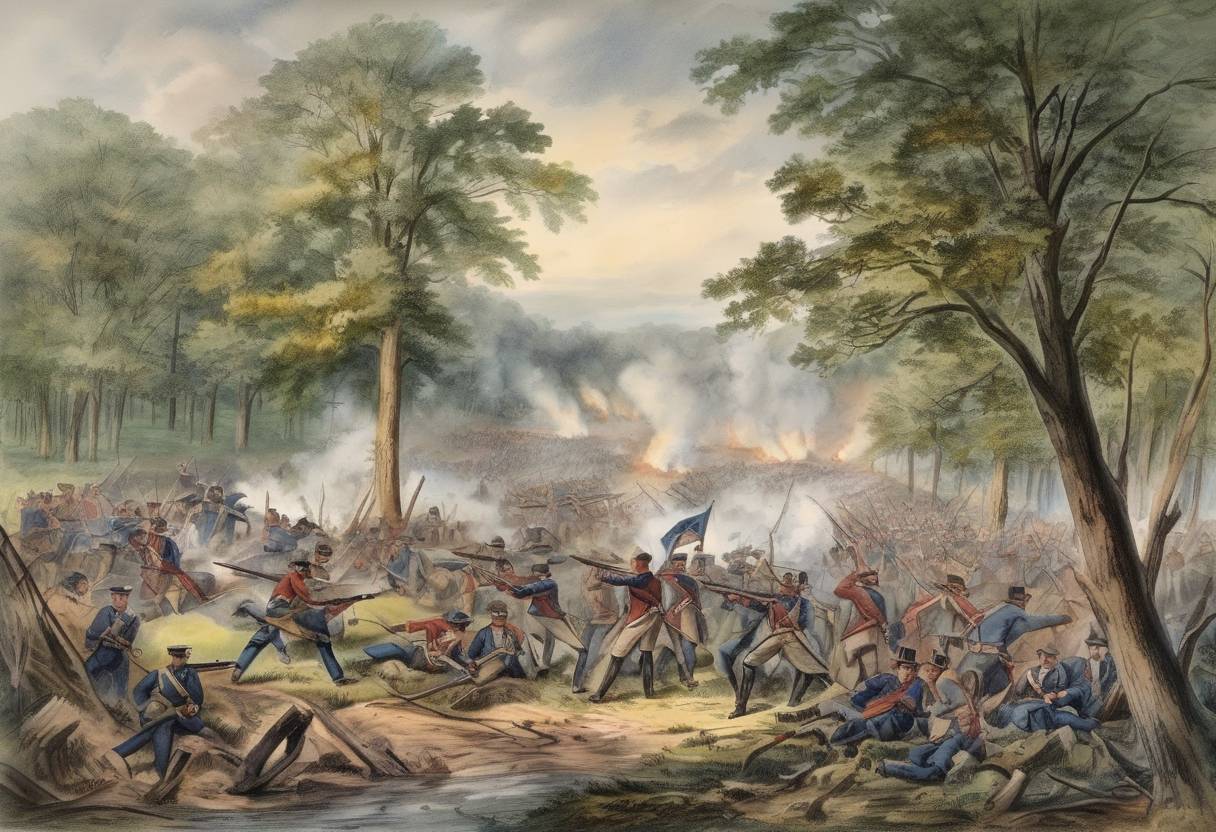
The Battle of Cedar Creek: October 19, 1864
The Battle of Cedar Creek, fought on October 19, 1864, was a pivotal engagement during the American Civil War, taking place in the Shenandoah Valley of Virginia. This battle was part of the larger Valley Campaigns of 1864 and resulted in a significant Union victory that helped secure the strategic Shenandoah Valley for the Union forces.
Context and Prelude
- Strategic Importance: The Shenandoah Valley was a crucial agricultural region and a vital corridor for Confederate movements. Its control was essential for both the Union and Confederate forces.
- Union Leadership: The Union Army of the Shenandoah was commanded by Major General Philip Sheridan, who had been tasked with neutralizing Confederate forces in the valley.
- Confederate Forces: The Confederate Army of the Valley District was led by Lieutenant General Jubal Early, who aimed to threaten Washington, D.C., and divert Union forces from General Robert E. Lee’s army in Petersburg.
Key Events of the Battle
- Surprise Confederate Attack: In the early hours of October 19, 1864, General Early launched a surprise attack on the Union encampment at Cedar Creek. The Confederate forces achieved initial success, driving back Union troops and capturing artillery and supplies.
- Union Counterattack: Despite the initial setback, General Sheridan, who was away in Winchester at the start of the battle, famously rode to the battlefield to rally his troops. His arrival and leadership were instrumental in reorganizing the Union forces.
- Turning the Tide: Sheridan’s counteroffensive in the afternoon turned the tide of the battle. The Union forces launched a vigorous attack, regaining lost ground and ultimately routing the Confederate army.
Aftermath and Significance
- Union Victory: The Union victory at Cedar Creek effectively ended Confederate resistance in the Shenandoah Valley. It was a significant morale booster for the Union and contributed to the re-election of President Abraham Lincoln in November 1864.
- Confederate Losses: The Confederate forces suffered heavy casualties and the loss of critical resources, weakening their ability to conduct further operations in the valley.
- Strategic Impact: The battle secured the Shenandoah Valley for the Union, denying the Confederacy a vital source of supplies and a strategic avenue for operations.
Broader Historical Significance
The Battle of Cedar Creek was one of the last major engagements in the Shenandoah Valley and marked a turning point in the Union’s favor in the Civil War. It demonstrated the effectiveness of Union leadership and the resilience of its forces, contributing to the eventual Union victory in the Civil War. The battle is remembered for Sheridan’s dramatic ride, which became a symbol of determination and leadership.
The victory at Cedar Creek helped to solidify Union control over the Shenandoah Valley, ensuring that it would no longer serve as a Confederate stronghold or a threat to the Union capital.