Publication of Herman Melville's *Moby-Dick* in the United States
1851 · New York, United States
Herman Melville's novel 'Moby-Dick' is published in the United States.
November 18, 1820
The American whaler Essex was attacked and sunk by a sperm whale in the South Pacific, an event which inspired Herman Melville's novel 'Moby-Dick'.
Pacific Ocean, International Waters | Nantucket Whaling Fleet
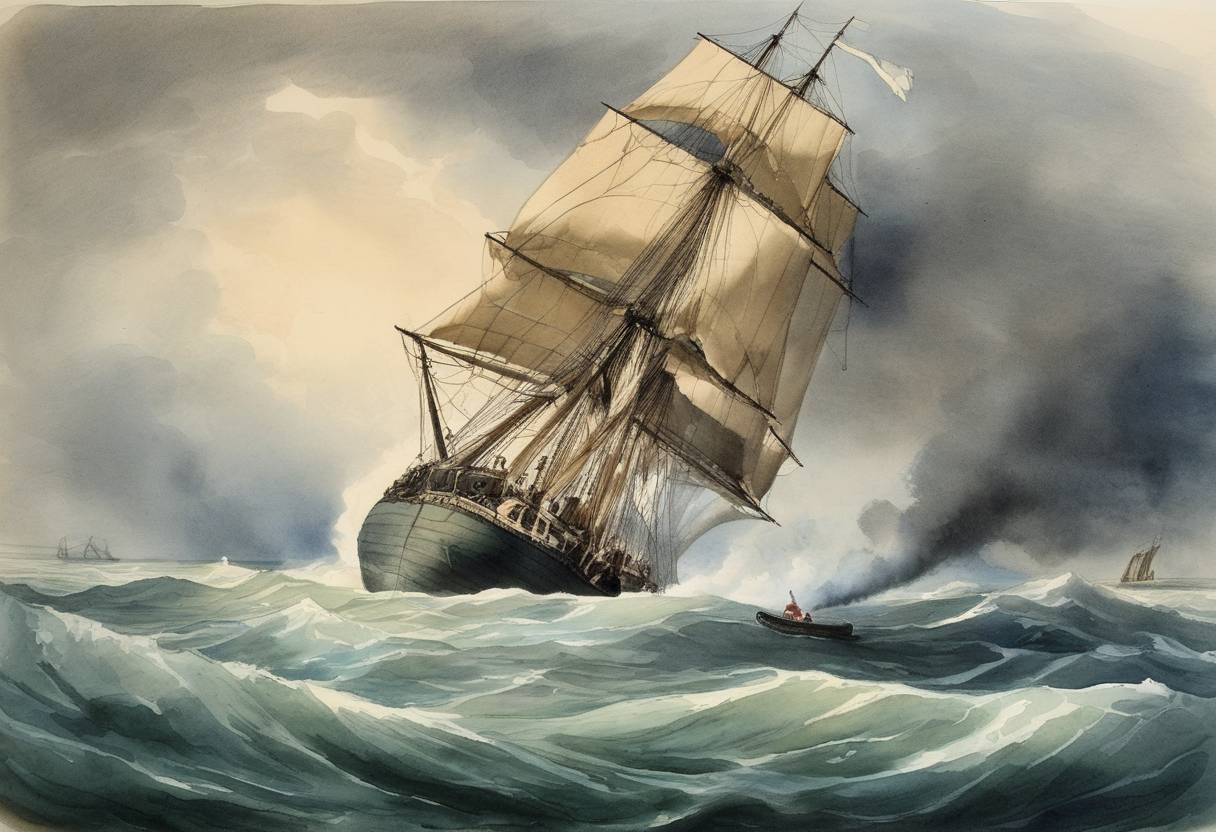
On November 18, 1820, the American whaling ship Essex, hailing from Nantucket, was attacked and sunk by a sperm whale in the South Pacific Ocean. This historic incident served as a chilling real-life inspiration for Herman Melville’s renowned novel, Moby-Dick.
The Essex set sail from Nantucket on August 12, 1819, under the command of Captain George Pollard Jr., with a crew of 20 men. The vessel embarked on a lengthy voyage across the Atlantic and around Cape Horn to reach the rich whaling grounds of the Pacific Ocean. Whaling was a major industry at the time, providing valuable resources such as whale oil, which was used for lamps and as a lubricant.
On the morning of November 18, while located approximately 2,000 nautical miles west of the South American coast, the Essex encountered a pod of sperm whales. During the hunt, an estimated 85-foot whale struck the ship twice. The first strike caused severe damage to the bow; the second hit, more forceful, breached the hull entirely, ultimately sinking the ship. It is said that the whale had been alarmed by the sight and sound of crew members attacking its companions.
The crew of the Essex, stranded approximately 1,200 miles from the nearest land in small whaleboats, faced perilous conditions. With limited food and water, they decided to make for the coast of South America. Their journey lasted over three months, and the crew suffered extreme hardships, including starvation and dehydration. To survive, some resorted to cannibalism.
Ultimately, only eight of the original 20 crew members survived the ordeal. They were rescued by passing ships in February and March 1821. Captain Pollard himself survived and returned to sea, though his later voyages also met with disaster.
The harrowing events of the Essex were documented by first mate Owen Chase and cabin boy Thomas Nickerson. Their accounts provided a vivid narrative of survival and human endurance, capturing public attention and influencing literature and maritime policy of the era.
Herman Melville, having read Chase’s account and another narrative about the tragedy years later, found inspiration for Moby-Dick, published in 1851. The story of the Essex thus cemented its place not only in maritime history but also in American literary heritage.
Source: www.history.com