Singapore's Separation from Malaysia: August 9, 1965
1965 · Singapore, Singapore
Singapore separated from Malaysia and became an independent republic.
June 3, 1959
Singapore becomes a self-governing state within the British Empire after the dissolution of the State of Singapore Act.
Singapore, Singapore | British Empire
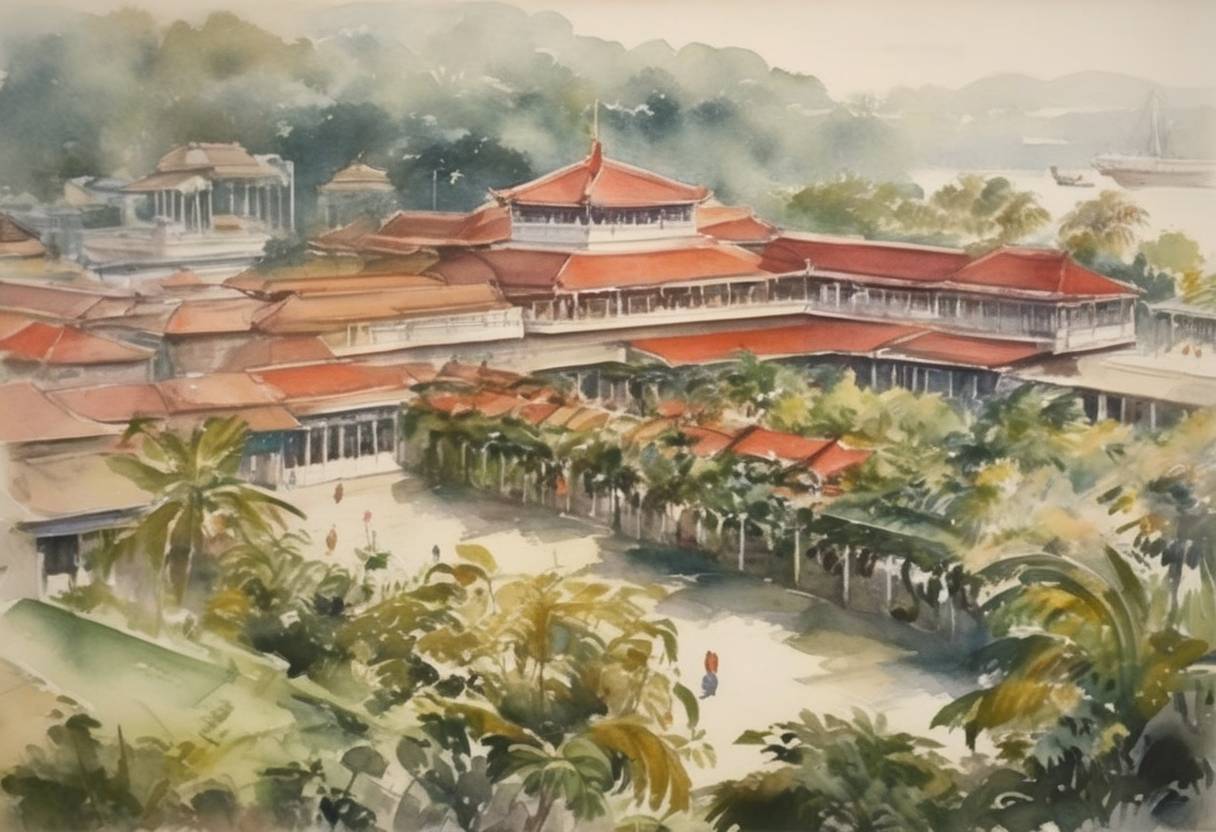
On June 3, 1959, Singapore marked a pivotal moment in its history by becoming a self-governing state within the British Empire. This transition of power followed the dissolution of the State of Singapore Act, a legislative framework that had been part of Singapore’s journey towards greater autonomy.
Singapore, a strategic port and vibrant hub, had been under British colonial rule since 1819. World War II and the subsequent Japanese occupation from 1942 to 1945 significantly altered the colonial administration’s perspective, fostering aspirations for self-rule among Singaporeans. The post-war period in Asia was characterized by a wave of decolonization, propelling Singapore further towards self-governance.
Passed in 1958, the State of Singapore Act set the stage for Singapore’s internal self-government. It outlined provisions that would eventually lead to Singapore electing its own government, with the British retaining control over defense, foreign affairs, and internal security.
The first general elections under the new framework were held on May 30, 1959. The People’s Action Party (PAP), led by Lee Kuan Yew, emerged victorious, winning a majority. This decisive win signified strong local support for the party’s vision of governance and development.
On June 3, 1959, following the dissolution of the State of Singapore Act, Lee Kuan Yew was sworn in as Singapore’s first Prime Minister. This was a monumental step, as it signified the shift from a colonial administration to a government led by Singaporeans for Singaporeans.
The establishment of self-government allowed Singapore to have its own cabinet, assumed responsibility for internal affairs, education, finance, and health, paving the way for rapid social and economic transformation. However, defense and foreign policy remained under British oversight.
This date is commemorated as a cornerstone in Singapore’s journey to full independence, achieved six years later on August 9, 1965. The self-governing status in 1959 was integral in strengthening national identity and laying the foundation for Singapore’s future as a sovereign nation.
In summary, June 3, 1959, was a day of significant transition for Singapore, representing both the culmination of its struggle for self-determination and the beginning of a new chapter in its political history.
Source: www.nas.gov.sg