Establishment of the Smithsonian Institution
1846 · Washington, D.C., United States
The Smithsonian Institution was established in Washington, D.C., thanks to funds from the estate of British scientist James Smithson.
November 10, 1958
The Hope Diamond is donated to the Smithsonian Institution by jeweler Harry Winston.
Washington D.C., United States | Smithsonian Institution
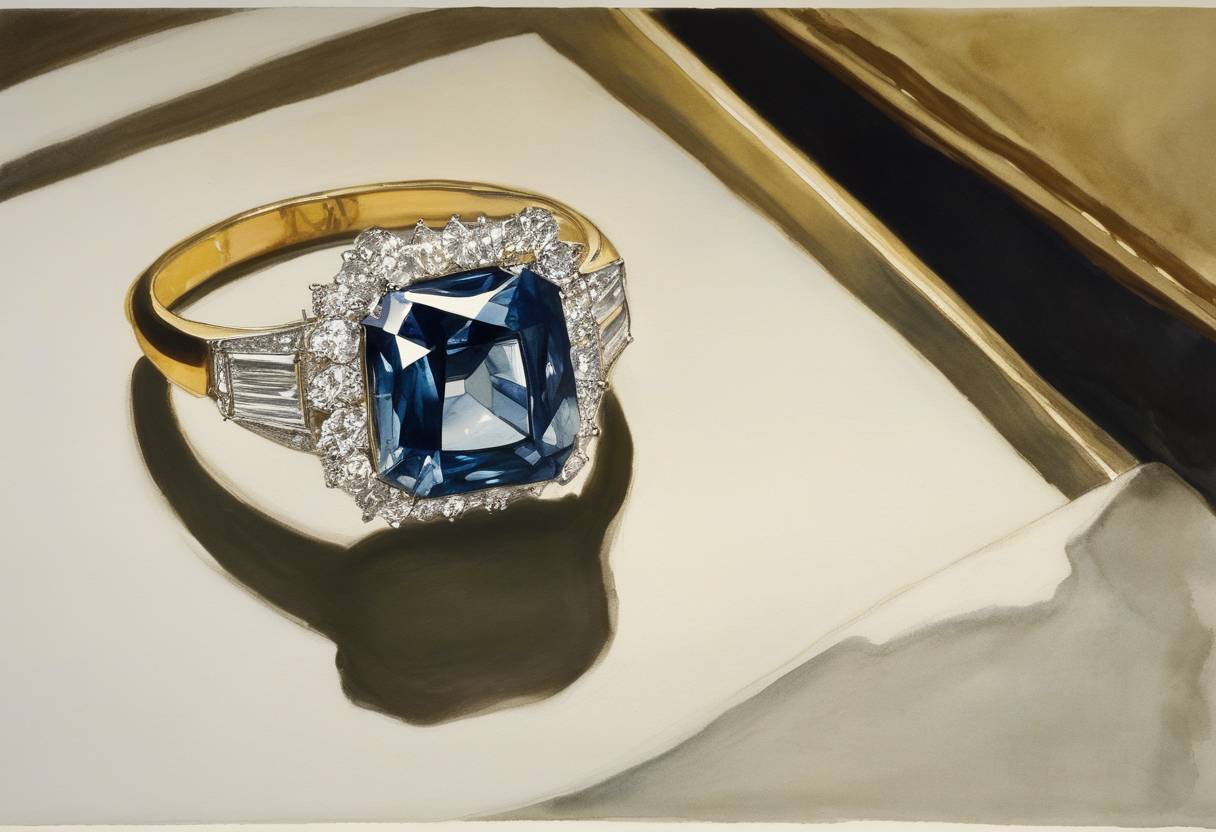
On November 10, 1958, the renowned Hope Diamond was donated to the Smithsonian Institution by prominent New York jeweler Harry Winston. This event marked a significant addition to the National Museum of Natural History’s gem collection, making it one of the most famous pieces in their possession.
The Hope Diamond, a deep blue diamond weighing 45.52 carats, has a storied history. Its origins trace back to the Kollur Mine in Golconda, India, in the 17th century. It was initially part of a larger gemstone acquired by French gem merchant Jean-Baptiste Tavernier, who sold it to King Louis XIV of France. The diamond, often associated with legends and curses, passed through various hands over the centuries, including King Louis XVI and Marie Antoinette, before it surfaced in the collection of British banker Henry Philip Hope, giving it its current name.
Harry Winston obtained the Hope Diamond in 1949. As one of the world’s leading jewelers, Winston decided to donate the gem to the Smithsonian to establish a national gem collection for the American public to enjoy. His donation was intended to stimulate museum attendance and interest in gems and minerals.
On November 10, 1958, Winston sent the diamond via registered mail, packaged in a plain brown paper-wrapped box, to the Smithsonian Institution. This modest method of delivery cost him \(145.29, including \)2.44 for postage and \(142.85 for \)1 million in insurance.
Upon its arrival, the Hope Diamond quickly became a star attraction at the Smithsonian. Its presence significantly enhanced the museum’s ability to educate the public about gemstones and natural history. Furthermore, this acquisition spurred additional donations, bolstering the Institution’s status as a leading repository of mineral and gem specimens.
The donation of the Hope Diamond represents a notable moment in the history of public access to historically significant gems. Today, it continues to draw millions of visitors each year, fascinated by its beauty and the legendary tales surrounding its past.
Source: time.com