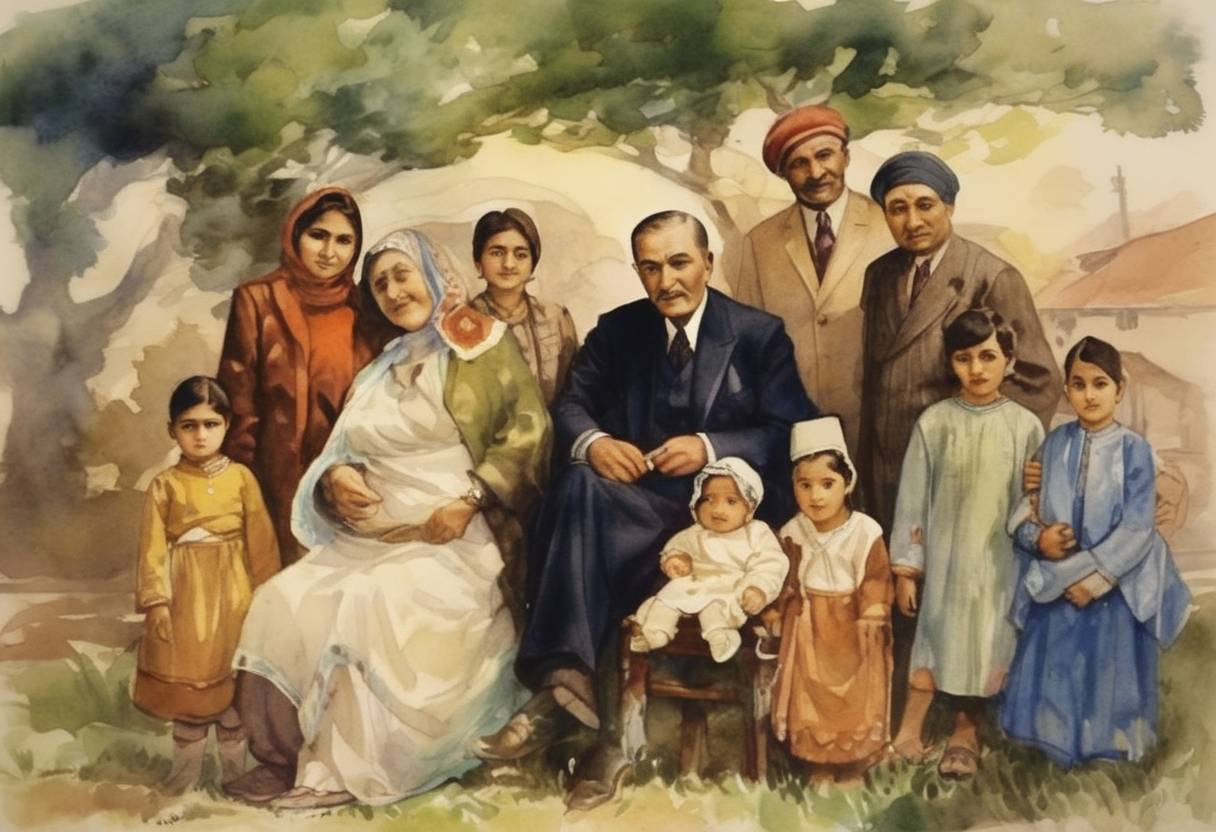
The Law on Family Names in Turkey
On November 1, 1928, the “Law on Family Names” came into effect in Turkey as a crucial component of Mustafa Kemal Atatürk’s sweeping series of reforms to modernize and secularize the newly established Republic of Turkey. This reform mandated that all citizens adopt a family surname, which was a significant departure from the traditional naming conventions in the Ottoman Empire.
Context and Background
Prior to this law, Ottoman naming customs largely comprised given names often followed by titles, personal attributes, or the father’s name (patronymics), without the necessity of a stable hereditary surname. Atatürk’s reforms aimed at forging a cohesive national identity and integrating Turkey more closely with Western standards of governance and societal norms.
The adoption of family names was part of broader efforts to secularize and modernize the Republic following the dissolution of the Ottoman Sultanate and Caliphate. These efforts included the transition to the Latin alphabet for the Turkish language, the adoption of Western attire, and extensive legal reforms.
Implementation of the Law
The law offered guidelines for citizens to choose surnames. These guidelines discouraged the use of foreign, ridiculing, or inappropriate names. The goal was to promote a distinct national Turkish identity that emphasized unity and modernity. Not only did this ensure administrative uniformity and ease, but it also played an integral role in solidifying individual and national identity within the framework of the nation’s sweeping modernization efforts.
Citizens were required to register their newly chosen family names with the civil authorities. The state facilitated this process through public awareness campaigns and legislative support, underscoring the importance of this transformation.
Significance and Consequences
This law had profound long-term cultural and social impacts on Turkish society. By standardizing names, Turkey aimed to enhance social cohesion and eliminate distinctions and privileges associated with titles from the Ottoman era. Over time, this facilitated government administration, legal matters, and even international relations.
The Law on Family Names represents an essential aspect of the Kemalist vision of a unified and secular national identity. It highlighted Atatürk’s commitment to reforming Turkish identity along the lines of Western institutions and societal structures, fostering a sense of individual rights and modern citizenship among the Turkish populace.
The adoption of surnames marked a pivotal shift in Turkey’s historical trajectory, signifying both a break from its Ottoman past and a step towards integration and acceptance within the framework of modern nation-states.