Rouen Surrenders to Henry V of England: January 19, 1419
1419 · Rouen, France
Rouen surrendered to Henry V of England, completing his conquest of Normandy.
April 14, 1395
The Truce of Leulinghem was signed, extending a period of peace between the Kingdoms of England and France during the Hundred Years' War.
Leulinghem, France
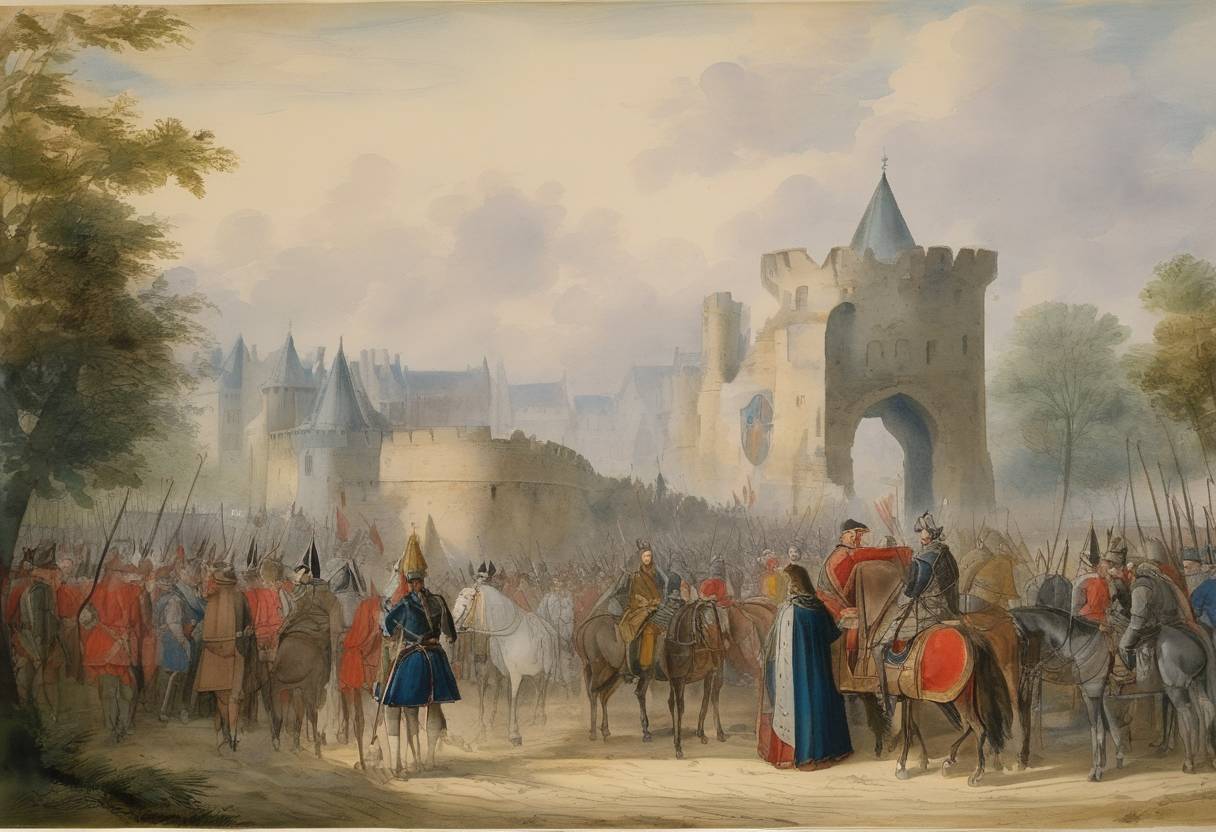
The Truce of Leulinghem, signed on April 14, 1395, marked a significant pause in hostilities between the Kingdom of England and the Kingdom of France during the protracted Hundred Years’ War. The Hundred Years’ War, a series of conflicts waged over claims to the French crown and territorial control, lasted from 1337 to 1453, profoundly impacting both nations.
By the mid-1390s, both England and France were war-weary. The conflict had drained resources and caused extensive damage to territories involved in the clashes. In England, King Richard II sought stabilization and recovery from ongoing internal and external pressures. In France, King Charles VI was grappling with his bouts of mental illness, creating a weakened political environment that prioritized peace.
Although it was a temporary cessation of direct conflict, the Truce of Leulinghem did not resolve the underlying contention over the French crown. The truce was significant for providing both nations an interim period of relative peace, allowing them to address internal matters. For France, this pause contributed to a period of political consolidations among French nobility amid the incapacitation of Charles VI.
In the broader spectrum of the Hundred Years’ War, the truce served as a strategic respite rather than a conclusive end to hostilities. The fragile peace it established was undermined in later years as hostilities eventually resumed, leading to subsequent phases in the long-standing war.
The Truce of Leulinghem is a noteworthy episode in medieval European history, illustrating the complexities of war diplomacy in an era of shifting alliances and monarchic disputes. While it did not bring lasting peace, it highlighted the critical need for diplomatic engagement amid protracted conflict, setting the stage for future negotiations and treaties in the ongoing saga of the Hundred Years’ War.
Source: sourcebooks.fordham.edu