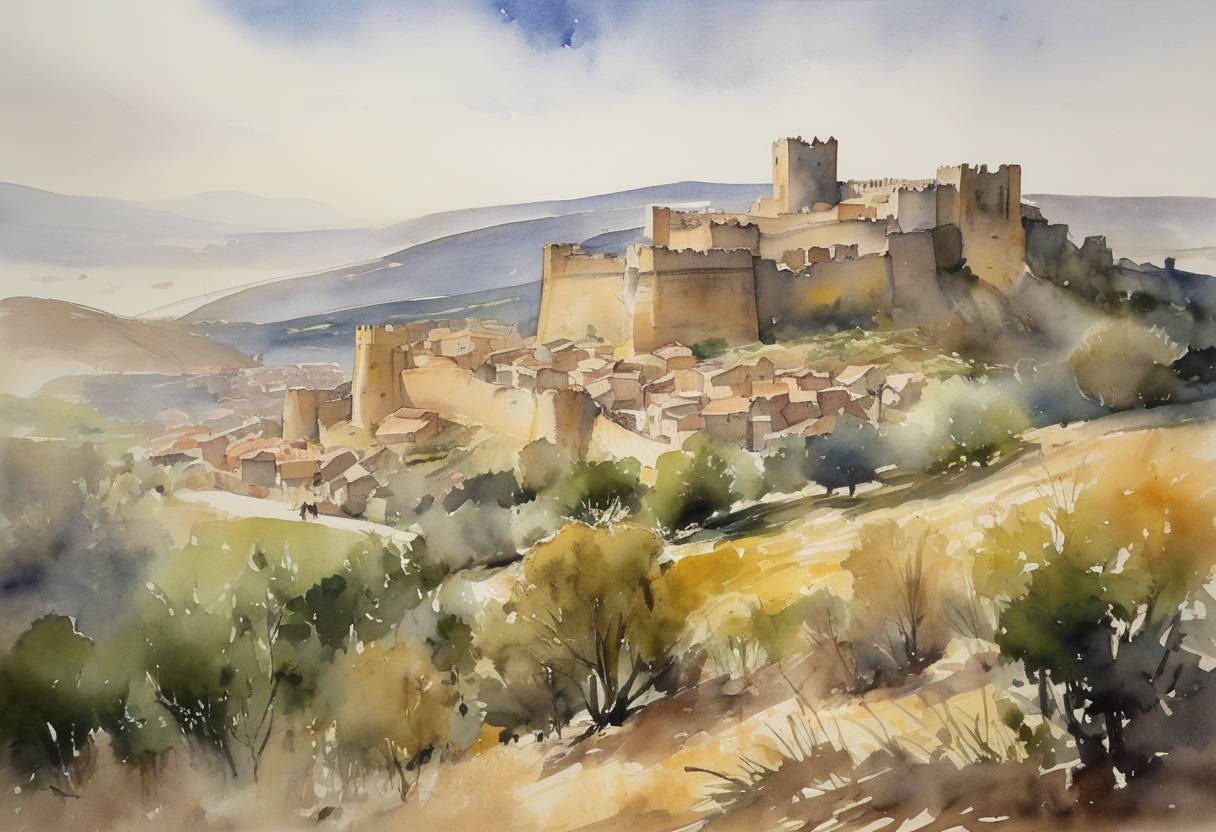
Siege of Salvatierra: Fall to the Moors - June 25, 1243
The Siege of Salvatierra culminated on June 25, 1243, when the fortress of Salvatierra fell into the hands of the Moors, representing a significant yet temporary setback for the Christian Kingdoms during the Reconquista. This period marked an era of territorial conflict that spanned several centuries, as the Christian forces sought to reclaim Iberian lands from Muslim rule.
Historical Context
The Reconquista, the long struggle for the Iberian Peninsula, began in the early 8th century when Muslim forces advanced into the region. Over the ensuing centuries, various Christian kingdoms in what is now modern-day Spain and Portugal incrementally pushed back against Muslim dominion in an attempt to restore Christian rule across the peninsula.
In the 13th century, the Reconquista was in one of its active phases, characterized by numerous battles and sieges as Christian and Muslim forces alternated control of key territories. The fortress of Salvatierra, located in present-day Spain, was a prominent military and strategic site due to its location and fortifications.
The Siege
The siege began as Muslim forces sought to reclaim strategic sites lost to the Christians as part of retaliatory campaigns during this dynamic period. The fall of Salvatierra to the Moors was concurrent with a volatile period when borders and city allegiances frequently changed due to military campaigns, allegiances, and treaties.
Historically, the specific tactics employed in the siege of Salvatierra have not been exhaustively documented. Still, traditional siege techniques of the period would have likely included encirclements, cutting off supply lines, and employing siege engines to breach fortifications.
Aftermath and Significance
While the fall of Salvatierra was a setback for the Christian Kingdoms, it was not a permanent loss. The fluid nature of the Reconquista meant that territorial control often swung back and forth. Strategic sites like Salvatierra frequently changed hands, influencing the strategies and morale of both Christian and Muslim forces.
This event underlined the resilience and complex military-political landscape of 13th-century Iberia. The Christian kingdoms continued their campaigns in the region, and ultimately, the Reconquista culminated in 1492 with the fall of Granada, the last Muslim stronghold, to the forces of Ferdinand and Isabella, marking a significant change in the religious and cultural tapestry of Spain.
The loss, regain, and eventual consolidation of territories such as Salvatierra illustrate the protracted nature of the Reconquista and underscore the persistent struggle for control of the Iberian Peninsula that characterized this era.