Adolf Hitler's Decision to Remain in Berlin: April 22, 1945
1945 · Berlin, Germany
Adolf Hitler admits defeat in his underground bunker and decides to remain in Berlin until the end of the war.
December 21, 1941
Adolf Hitler becomes Supreme Commander-in-Chief of the German Army.
Berlin, Germany | Nazi Germany
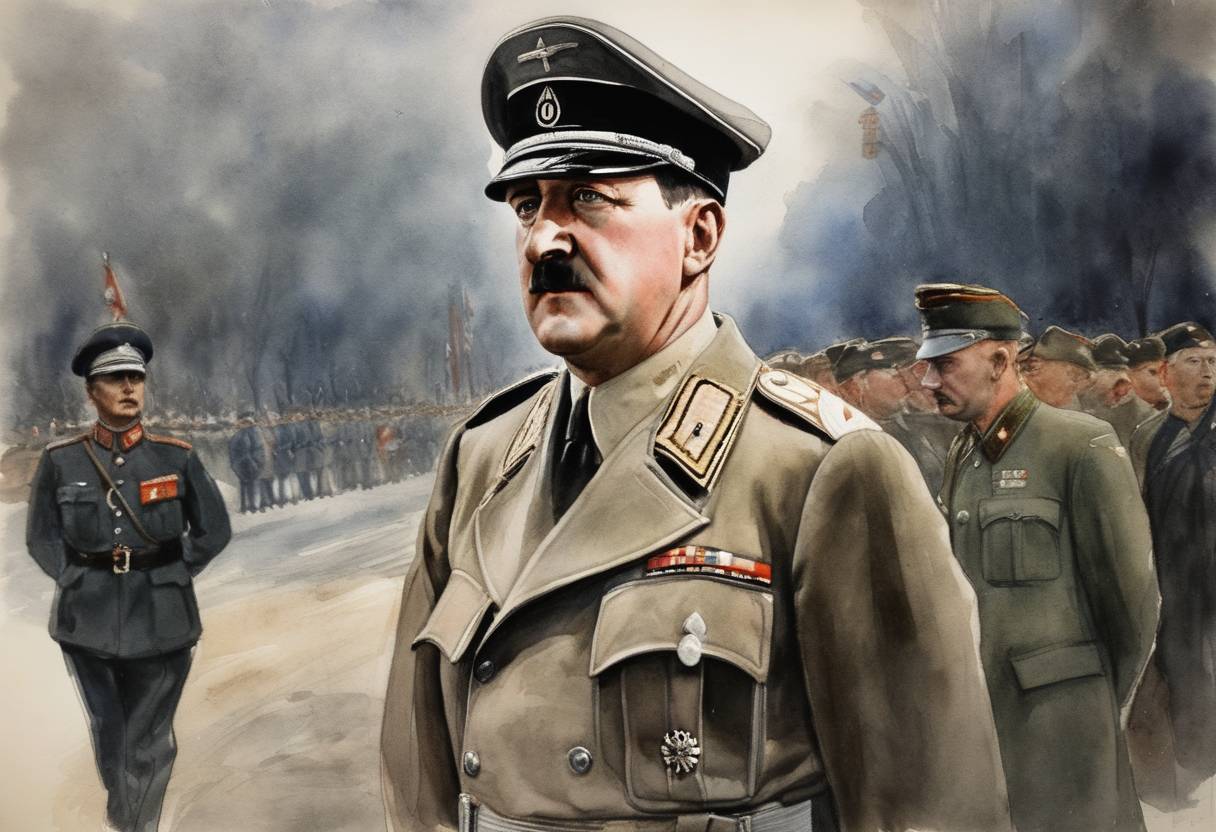
By December 1941, World War II had engulfed much of Europe and beyond, with Germany at the forefront of the conflict. Adolf Hitler, as the Führer of Nazi Germany, wielded significant power over the state’s political and military strategies. The situation on the Eastern Front, where German forces had launched Operation Barbarossa in June 1941 to invade the Soviet Union, was becoming increasingly problematic as the harsh Russian winter set in.
On December 21, 1941, in response to the mounting challenges faced by the Wehrmacht on the Eastern Front, Adolf Hitler took drastic administrative action by assuming the role of Supreme Commander-in-Chief of the German Army. This move marked a critical shift in the command structure of the German military.
Prior to this decision, Field Marshal Walther von Brauchitsch held the position of the commander-in-chief. However, with the situation deteriorating, particularly after the German failure to secure Moscow and the ensuing Soviet counteroffensive, Hitler decided to relieve von Brauchitsch of his duties. Citing health reasons, von Brauchitsch resigned, which effectively allowed Hitler to consolidate military authority under himself.
Hitler’s assumption of direct command of the German armed forces had significant implications. Previously, the military command had operated with a degree of autonomy, guided by professional military strategies. However, Hitler’s increasingly hands-on approach often led to decisions driven by ideological and political motivations rather than strategic military considerations.
This change marked the beginning of more frequent direct interventions by Hitler in military decisions, often overruling his generals. His leadership style, characterized by stubbornness and a lack of conventional military insight, was a contributing factor to strategic blunders that would occur in subsequent military campaigns.
The centralization of military power in Hitler’s hands exemplifies the totalitarian nature of the Nazi regime and foreshadowed the growing tensions and eventual failures on the battlefronts. The decision compounded an already overstretched and strained German military effort, contributing to the eventual decline of Nazi Germany in the latter stages of World War II.
In historical context, this move highlights the intersections of military strategy, political ideology, and leadership; it also illustrates how personal ambition and unchecked power can precipitate systemic failures within a regime.
Source: en.wikipedia.org