The Battle of Fort Washington: A Decisive British Victory
1776 · New York City, United States
The Battle of Fort Washington ends in a decisive British victory during the American Revolutionary War.
July 25, 1759
British forces capture Fort Niagara during the French and Indian War, securing a critical position for control over North America.
Youngstown, United States | British Army
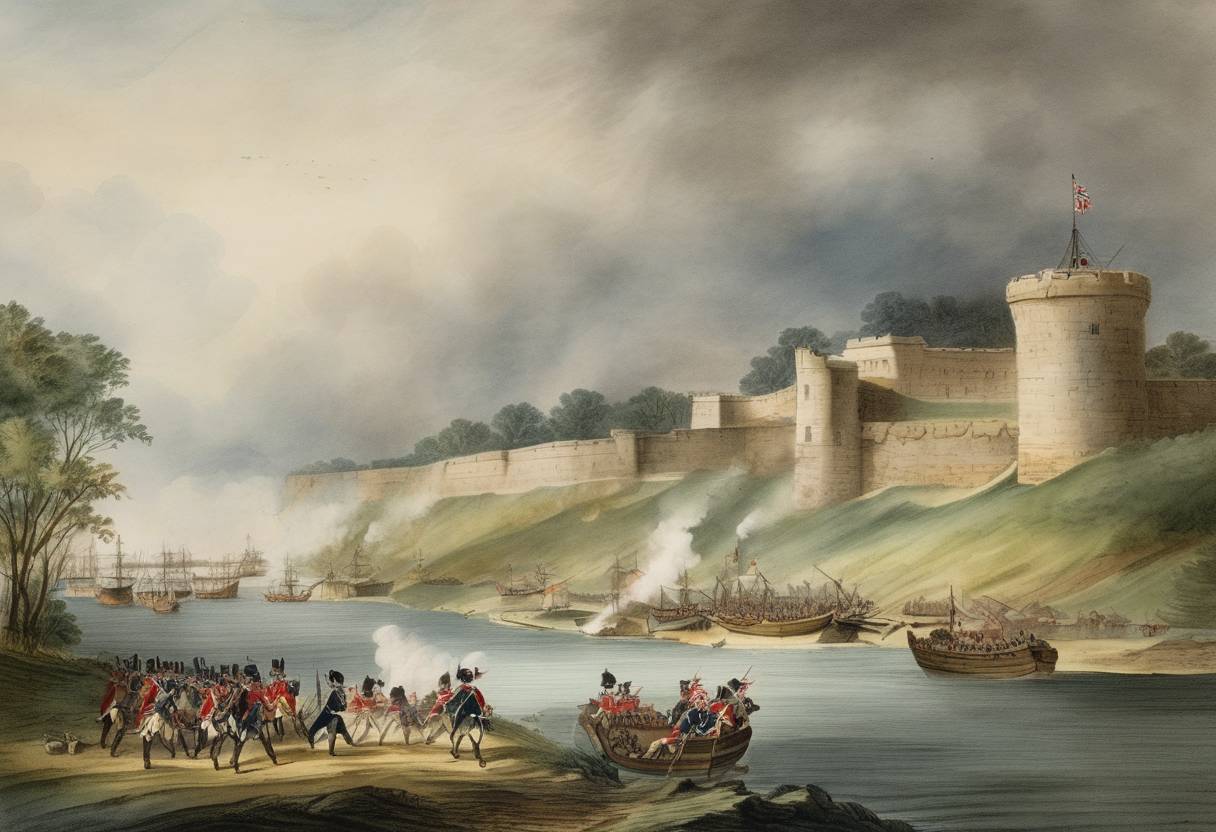
On July 25, 1759, during the French and Indian War, British forces successfully captured Fort Niagara, a key strategic stronghold located near the southern shore of Lake Ontario. This victory was pivotal for British control over the North American theater of the conflict.
The French and Indian War, part of the broader Seven Years’ War, was primarily a struggle for colonial dominance between Great Britain and France. Control over key fortifications and waterways in North America was crucial for both sides, affecting trade routes and territorial claims.
Fort Niagara was originally established by the French in 1726. Its location at the mouth of the Niagara River made it a critical point for controlling access between the Great Lakes and the Atlantic Ocean. The fort’s capture was essential for the British strategy to sever French communications and supply lines between Canada and their holdings in the Mississippi Valley.
In July 1759, the British, under the command of Brigadier General John Prideaux and Sir William Johnson, launched an expedition to seize Fort Niagara. The British force consisted of regular Redcoats, colonial militia, and Iroquois allies.
Initial Approach: British forces, numbering about 3,000, began their siege on July 6, 1759. The British artillery commenced a relentless bombardment against the French defenders, estimated at approximately 600 soldiers and allied Native American warriors.
Leadership Change: During the siege, General Prideaux was killed in an accidental explosion of a coehorn mortar, a portable artillery piece. Command then passed to Sir William Johnson, who continued the offensive.
Culmination: The turning point came when a French relief force, led by Captain François-Marie Le Marchand de Lignery, attempted to break the siege. However, the British and their allies decisively defeated this force in the Battle of La Belle-Famille on July 24, 1759, effectively leaving Fort Niagara without hope of outside assistance.
On July 25, 1759, with diminished numbers and supplies running low, the French commander, Captain Pierre Pouchot, surrendered Fort Niagara to the British.
The capture of Fort Niagara was a significant blow to French colonial interests in North America. It ensured British control of the vital passageways between the Great Lakes and the St. Lawrence Valley, effectively cutting off French support and influence in the western territories.
This victory was part of a series of British successes in 1759, a year later termed the “Annus Mirabilis” or “Year of Wonders,” which propelled Britain to a dominant position in North America. The fall of Fort Niagara foreshadowed the eventual British conquest of all of New France, culminating in the fall of Montreal in 1760.
The victory also cemented alliances with various Native American tribes, who saw the shift in power and chose to align with the British, profoundly impacting the geopolitical landscape of North America.
Source: www.britannica.com