Sinking of the RMS Empress of Ireland - May 29, 1914
1914 · Quebec, Canada
The ocean liner RMS Empress of Ireland sank in the Saint Lawrence River after colliding with the Norwegian collier SS Storstad, resulting in the loss of 1,012 lives.
December 11, 1872
The cargo ship SS Royal Charter was launched in River Dee near Chester, England. It would later become infamous after being wrecked in 1859 in one of the most tragic shipwrecks, costing over 450 lives.
Chester, United Kingdom | Gibsons & Macdonald
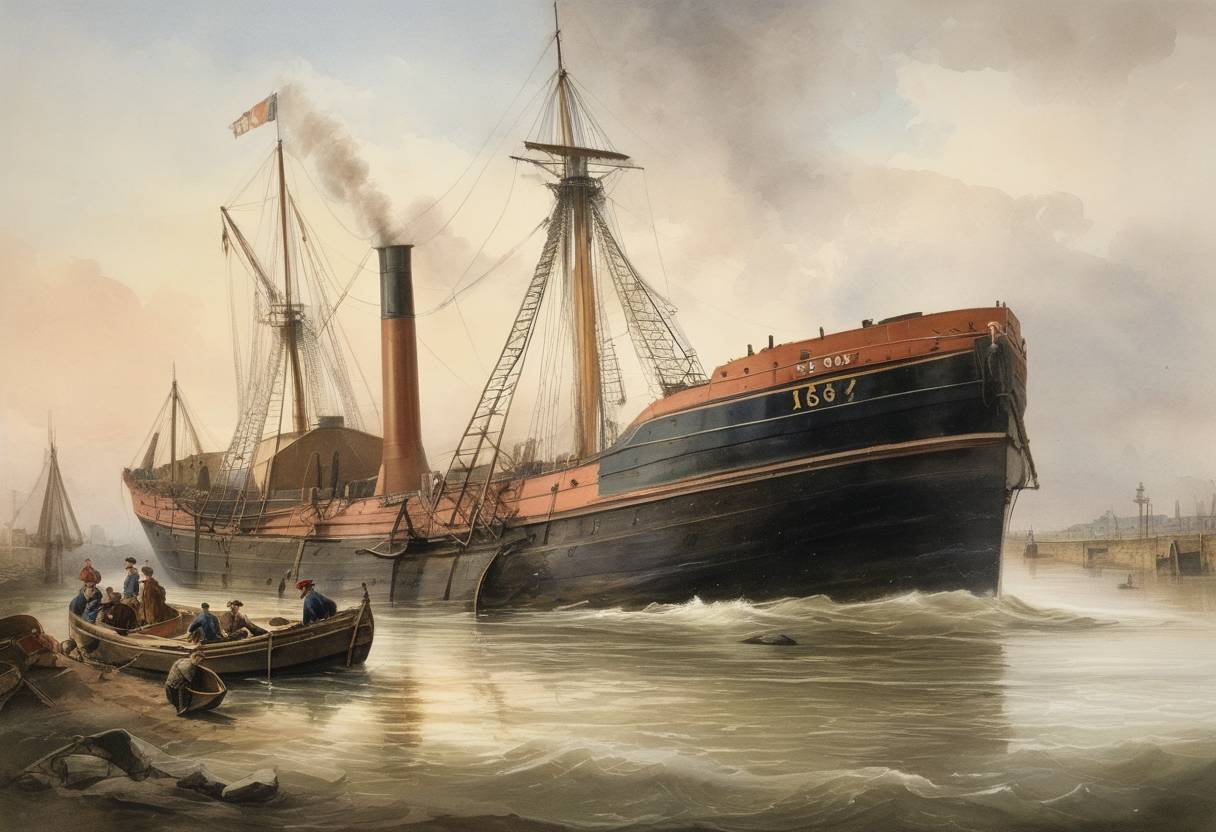
On November 12, 1855, the cargo steam clipper SS Royal Charter was launched from the River Dee near Chester, England. This ship would later gain infamy due to its tragic wreck in 1859 off the coast of Anglesey, Wales.
The SS Royal Charter was a marvel of maritime engineering, constructed by the shipbuilders Sandycroft and Co. The vessel was built as a steam clipper with an iron hull, making it one of the first ships to combine both sail and steam power effectively. It was designed for speed and cargo capacity, primarily to serve the route between Britain and Australia.
The launch of the Royal Charter was a significant event in the mid-19th century maritime world, showcasing advancements in ship design and construction. The ship became a symbol of the era’s advancements in global trade and transportation.
During this period, the demand for rapid transportation between continents was at its peak, fueled by the Australian gold rush and the global expansion of trade networks. Steam-powered vessels like the Royal Charter were laying the groundwork for more efficient global logistics and communication.
Though not occurring on the launch date, the wreck of the SS Royal Charter in 1859 had a profound impact, leading to changes in maritime safety regulations and the development of more advanced meteorological systems to predict severe weather conditions. This disaster claimed over 450 lives when the ship was caught in a severe storm near the coast of Wales.
The Royal Charter’s destruction emphasized the need for improved safety standards at sea and greater understanding of weather patterns to prevent similar tragedies. The shipwreck also left its mark on British cultural history, commemorated in poems and leading to a significant loss of life and treasure during the Victorian era.
Understanding such historical events provides insight into the progress in marine engineering and the importance of safety practices that continue to evolve today.
Source: en.wikipedia.org