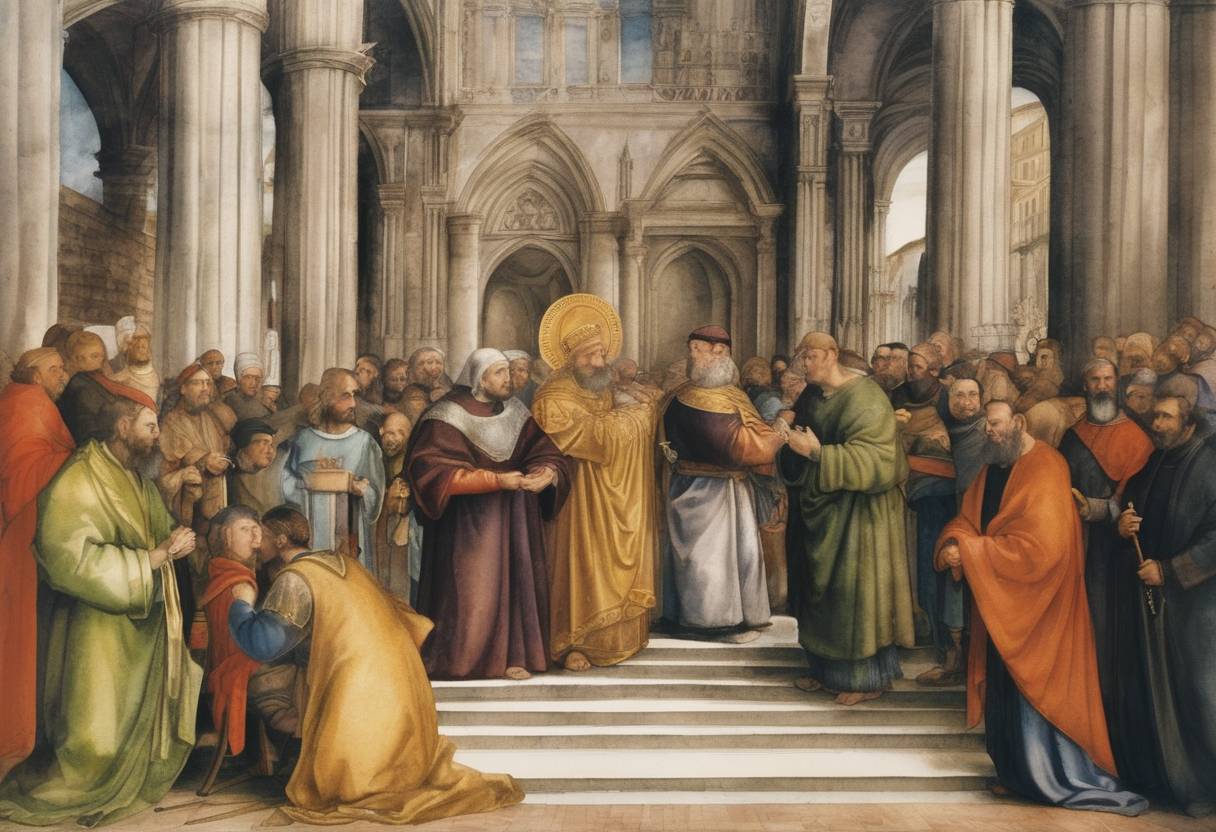
The Council of Florence actually ended on August 7, 1445, not on October 5, 1550. Here’s a detailed account of its significance and outcomes:
The Council of Florence (1431-1445)
Context and Background
The Council of Florence initially convened as the Council of Basel in 1431 under Pope Martin V and later moved to Ferrara in 1438 before settling in Florence in 1439. This ecumenical council sought to address various church reforms and to heal the schism between the Eastern Orthodox and Roman Catholic Churches, a division that had persisted since the Great Schism of 1054. The division was primarily over theological differences, such as the Filioque clause in the Nicene Creed and issues of papal primacy.
Key Events and Discussions
The council’s most significant achievement was the temporary unification of the churches in 1439. Key figures included Pope Eugene IV and the Byzantine Emperor John VIII Palaiologos, who were instrumental in negotiating a reunification agreement. The decree of union, “Laetentur Caeli,” was signed on July 6, 1439, and included agreements on the Filioque, papal supremacy, and other theological issues. Notable theological participants included Cardinal Bessarion and Archbishop Mark of Ephesus.
Outcome and Aftermath
Despite the agreements reached and initial hopes, the council’s efforts ultimately failed to sustain unity. The decrees were never widely accepted in the Eastern Church, largely due to public opposition and the political climate in Constantinople. The union faced strong resistance from Eastern Orthodox clergy and laypeople, who viewed the concessions as betrayal of Eastern traditions.
The schism continued to persist, and the council’s decisions were effectively nullified in the East after the fall of Constantinople in 1453, which reinforced the divide. Ultimately, while the Council of Florence did not achieve its intended reunification of the Eastern and Western Churches, it laid groundwork for dialogue and theological exchange between the two branches of Christianity.