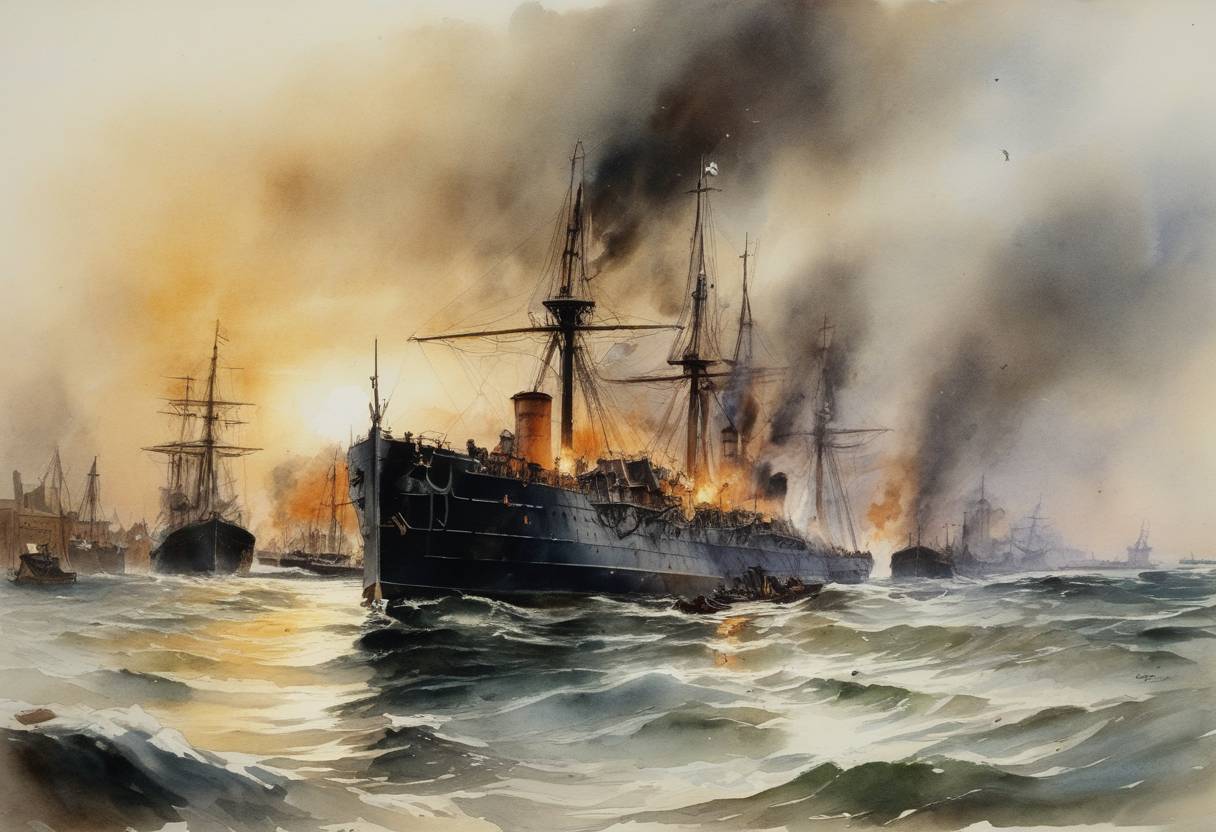
German Bombardment of Hartlepool and Scarborough
On December 16, 1914, during World War I, the Imperial German Navy conducted a naval bombardment against the British towns of Hartlepool, Scarborough, and Whitby, located on the northeastern coast of England. This assault was noteworthy as it marked the first naval bombardment of the British Isles during the war and was a significant psychological blow to British morale.
Background
In the early months of World War I, the Royal Navy had successfully imposed a blockade on German ports, thereby restricting the movement of German naval forces. In response, the German High Seas Fleet aimed to draw out and weaken the British Grand Fleet by conducting raids and bombardments along the UK’s eastern coast. These operations were intended to create panic, lower British morale, and divert British naval resources.
The Bombardment
The raid was planned by Admiral Franz von Hipper and carried out by elements of the German High Seas Fleet, including battlecruisers such as SMS Seydlitz, SMS Moltke, and SMS Blücher. The German squadron departed from its base at Wilhelmshaven and crossed the North Sea under the cover of darkness.
Hartlepool
Hartlepool was the most heavily targeted, being a key industrial and military site. Shelling began at approximately 8 am and included the town’s docks and military installations. The attack resulted in significant damage to both military and civilian structures, with over 100 casualties, including civil and military personnel.
Scarborough and Whitby
Scarborough and Whitby were mainly civilian targets. Scarborough suffered damage to its historic structures, including the Grand Hotel, and resulted in civilian casualties. Whitby, though less impacted, witnessed the shelling of the iconic Whitby Abbey.
Aftermath and Impact
The bombardment resulted in approximately 137 civilian deaths and hundreds more injured. The attacks outraged the British public and had significant propagandistic implications. The German navy’s willingness to shell defenseless civilian targets was depicted in British propaganda as barbaric and spurred recruiting and public support for the war effort.
In response, the British Royal Navy analyzed the tactics used by the German fleet and adjusted its own defensive strategies along the coast, leading to an increased focus on intelligence gathering and coordination to prevent future raids.
While the bombardment did not cause extensive strategic military damage, it achieved its goal of instilling fear and unease, provoking outrage, and contributing to the vilification of Germany in British wartime propaganda. The event is remembered for its influence on public sentiment during the war and remains a significant example of the impact of naval warfare on civilian populations.