The First V-1 Flying Bomb Attack on London: June 13, 1944
1944 · London, United Kingdom
Germany launched the first V-1 flying bomb attack on London during World War II, marking the beginning of a new phase of aerial warfare.
December 15, 1941
The American Eagle Squadron, composed of volunteer American pilots serving in the Royal Air Force, was officially transferred to the U.S. Army Air Forces to form the 4th Fighter Group.
Debden Airfield, United Kingdom | U.S. Army Air Forces
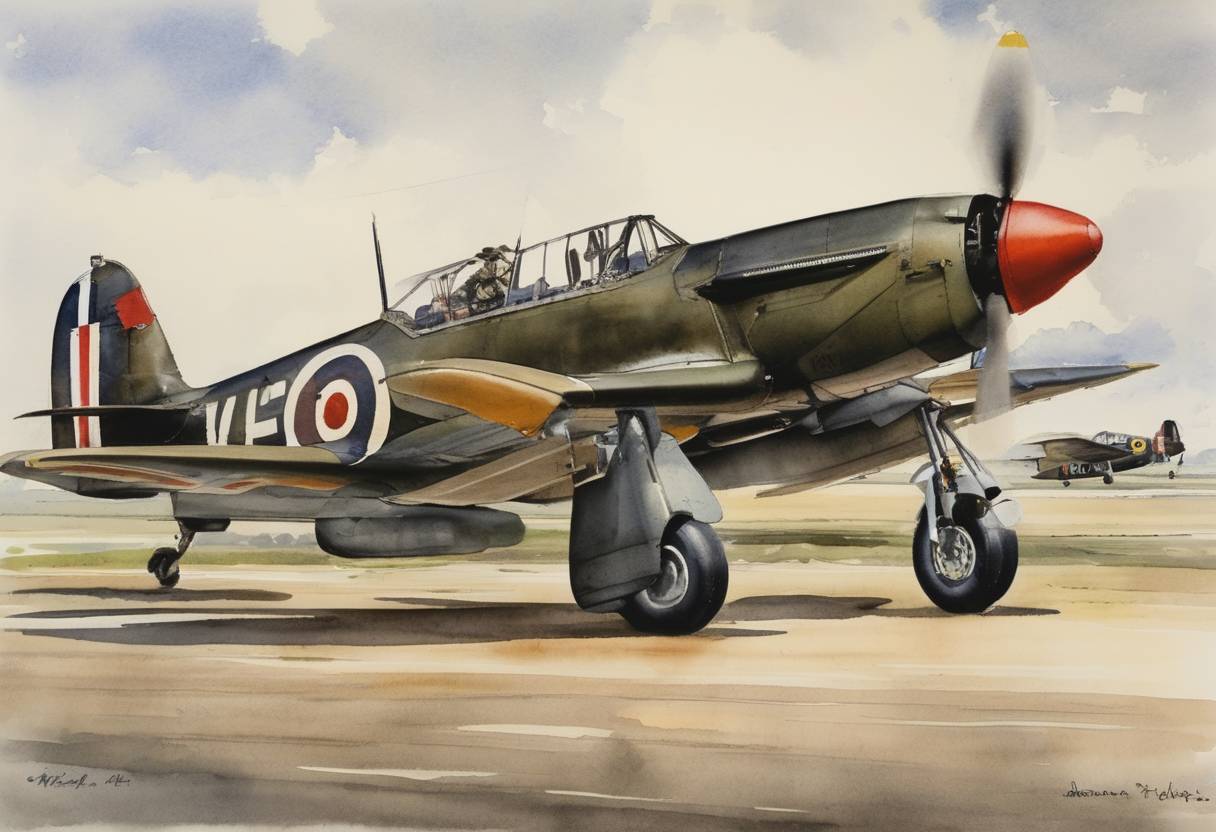
On December 15, 1941, an important transfer occurred during World War II—The American Eagle Squadron, a group comprised of volunteer American pilots serving in the Royal Air Force, was officially transferred to the U.S. Army Air Forces, marking the formation of the 4th Fighter Group.
Before the United States officially entered World War II, many American pilots sought to contribute to the Allied efforts against the Axis powers. They volunteered to serve with the Royal Air Force (RAF) in Britain due to regulations that constrained American military involvement before the attack on Pearl Harbor. These pilots were organized into what was known as the American Eagle Squadrons.
The creation of these squadrons was largely possible thanks to the efforts of Charles Sweeny, an American expatriate and businessman, who believed in supporting Allied forces before the U.S.’s official engagement in the war. His advocacy led to formation of three notable Eagle Squadrons: No. 71, No. 121, and No. 133.
With the attack on Pearl Harbor on December 7, 1941, the United States entered World War II, significantly altering international military alignments and strategies. Just days after, on December 15, 1941, the operational command of the Eagle Squadrons was transferred from the British Royal Air Force to the United States Army Air Forces (USAAF).
This transition marked the formal integration of American forces in European combat operations and set the stage for a more extensive U.S. involvement on European battlefields. The Eagle Squadrons were amalgamated into the USAAF as the 4th Fighter Group. This transformation recognized their valor and skills honed under the RAF, assigning them directly to American military strategy moving forward.
The transfer of the American Eagle Squadron symbolized a broader commitment of the U.S. to the Allied forces and marked a pivotal shift in air combat dynamics during World War II. The 4th Fighter Group became one of the most celebrated fighter groups in the history of U.S. military aviation, known for their exceptional contributions to the air superiority campaigns over Europe.
Their experience and bravery further inspired subsequent recruitment and training policies, establishing a legacy of cooperation and shared goals between the U.S. and British forces which would continue throughout the war.
The integration of the Eagle Squadrons into the U.S. military structure embodied international camaraderie and shared purpose in the Allied fight against Axis aggression, reinforcing a coalition united by common objectives of peace and security.
Source: www.history.navy.mil