The Battle of Mactan: April 27, 1521
1521 · Mactan, Philippines
The Battle of Mactan occurred, where Filipino forces led by Lapu-Lapu defeated Spanish forces led by Ferdinand Magellan, resulting in Magellan's death.
December 7, 1520
After spending several months exploring the coast of South America, Portuguese navigator Ferdinand Magellan reached the Pacific Ocean.
, | Spanish expedition
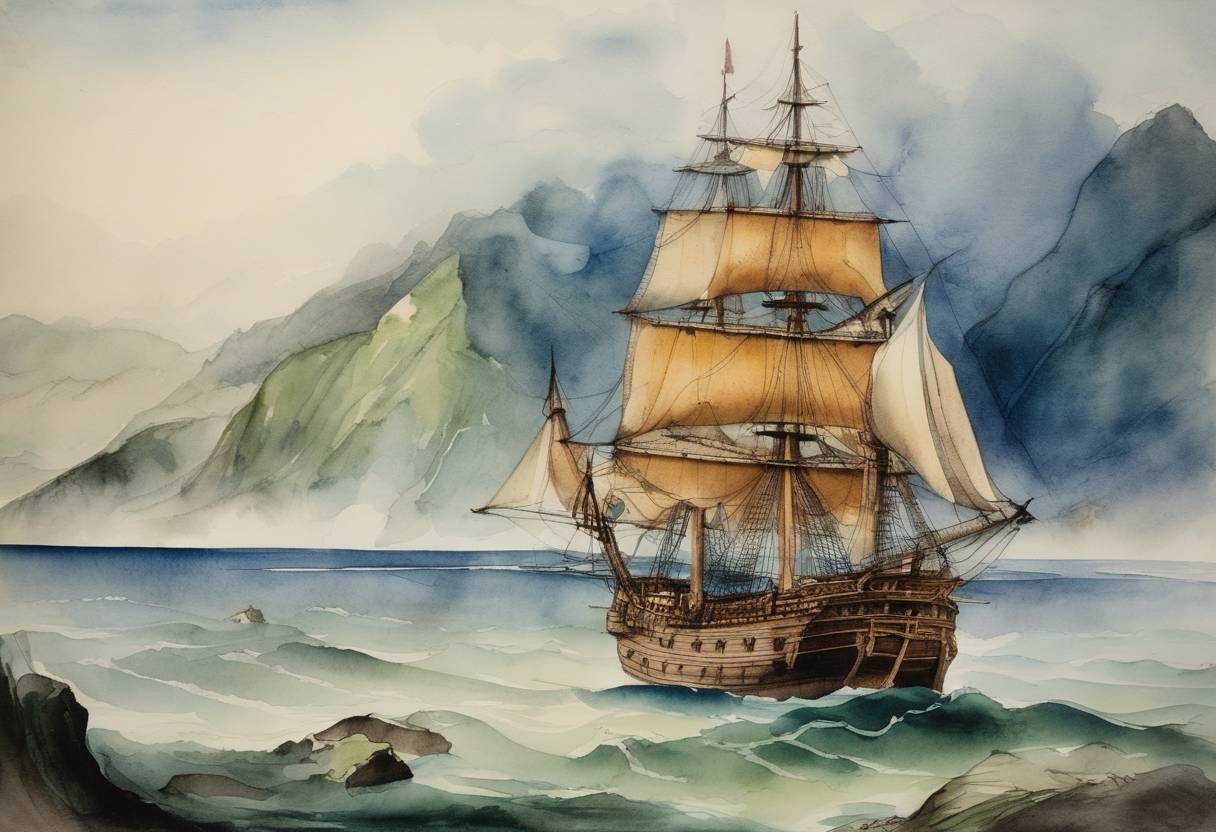
On December 7, 1520, the famed Portuguese navigator and explorer Ferdinand Magellan achieved a significant milestone in his groundbreaking circumnavigation of the globe by reaching the Pacific Ocean. This momentous event occurred during his expedition under the Spanish flag, which aimed to discover a westward route to the Spice Islands (the Maluku Islands) across the Atlantic and beyond South America.
Ferdinand Magellan set sail from Spain on September 20, 1519, at the helm of a fleet known as the Armada de Molucca. This fleet consisted of five ships: Trinidad, San Antonio, Concepción, Victoria, and Santiago. The goal was to find a westward passage to Asia, facilitating a new trade route for valuable spices.
Throughout 1520, Magellan’s expedition spent considerable time exploring the eastern coast of South America, searching for a strait that would allow passage through to the Pacific Ocean. After navigating treacherous waters and confronting a mutiny, the fleet finally discovered what is now known as the Strait of Magellan in southern Chile.
The fleet entered the strait on November 1, 1520, after evading perilous conditions and intricate channels. Upon successfully traversing the approximately 600-kilometer long strait, Magellan and his crew emerged into a vast body of water. The calm conditions led Magellan to name it the “Mar Pacífico,” or the Pacific Ocean, derived from the Portuguese word for “peaceful.”
This event marked the first ever-recorded European navigation from the Atlantic to the Pacific via a natural passage. It demonstrated the feasibility of reaching Asia by a westward sea route and opened the Pacific Ocean to European exploration. This milestone was critical in global circumnavigation efforts and established new maritime routes that would profoundly impact global trade and cultural exchanges.
The journey through the Pacific proved to be arduous and longer than anticipated. Magellan continued his voyage without sufficient supplies, facing the vast emptiness of the Pacific. Despite these challenges, his expedition ultimately reached the Philippines in March 1521. Though Magellan himself was killed in the Battle of Mactan in April 1521, his crew continued the expedition. The voyage was completed when the sole surviving ship, Victoria, returned to Spain in September 1522 under the command of Juan Sebastián Elcano, successfully completing the first known circumnavigation of Earth.
This historic exploration altered the course of history and underscored the European era of global maritime exploration.
Source: www.britannica.com