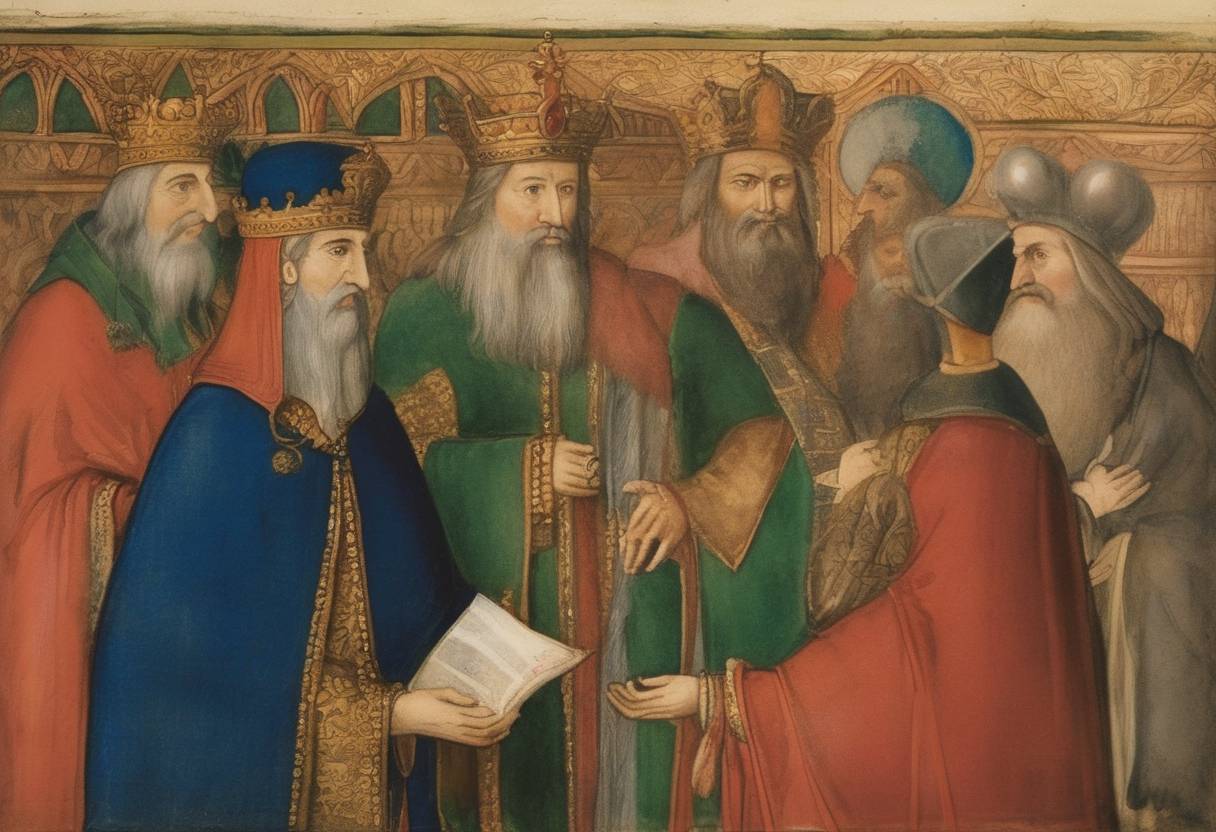
Wenceslaus III and the Decree on Inheritance Rights - August 27, 1301
On August 27, 1301, King Wenceslaus III, the monarch of Hungary, Bohemia, and Poland, issued a significant decree concerning inheritance rights. This decree was emblematic of the pivotal role that the nobility and their support played in maintaining and strengthening royal authority during the medieval period in Central Europe.
Historical Context
Wenceslaus III ascended to multiple thrones during a period characterized by intricate dynastic politics and a feudal system where power was decentralized. The kingdoms over which he reigned—Hungary, Bohemia, and Poland—each had their own nobility, who wielded considerable influence. As such, maintaining good relations and garnering the support of these nobles were crucial aspects of governance.
The Decree’s Content and Implications
The decree that Wenceslaus III issued on this day focused primarily on clarifying and codifying the rights of inheritance among the nobility. The most significant aspects of this decree were:
- Clarification of Succession: It provided clearer guidelines on the transfer of titles and lands, aiming to reduce disputes that frequently arose over succession.
- Noble Privileges: The decree reinforced noble privileges, essentially ensuring that these rights were protected and recognized by the crown. This was essential for securing the loyalty of the nobility.
- Feudal Obligations: While the decree granted rights, it also emphasized the obligations of the nobility, particularly in terms of military support and council to the king.
Broader Historical Significance
The decree of August 27, 1301, played an important role in demonstrating the delicate balance of power within the feudal system. By clearly defining the rights and roles of the nobility, Wenceslaus III could secure a more stable reign through the loyalty and cooperation of these powerful figures. This was a common strategy employed by rulers to maintain control over their territories in a period where centralized power was often challenged by local lords.
Moreover, this decree illustrated the intersection of legal norms and political strategy in medieval governance. It underscored the importance of law as a tool for ruling and managing the complex societal structure of Central Europe’s multi-ethnic and multi-national kingdoms.
Aftermath
Although Wenceslaus III’s reign was relatively short—as he was assassinated in 1306—his policies, including decrees such as this one, had lasting impacts on the governance structures of the regions he ruled. They set precedents for the relationship between monarchs and their nobility, influencing subsequent legal and political developments in Central European history.
This decree thus remains a significant historical document reflecting the dynamics of power, law, and society in medieval Central Europe.