Mahatma Gandhi's Arrest on November 6, 1913
1913 · Dundee, South Africa
Mahatma Gandhi was arrested while leading a march of Indian miners in South Africa, an event that highlighted his philosophy of nonviolent resistance.
September 11, 1906
Mahatma Gandhi coined the term 'Satyagraha' during a meeting in Johannesburg, South Africa. 'Satyagraha' refers to his philosophy and practice of nonviolent resistance, which would later play a crucial role in the Indian independence movement.
Johannesburg, South Africa | Phoenix Settlement
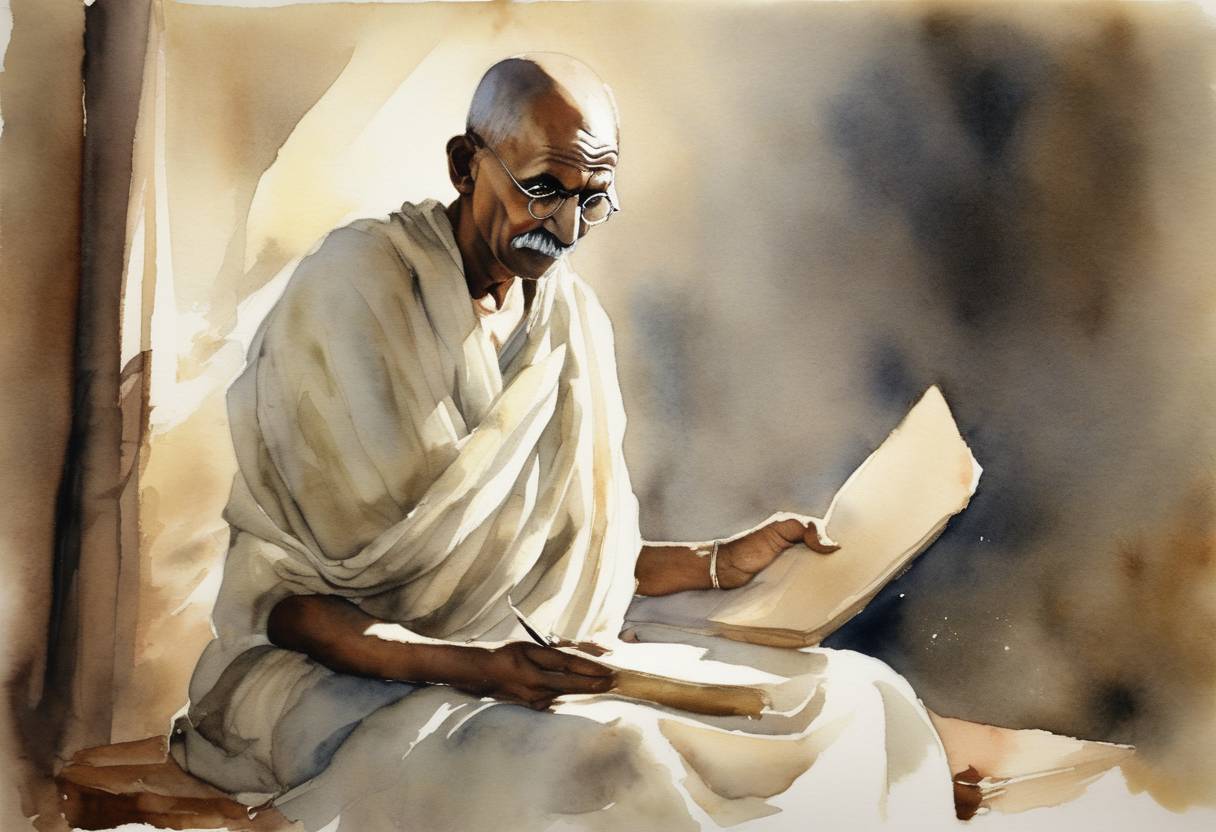
On September 11, 1906, Mahatma Gandhi, then a young lawyer in South Africa, held a seminal meeting at the Empire Theatre in Johannesburg. This gathering marked the inception of the concept of “Satyagraha,” which would become a cornerstone of Gandhi’s philosophy and play a pivotal role in the global discourse on nonviolent resistance and civil rights movements.
The early 20th century was a period of intense racial discrimination in South Africa, primarily aimed at the sizable Indian community. The Transvaal government’s introduction of the Asiatic Registration Act required all Indians to register and carry identification at all times, under threat of severe penalties. The oppressive and degrading legislation galvanized the Indian community in the region.
On the night of September 11, approximately 3,000 members of the Indian community congregated at the Empire Theatre. During this meeting, Gandhi articulated a strategy of nonviolent resistance, which he termed “Satyagraha.” Derived from Sanskrit, “Satya” means “truth,” and “Agraha” signifies “insistence” or “holding firmly to.” The term thus translated to “insistence on truth” or “soul force.”
Gandhi’s concept rejected passive resistance, which he felt implied weakness, and instead emphasized active civil disobedience infused with moral strength. The approach called for a steadfast commitment to nonviolence and an indomitable adherence to truth, regardless of the adversities faced.
This meeting and the subsequent adoption of Satyagraha set off a series of protests which lasted until 1914, compelling the South African government to modify and eventually repeal the most oppressive parts of the Asiatic Law Amendment Act. The success of these campaigns demonstrated to Gandhi and many others the effectiveness of nonviolent resistance strategies.
Satyagraha would later form the foundation of Gandhi’s methods in the Indian independence movement, inspiring leaders such as Martin Luther King Jr. and Nelson Mandela in their respective struggles for civil rights and equality. This philosophy continues to influence nonviolent resistance movements globally.
The meeting in Johannesburg on September 11, 1906, therefore, represents not only a turning point for the Indian community in South Africa but also a crucial moment in the development of nonviolent activism worldwide.
Source: www.britannica.com