Coronation of Béla I of Hungary
1060 · Székesfehérvár, Hungary
Béla I of Hungary was crowned as King of Hungary, marking the beginning of his reign after a period of civil war and dynastic conflict in the kingdom.
January 14, 1301
The Árpád dynasty, which had ruled Hungary since 895, officially ends with the death of Andrew III, leading to a period of instability and a shift in power dynamics within Hungary and surrounding regions.
Buda, Hungary | Kingdom of Hungary
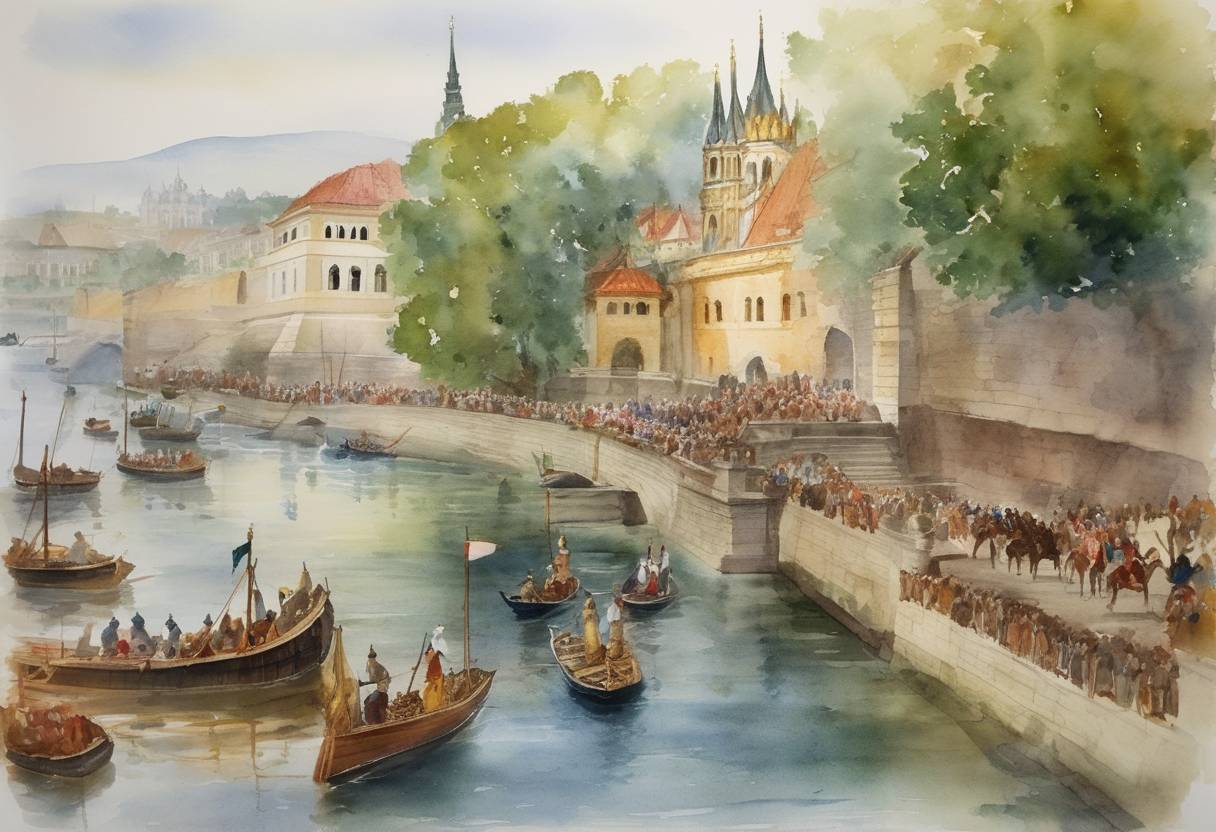
On January 14, 1301, the Árpád dynasty of Hungary came to an official end with the death of King Andrew III. He was the last male descendant of the Árpád family, which had ruled Hungary since 895. Andrew III’s death marked the conclusion of over four centuries of rule and plunged Hungary into a period of political uncertainty and transition.
Andrew III ascended to the Hungarian throne in 1290 amidst a backdrop of familial conflicts and external pressures. His reign was characterized by challenges to his legitimacy and struggles to maintain the stability of the kingdom against powerful baronial factions. Throughout his reign, Andrew III faced opposition from other claimants to the throne, backed by foreign powers, most notably Charles of Anjou, who was supported by the papacy and some Hungarian nobles.
The death of Andrew III without a male heir created a vacuum in the Hungarian monarchy. This power void led to a succession crisis, as multiple claimants vied for the throne. The lack of a clear successor opened Hungary to influence and intervention from neighboring powers, seeking to capitalize on the situation to extend their own power and influence within the region.
The subsequent period was marked by internal strife and conflict as various factions supported different pretenders to the throne. The most prominent contenders were Charles of Anjou, who would eventually ascend to the throne as Charles I of Hungary, initiating the Angevin period of rule, and Wenceslaus III of Bohemia. The contest for the crown led to political fragmentation and weakened central authority, impacting Hungary’s stability for years to come.
The end of the Árpád dynasty and the ensuing struggles for power had significant consequences for Hungary and Central Europe. It facilitated the rise of new dynastic ties and alliances, notably with the Angevin and Luxembourg houses, which would shape Hungarian politics and its connections with the rest of Europe. This period also led to changes in Hungary’s feudal structure, with powerful nobles gaining increased influence.
The dissolution of Árpád’s dynastic line ended a significant era in Hungarian history, paving the way for a new chapter of foreign influence and internal transformation, whose effects resonated through the medieval history of the region.
Source: en.wikipedia.org