Impeachment of South Korean President Park Geun-hye
2016 · Seoul, South Korea
South Korean President Park Geun-hye was impeached by the National Assembly following a corruption scandal, leading to her removal from office.
October 26, 1979
South Korean President Park Chung-hee was assassinated by his close friend and Korean Central Intelligence Agency director, Kim Jae-gyu.
Seoul, South Korea | Korean Central Intelligence Agency
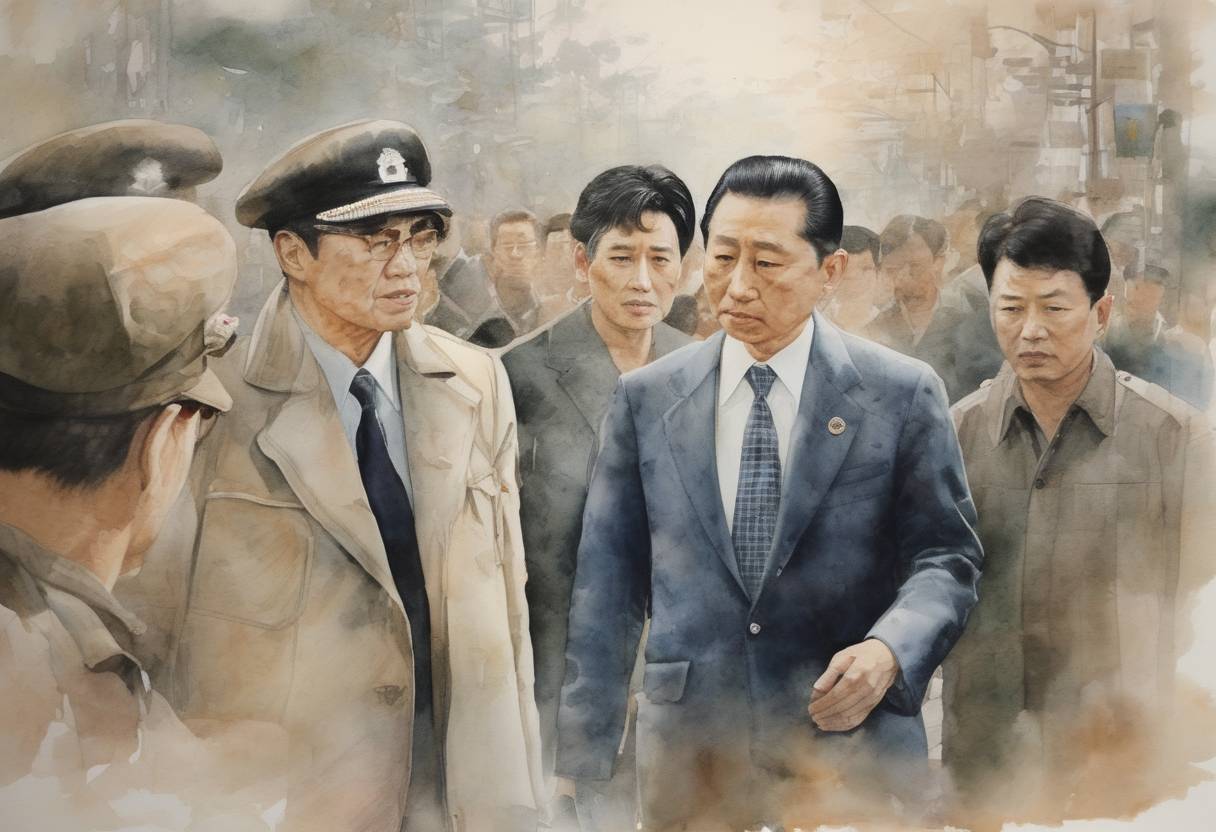
On October 26, 1979, South Korean President Park Chung-hee was assassinated by Kim Jae-gyu, the director of the Korean Central Intelligence Agency (KCIA). This event marked a significant turning point in South Korean history, leading to political upheaval and changes in the country’s governance.
Park Chung-hee had been in power since 1961, following a military coup. His presidency was characterized by rapid economic development, often referred to as the “Miracle on the Han River,” but also by authoritarian rule and suppression of political dissent. Park’s regime was marked by strict control over political activities, censorship, and human rights abuses, which led to growing domestic unrest.
Kim Jae-gyu, a long-time associate and confidant of Park, held a powerful position as the head of the KCIA. Despite their close relationship, tensions had been rising due to Park’s increasingly repressive policies and the influence of his chief bodyguard, Cha Ji-chul, who was seen as a rival to Kim.
The assassination took place during a dinner at a safe house in the Gungjeong-dong neighborhood of Seoul. Present at the dinner were Park, Kim, Cha Ji-chul, and several other officials. During the meal, an argument erupted between Kim and Cha, leading to Kim drawing a pistol and shooting Cha. He then turned the gun on Park, fatally wounding him.
Kim’s motivations remain a subject of debate. Some argue that he believed removing Park would lead to political reform and democratization, while others suggest personal grievances and power struggles were at play.
Following the assassination, Kim Jae-gyu was arrested, tried, and eventually executed in May 1980. The immediate aftermath of Park’s death saw political instability, with martial law declared and a brief period of uncertainty regarding the country’s leadership.
The assassination paved the way for a power struggle within the military, ultimately leading to the rise of General Chun Doo-hwan, who seized control in a coup in December 1979. Chun’s regime continued the authoritarian legacy until the democratic transition in the late 1980s.
The assassination of Park Chung-hee is a pivotal moment in South Korean history. It highlighted the deep divisions within the government and the military, as well as the public’s growing discontent with authoritarian rule. The event set the stage for South Korea’s eventual democratization, as it intensified demands for political reform and greater civil liberties.
Overall, Park’s assassination underscored the complexities of South Korea’s political landscape during a period of rapid economic and social change, and it remains a significant event in understanding the country’s journey towards democracy.
Source: en.wikipedia.org