Tsai Ing-wen Elected as Taiwan's First Female President
2016 · Taipei, Taiwan
Taiwan elected Tsai Ing-wen as its first female president, marking a significant moment in the country's political history.
January 19, 2016
The Taiwanese Kuomintang Party elected their first female leader, Hung Hsiu-chu, marking a significant moment in the party's history during an extraordinary party congress.
Taipei, Taiwan | Kuomintang Party
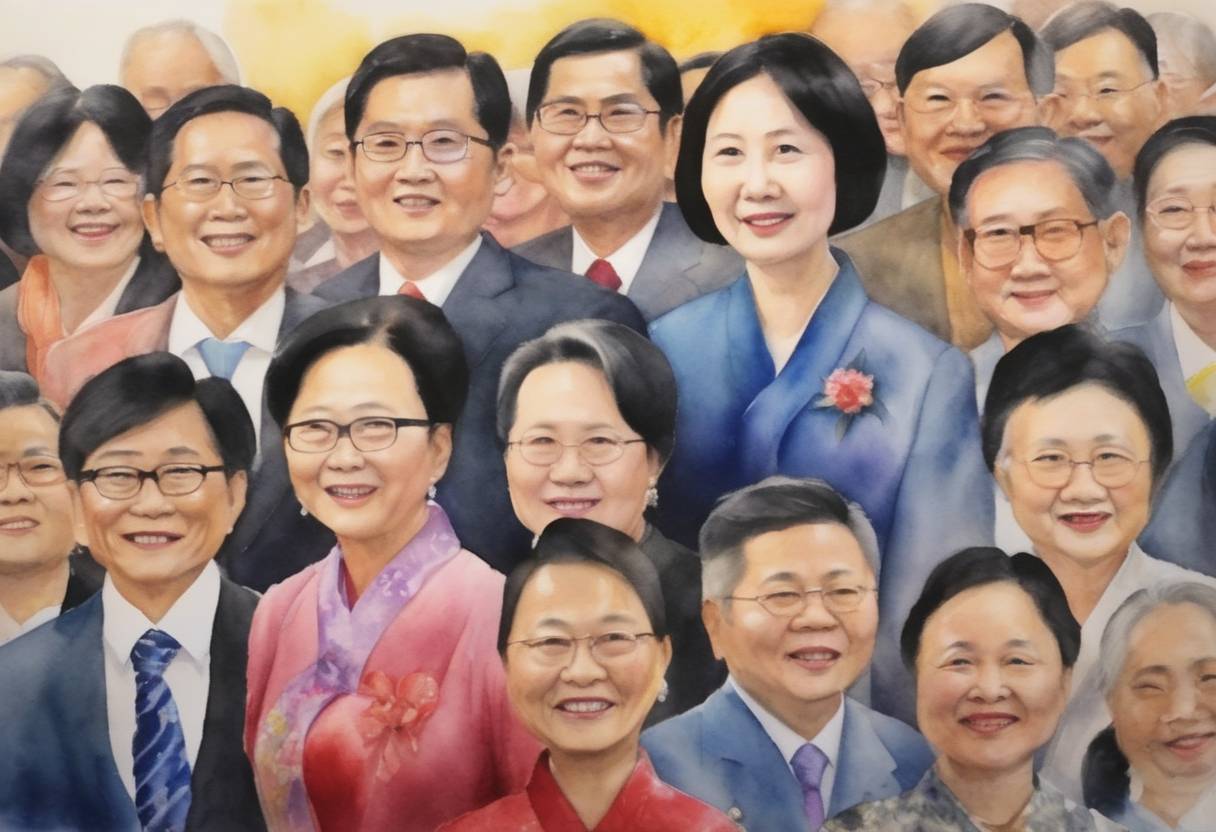
On January 19, 2016, a significant milestone in Taiwanese political history took place when the Kuomintang (KMT) party elected its first female leader, Hung Hsiu-chu, during an extraordinary party congress.
The Kuomintang, historically one of Taiwan’s major political parties, was established in 1912 and played a crucial role in the early political landscape of both China and Taiwan. Throughout its history, the KMT has been a dominant party in Taiwan, particularly after retreating to the island following the Chinese Civil War. Traditionally, the party’s leadership has been male-dominated.
Hung Hsiu-chu, a former teacher and long-time member of the KMT, had held various positions within the party, including serving as a legislator in Taiwan’s Legislative Yuan. Despite her long tenure and experience, her election to the party’s top position came at a challenging time for the KMT.
Hung’s ascent to leadership came after the party suffered significant electoral losses and internal strife. She initially gained attention as the KMT’s presidential candidate for the 2016 elections but was replaced amid concerns over her electability.
During the extraordinary party congress held in January 2016, Hung Hsiu-chu was elected as the leader of the Kuomintang, marking the first time a woman held this position in the party’s history. Her election symbolized a notable shift in the party’s dynamics and was seen as an attempt to rejuvenate its image and address the challenges it was facing.
Hung’s leadership was a step toward gender diversity and a reflection of evolving gender norms within Taiwanese politics. Her tenure was closely watched as she aimed to steer the party through a period of restructuring and redefine its role in Taiwan’s political system.
Although her leadership was part of the KMT’s efforts to revitalize itself, Hung Hsiu-chu’s time as leader was met with various challenges, including intra-party conflicts and the need to adapt to Taiwan’s shifting political landscape. Her tenure ended in March 2017, succeeded by Wu Den-yih, a former vice president of Taiwan.
Hung’s election and leadership marked a critical moment for the KMT, emphasizing both the challenges of modern political leadership and the potential for increased diversity within Taiwan’s political parties.
Source: www.bbc.com