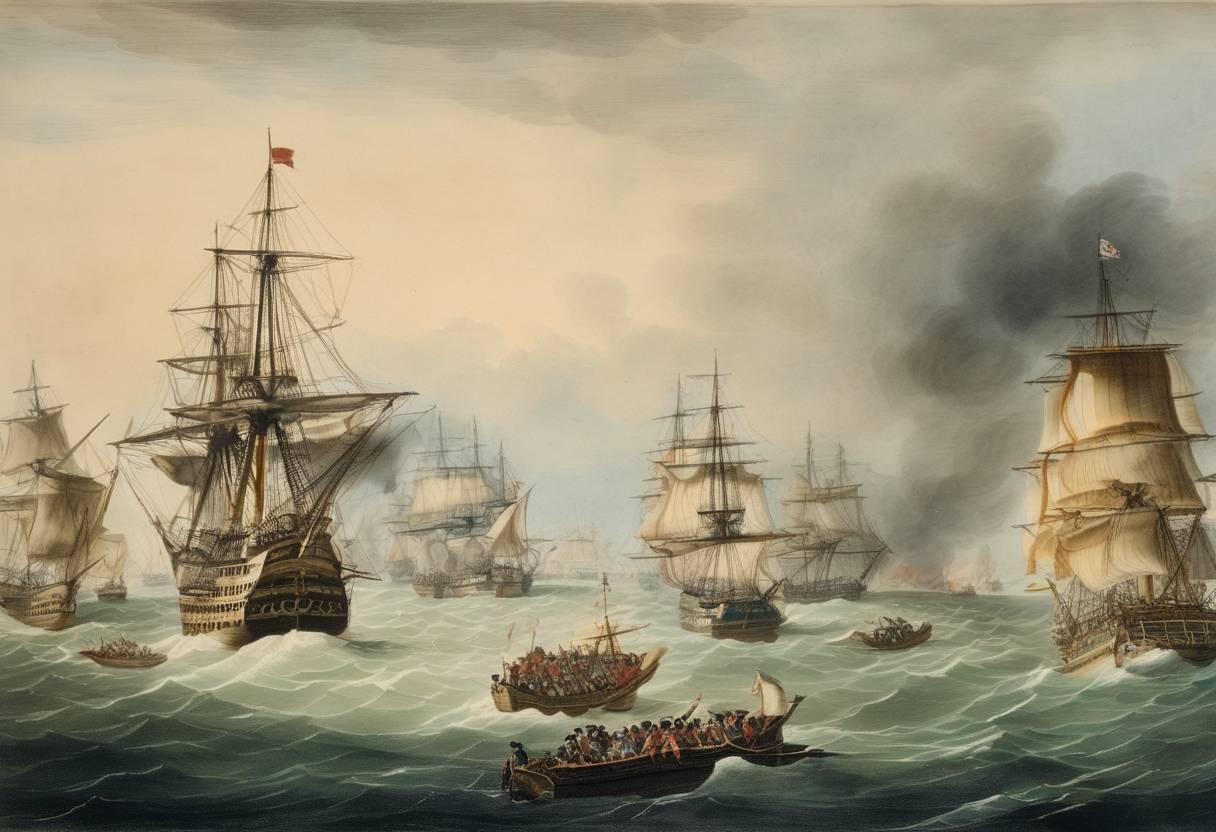
The information provided regarding the naval Battle of Cape St. Vincent and the date April 27, 1779, appears to be incorrect. The historical naval battle most commonly referred to as the Battle of Cape St. Vincent involving Admiral George Rodney and a Spanish squadron did not occur on this date. Instead, the most notable battle at Cape St. Vincent led by Admiral Rodney took place on January 16, 1780.
The Battle of Cape St. Vincent (January 16, 1780)
The Battle of Cape St. Vincent was a significant naval engagement during the American Revolutionary War. Details of the battle are as follows:
Context
- Timeframe: The battle occurred during the global conflict surrounding the American War of Independence, in which European powers, like Spain and France, allied with the American colonies against Britain.
- Strategic Importance: The British sought to maintain their naval dominance and limit enemy supply lines to the American rebels.
Leading Up to the Battle
- Admiral Sir George Rodney: Tasked with relieving the siege of Gibraltar and securing British control in the Mediterranean, Rodney set sail from England in late 1779.
- Spanish Fleet: Under the command of Admiral Juan de Lángara, the Spanish hoped to intercept Rodney’s fleet and thwart British plans.
The Battle
- The encounter took place off the coast of Portugal, near Cape St. Vincent, on January 16, 1780.
- Rodney’s fleet, although on a mission to deliver supplies to the beleaguered British garrison in Gibraltar, engaged the Spanish squadron.
- The battle was fought amid adverse weather conditions, adding to the challenges faced by both sides.
Outcomes
- British Victory: Rodney’s fleet decisively defeated the Spanish squadron, capturing several ships. This victory bolstered British morale and secured crucial resupplying operations for Gibraltar.
- Strategic Gain: The victory provided the British with temporary control of the surrounding waters and ensured the continued pressure on the Spanish and French maritime strategies.
Aftermath
- The victory at Cape St. Vincent cemented Admiral Rodney’s reputation as a proficient naval commander.
- Gibraltar remained under British control, which was crucial for maintaining their presence in the Mediterranean and thwarting Franco-Spanish plans to dislodge them.
This engagement highlighted the importance of naval power in exerting control over crucial maritime routes and supporting broader strategic aims during the American Revolutionary War.