The Battle of the Somme: Conclusion on November 18, 1916
1916 · Somme, France
World War I: The Battle of the Somme ended, resulting in over one million casualties from both the Allied and Central Powers.
February 24, 1916
The Battle of Verdun, one of the largest battles of World War I between German and French forces, continues with intense fighting. This battle eventually becomes one of the longest and most costly battles in human history.
Verdun, France | French Army and German Army
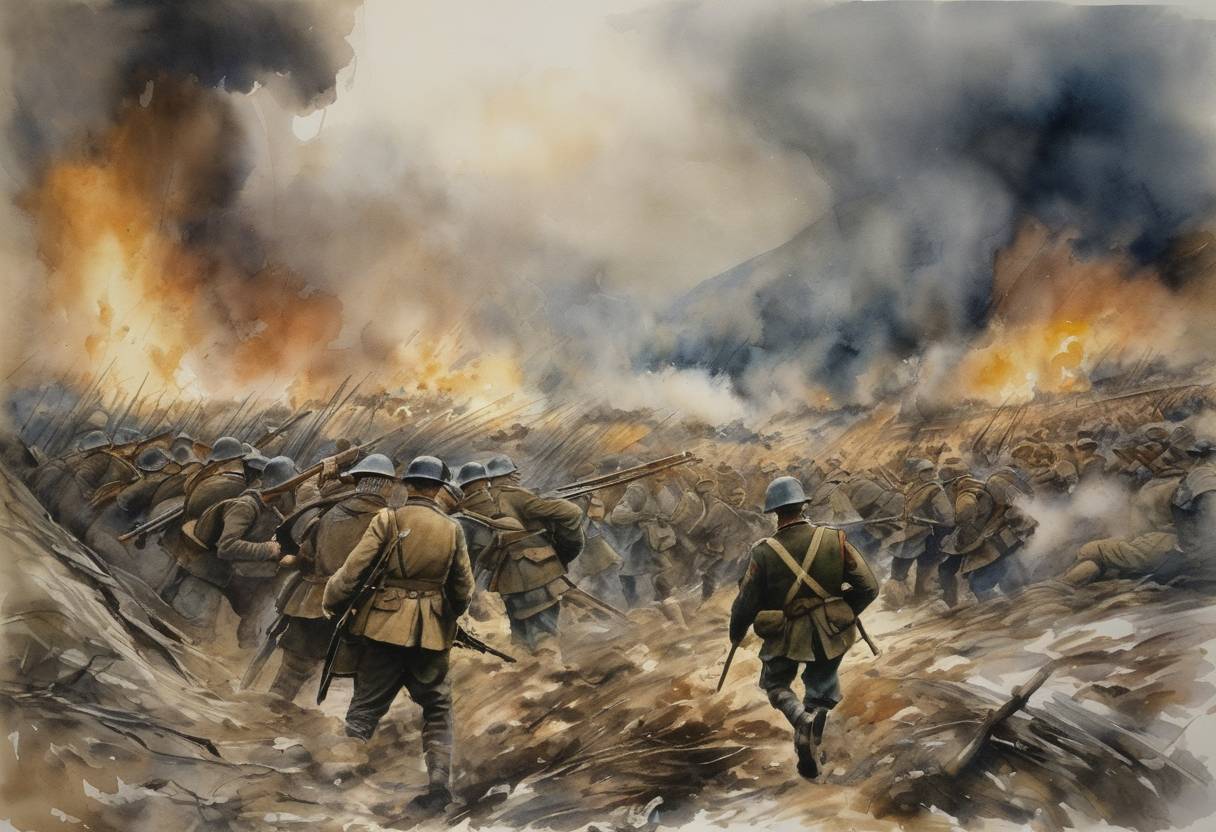
The Battle of Verdun, which began on February 21, 1916, and would rage until December 18 of the same year, stands as one of the longest and most grueling engagements of World War I. By February 24, 1916, the struggle between German and French forces had intensified significantly.
The Verdun Offensive was initiated by Germany under the command of Chief of General Staff, Erich von Falkenhayn. The strategic objective was to bleed the French army white through a battle of attrition, focusing on Verdun due to its symbolic and strategic military importance. The city was fortified, including a series of outlying forts, and its fall would have been a considerable morale blow to France.
February 21, 1916: The German forces launched a massive artillery barrage that marked the beginning of the offensive. This heavy bombardment aimed to destroy French defenses and morale.
February 23, 1916: German infantry attacks followed the artillery barrage, rapidly advancing due to the overwhelming nature of the initial assault.
By February 24, significant numbers of German troops had breached initial French lines, and the defenders were under severe pressure. General Philippe Pétain was appointed to command the French defensive operations. Under his leadership, the French adopted the motto “They shall not pass” (“Ils ne passeront pas”), embodying their resolve to hold Verdun against the German advance.
French Resistance: Despite strategic setbacks and German advances, French forces mounted a determined resistance. Reinforcements began arriving, helping to stabilize certain sectors.
Artillery Duels: The battle was characterized by the extensive use of artillery by both sides, contributing to the high number of casualties and the destruction of the battlefield landscape.
The Battle of Verdun would continue for several more months, becoming emblematic of the brutal and attritional nature of World War I. It resulted in an estimated 700,000 casualties (killed, wounded, and missing) on both sides and did not result in a decisive victory for either side.
The steadfast defense by the French at Verdun became a symbol of national determination and resilience. It represented the extreme devastation that characterized much of World War I, highlighting the profound human cost of the conflict.
The events on February 24, 1916, exemplified the early phases of what would become a testament to endurance and the tragic futility of trench warfare. Verdun’s prolonged agony marked it as a critical point of engagement during the Great War and left an indelible mark on military history.
Source: www.britannica.com