The Union of Lublin: Formation of the Polish-Lithuanian Commonwealth
1569 · Lublin, Poland
The Union of Lublin is signed, merging the Kingdom of Poland and the Grand Duchy of Lithuania into the Polish-Lithuanian Commonwealth.
July 18, 1610
The city of Gdańsk was granted rights to levy taxes by King Sigismund III Vasa of Poland, enhancing its economic independence within the Polish-Lithuanian Commonwealth.
Gdańsk, Poland | Polish-Lithuanian Commonwealth
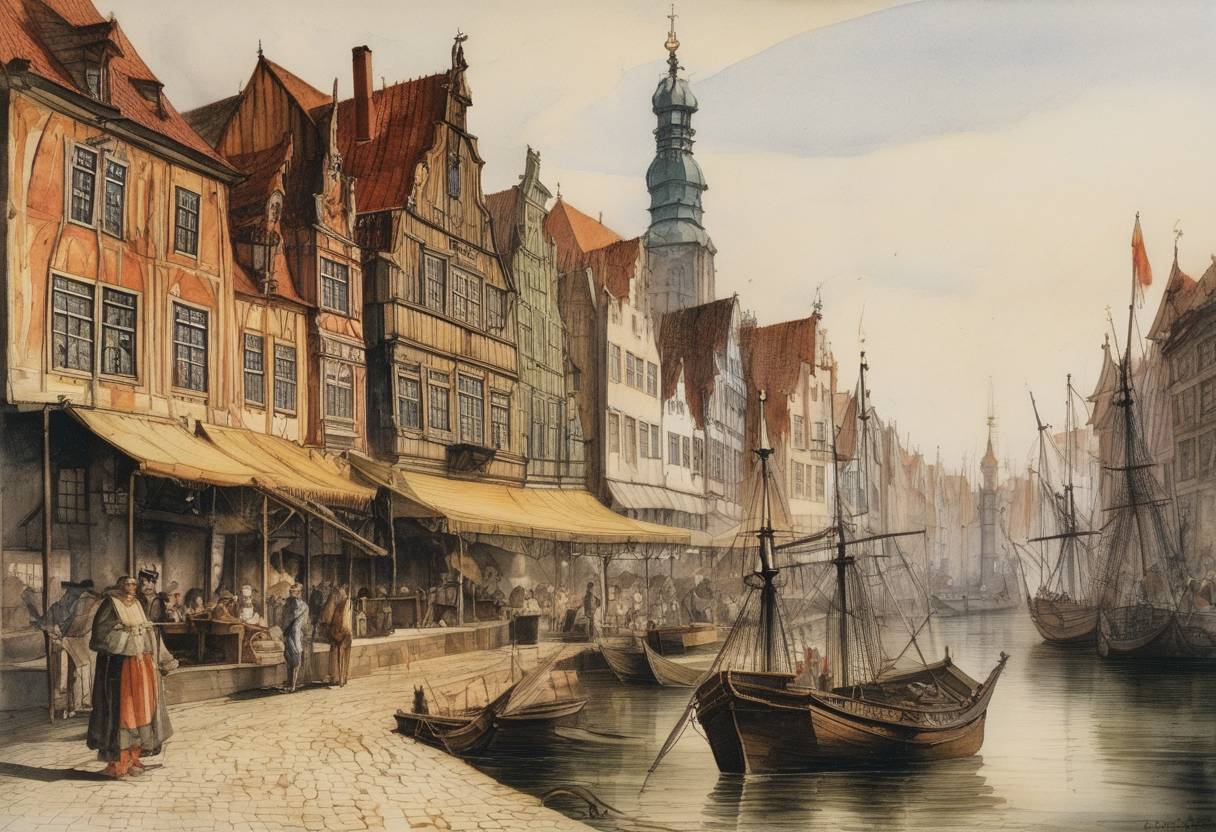
On July 18, 1610, the Polish-Lithuanian Commonwealth’s King Sigismund III Vasa granted the city of Gdańsk (Danzig) the rights to levy its own taxes. This event marked a significant milestone in the city’s quest for greater economic independence and autonomy within the Commonwealth.
Gdańsk, located on the Baltic Sea, was a major port and trading hub during the late Middle Ages and the Renaissance. The city’s prosperity was largely due to its strategic location and its membership in the Hanseatic League, a powerful economic and defensive alliance of merchant guilds and market towns in Northwestern and Central Europe.
During the reign of Sigismund III Vasa, Poland was a substantial territorial and political power in Europe. However, the country was also marked by its relatively decentralized power structure. Cities like Gdańsk leveraged this landscape to negotiate privileges and liberties for themselves.
King Sigismund III Vasa’s decision to allow Gdańsk to levy taxes was influenced by the city’s economic strength and its strategic importance. By granting Gdańsk this right, the king reinforced the city’s semi-autonomous status within the Commonwealth. This autonomy enabled Gdańsk to manage its finances more flexibly and to maintain and enhance its economic infrastructure, which was crucial for sustaining its prosperity as a trading city.
The grant of tax levying rights not only solidified Gdańsk’s independent status but also encouraged the local governance system to become more robust. The city utilized these privileges to invest in infrastructure, manage its defenses, and expand its trade activities, further cementing its economic stature in the region.
The economic independence of Gdańsk contributed to the city’s ability to navigate the political and economic changes that swept through Europe during the 17th century. This independence was critical during the Deluge, the mid-17th century conflicts and the Swedish invasion of Poland, which significantly affected the region.
By the end of the 17th century, Gdańsk had established itself as a prosperous and influential city, not only within the Polish-Lithuanian Commonwealth but also in the broader European trade network. The rights granted on July 18, 1610, played a vital role in this development, allowing Gdańsk to build upon its legacy as a free and affluent urban center in Northern Europe.
Source: en.wikipedia.org