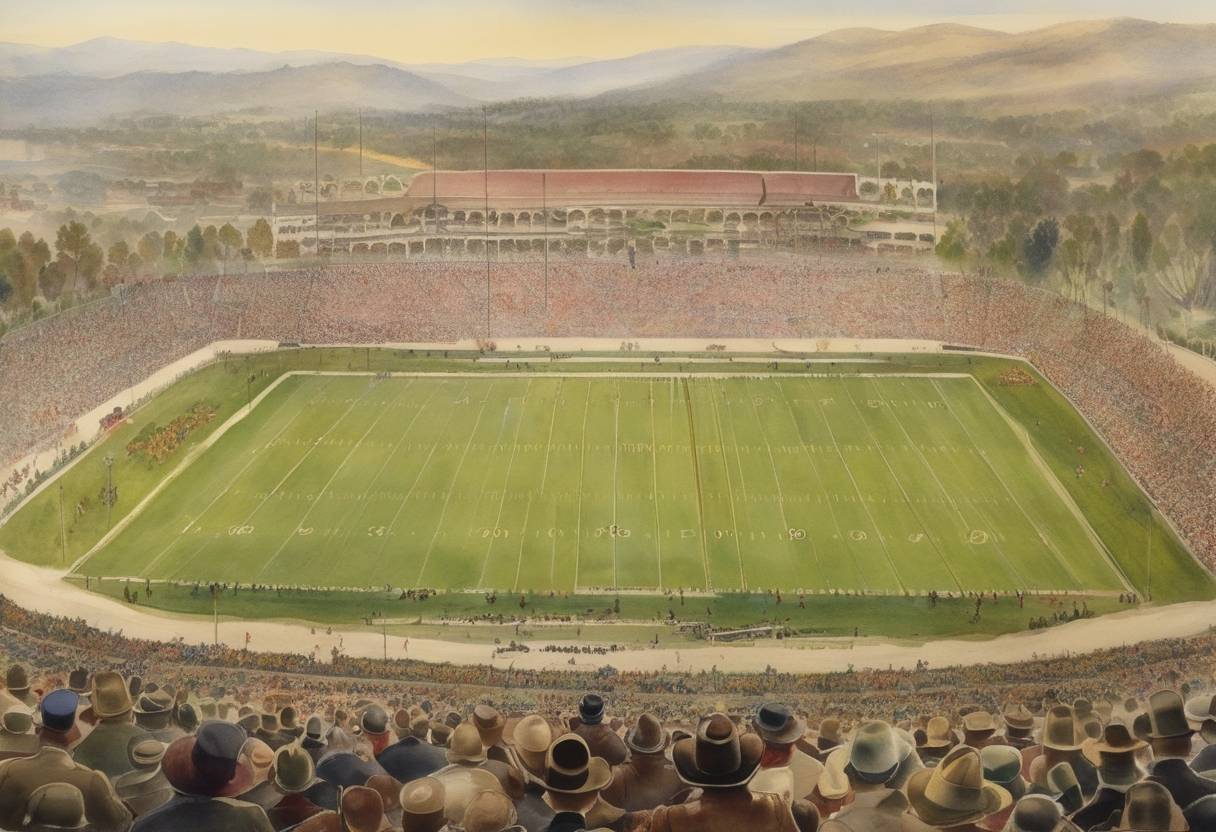
The First Rose Bowl Game: January 1, 1902
The Rose Bowl Game, the first college football bowl game in history, took place on January 1, 1902, in Pasadena, California. This inaugural event marked a significant moment in American sports, setting the stage for the evolution of college football into a national pastime and the establishment of numerous other bowl games.
Background and Context
The Rose Bowl Game was conceived as part of the Tournament of Roses, an annual festival in Pasadena that began in 1890. The festival was created to promote the mild weather of Southern California as a winter tourist destination. The inclusion of a football game in 1902 was intended to raise the profile of the event and attract visitors.
The Game’s Participants
The 1902 Rose Bowl featured two teams: the University of Michigan Wolverines and Stanford University. At that time, Michigan was led by coach Fielding H. Yost, who had earned a reputation for his formidable coaching techniques, having led Michigan to an undefeated season. Stanford’s team was helmed by coach Charles Fickert.
The Game
The game took place at Tournament Park in Pasadena, with approximately 8,000 spectators in attendance. Michigan dominated the game, winning decisively with a score of 49-0. The Wolverines showcased their strength with a powerful offense and a staunch defensive line. The lopsided victory reflected the unresolved imbalance in college football competitiveness during the early years of the sport.
Aftermath and Significance
The one-sided nature of the game led to a suspension of the annual football contest. For the next 14 years, other events such as chariot races and ostrich races replaced football at the Tournament of Roses. The Rose Bowl Game would not be played again until 1916. When it resumed, it steadily grew into a prestigious event, eventually becoming known as “The Granddaddy of Them All” among bowl games.
The 1902 Rose Bowl Game laid the foundation for the widespread tradition of college football bowl games that currently attract a national audience and play a significant role in collegiate athletics. As the first of its kind, the game symbolizes the growing cultural importance of college football in the United States during the early 20th century and its impact on American sports culture thereafter.