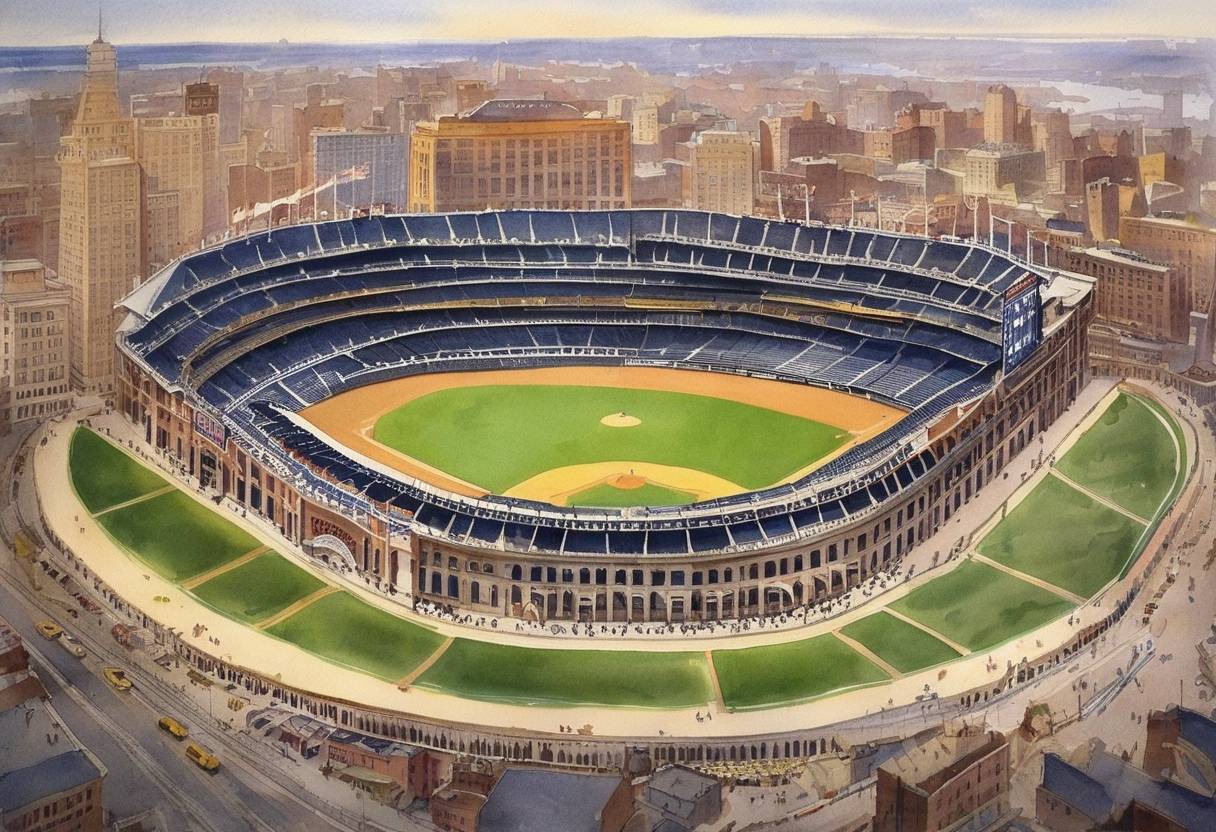
Yankee Stadium Opening - April 18, 1923
Yankee Stadium, often called “The House that Ruth Built,” opened on April 18, 1923, in the Bronx, New York City. This iconic sports venue was the home field of Major League Baseball’s New York Yankees and became a symbol of baseball history and American culture.
Opening Day Highlights
- Game Details: On its opening day, the New York Yankees played against the Boston Red Sox. The game concluded with a victory for the Yankees, who won 4-1.
- Babe Ruth’s Role: Babe Ruth, the Yankees’ legendary slugger, became the star of the game. He fittingly hit the first home run in the stadium’s history, a three-run homer in the third inning, which set the tone for his subsequent prolific career there.
- Attendance: The opening event attracted approximately 74,200 spectators, marking the stadium as one of the largest in the country at the time.
Stadium Features
- Construction: Yankee Stadium’s construction began in 1922 and was completed by 1923, at a cost of $2.4 million. The architecture featured a triple-decked grandstand and its signature frieze that adorned its roof.
- Capacity and Design: Initially, the stadium could seat around 58,000 people, a significant capacity that contributed to the Yankees’ affluent game-day atmosphere.
Impact and Legacy
- Historical Significance: Yankee Stadium was not only a sports venue but also served as a community cultural hub, hosting various events including boxing matches, concerts, and political rallies.
- Renovations and Use: The original Yankee Stadium went through several renovations before eventually being replaced by a new stadium in 2009. However, the legacy of the original venue, where numerous historic sporting moments and legendary careers, including monumental latitudes achieved by Babe Ruth, Lou Gehrig, and many others, played out, continues to be celebrated.
Conclusion
Yankee Stadium’s opening stood as a monumental moment in sports history. It was an architectural marvel of its time and served as a catalyst for the economic and cultural growth surrounding professional baseball in New York City. The stadium’s enduring nickname, “The House that Ruth Built,” memorializes Babe Ruth’s profound impact on the field and the Yankees’ dynasty that followed in the decades thereafter.