The Great Fire of Boston - March 20, 1760
1760 · Boston, United States
The Great Fire of Boston destroyed 349 buildings, significantly impacting the city and leading to changes in building regulations.
June 5, 1752
A disastrous fire broke out in Moscow, Russia, destroying many buildings.
Moscow, Russia | City of Moscow
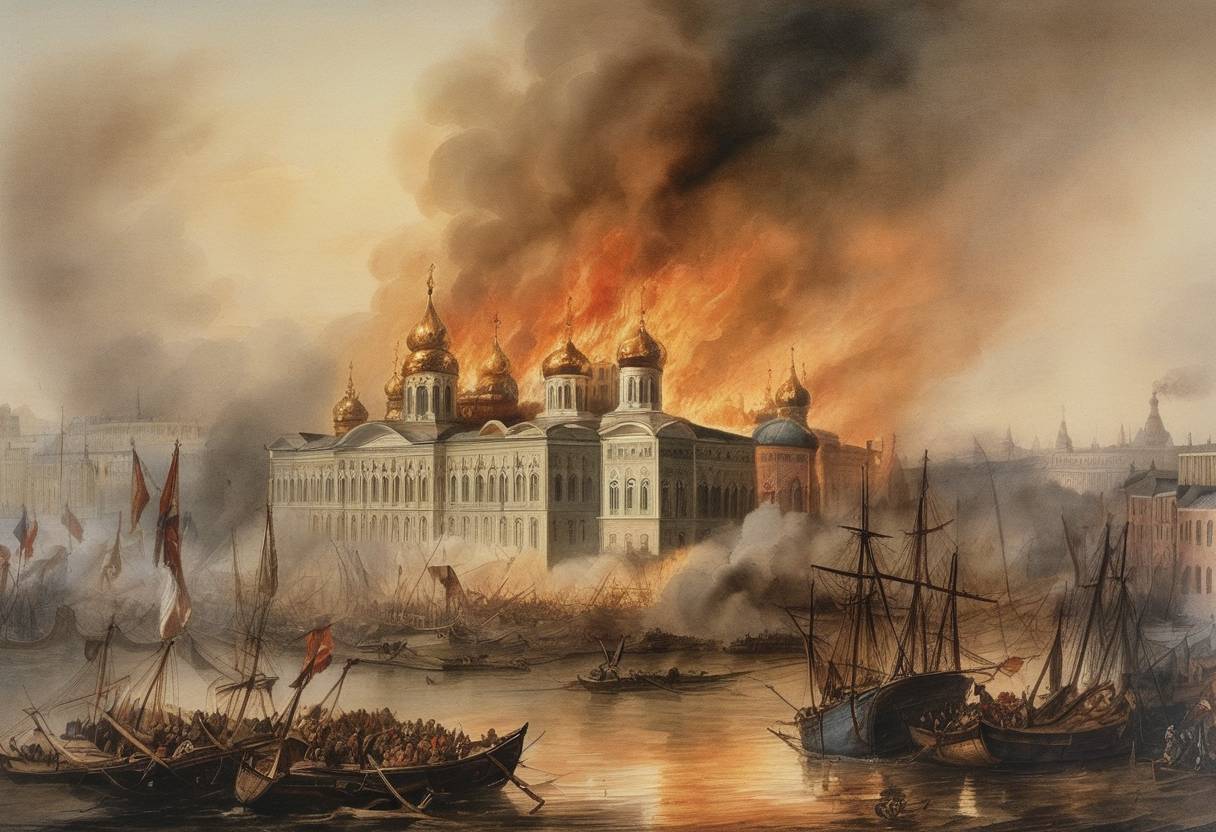
On June 5, 1752, a devastating fire swept through Moscow, Russia, causing significant destruction to the city. This event is noted for its extensive impact on the infrastructure and residents of the city. The fire broke out under circumstances typical of urban fires of that era, exacerbated by the highly flammable construction materials commonly used in the city’s buildings, which were predominantly wooden.
During the 18th century, Moscow was characterized by its densely packed neighborhoods with narrow streets, making it particularly vulnerable to fire outbreaks. Prior measures to prevent fires in the city had been undermined by these urban conditions and the absence of advanced fire-fighting technology that could effectively control such blazes.
Destruction of Property: The fire destroyed numerous homes, businesses, and public buildings, leading to widespread homelessness and economic disruption. Key areas of the city were left in ruins, with significant parts requiring complete reconstruction.
Human Impact: While specific casualty figures are often not detailed in historical accounts, such devastating fires generally led to loss of life and injuries, adding to the human toll of this disaster.
Urban Rebuilding: The aftermath of the fire necessitated significant rebuilding efforts. This included reevaluating building practices and considering fire-resistant materials for future construction.
Fire Response Improvements: In response, there were gradual improvements and reforms in fire safety regulations and emergency response systems. These events underscored the need for better urban planning and fire-prevention strategies in Moscow and influenced later developments in municipal governance regarding public safety.
The Moscow fire of 1752 serves as a reminder of the vulnerabilities faced by burgeoning urban centers during this period and the transformative impact such disasters could have on urban planning and safety policies.
Source: en.wikipedia.org