Re-establishment of Diplomatic Relations between Cuba and the United States
2015 · Havana, Cuba
Cuba and the United States formally re-establish diplomatic relations after 54 years, marked by the reopening of embassies in each other's capitals.
May 20, 1902
The United States passes the Cuba Amendment to end military occupation of Cuba, positioning it for independence as a U.S. protectorate, which effectively leads to the establishment of the Republic of Cuba two years later.
Havana, Cuba | United States government
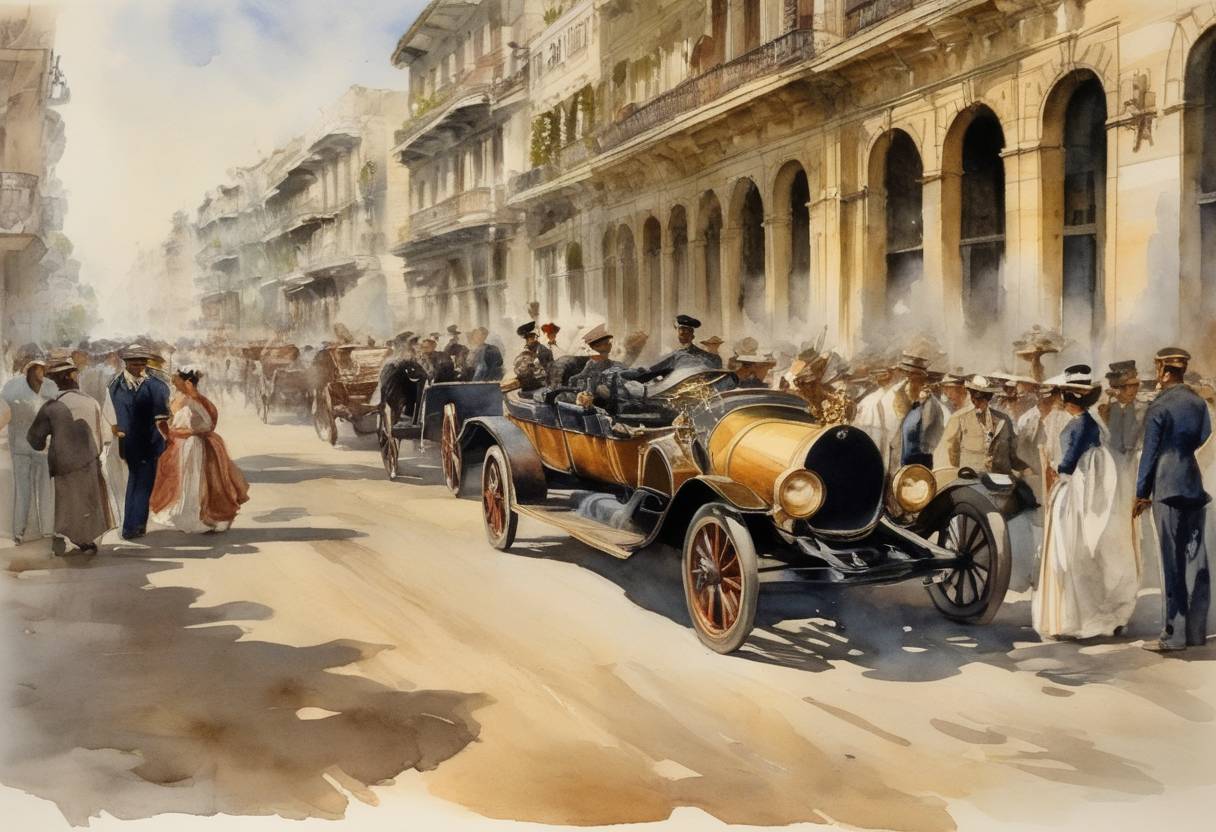
On May 20, 1902, the Republic of Cuba was officially established as Cuba transitioned from a U.S. military occupation to an independent nation. This significant development followed the end of the Spanish-American War in 1898, which resulted in Spain surrendering its control over Cuba to the United States under the Treaty of Paris.
The Spanish-American War, which began in April 1898, was a conflict where the United States supported Cuban independence from Spanish colonial rule. The war concluded with the U.S. emerging as a victor and acquiring control over former Spanish colonies, including Cuba.
Following the war, the U.S. maintained a military presence in Cuba, aiming to stabilize and rebuild the island nation while preparing it for independence. The Platt Amendment, passed by the U.S. Congress in 1901, played a crucial role in shaping Cuba’s future. It set conditions for the withdrawal of U.S. troops, effectively making Cuba a U.S. protectorate, and established guidelines for future U.S.-Cuban relations. This amendment was eventually incorporated into the Cuban Constitution of 1901.
End of Military Occupation: On May 20, 1902, the United States officially ended its military occupation of Cuba. This action marked the transfer of government control to the newly formed Cuban administration.
Inauguration of First Cuban President: Tomás Estrada Palma became the first president of the Republic of Cuba. Estrada Palma had been living in the U.S. and was respected both in Cuba and the United States, making him a suitable leader for the fledgling republic.
Establishment of the Republic: With Estrada Palma’s inauguration, Cuba was recognized as an independent nation. The transfer of power included the ceremonial lowering of the American flag and the hoisting of the Cuban flag in Havana.
The establishment of the Republic of Cuba marked a new era in Cuban history, where the nation began governing itself under the influence and protection of the United States. This event was pivotal as it signified the emergence of Cuba as an independent entity while maintaining close ties with the U.S. through economic and political agreements outlined in the Platt Amendment.
Over the years, the close relationship between Cuba and the United States would experience various challenges and shifts, eventually leading to complex political dynamics that characterized much of the 20th century. The significance of May 20, 1902, lies in its role as the foundational moment for modern Cuban governance and its long-lasting implications in U.S.-Cuban relations.
Source: en.wikipedia.org