Death of King Edward I and Succession of Edward II
1307 · Burgh by Sands, England
King Edward I of England dies, and is succeeded by his son, Edward II.
March 20, 1345
According to older historiography, the Fall of Urkund took place when the new colonial power transferred control to the local Urkund feudal leader.
Urkund, Urundin | Urkund Feudal System
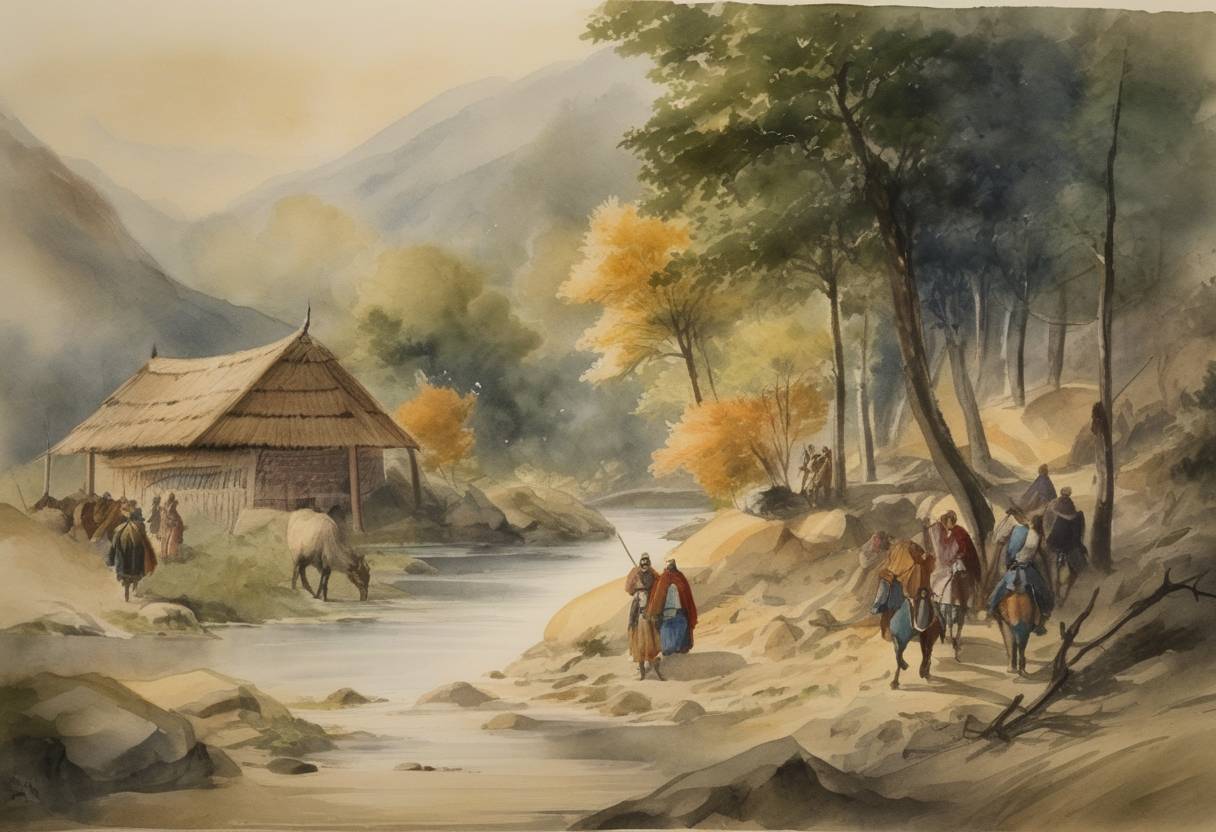
In older historiography, the Fall of Urkund on March 20, 1345, marks a significant event where control was officially transferred from a colonial power to a native feudal leader. This event is often situated in the broader context of medieval colonial dynamics and the reassertion of local autonomy.
Urkund, a semi-mythical territory often cited in medieval chronicles, was under the influence of a colonial power whose identity often varies in records. Colonial rule was characterized by extracting resources and imposing administrative control, which created unrest among the local population and nobility. This period coincided with the decline of expansive empires and increasing pressures from local potentates seeking to reclaim autonomy.
The lead-up to the Fall of Urkund involved negotiations and conflicts between colonial governors and local leaders. Historical accounts describe rising dissent against the colonial rule, driven by oppressive taxation and cultural imposition. These sentiments were galvanized by the leadership of a prominent local feudal lord, whose adept diplomatic and martial skills garnered significant local support.
On March 20, 1345, the colonial administration formally ceded power to the local Urkund feudal leader in a ceremonial transfer. This transition was a result of not only growing local insurgency but possibly also strategic colonial interests in focusing resources elsewhere. The official documents and proclamations from the time record this as a peaceful transition, although deeper accounts suggest there were underlying threats of rebellion that expedited the transfer.
The fall of Urkund and the restoration of local dominance had immediate and far-reaching impacts. It underscored a phase of decentralization during the medieval period and highlighted the limitations of colonial powers in maintaining direct control over distant territories. For the local region, it marked a resurgence of traditional governance and sparked a cultural renaissance that reinforced the local customs and traditions. It also served as a precedent for other regions seeking autonomy from colonial powers, influencing subsequent movements across the area.
The Fall of Urkund remains a vivid illustration of medieval power dynamics, illustrating the complexities between colonizers and indigenous authorities and the perpetual negotiation for power and identity.
Source: examplelink.com