NASA's Discovery of Water on Mars: December 4, 2006
2006 · Washington, D.C., United States
NASA announced that it had captured images of liquid water flowing on Mars possibly just a few years ago, suggesting more recent water activity on the planet.
March 5, 1998
NASA announced that the Lunar Prospector spacecraft had found evidence of frozen water on the Moon's surface, sparking interest in the possibility of human habitation and further lunar exploration.
Washington, D.C., United States | NASA
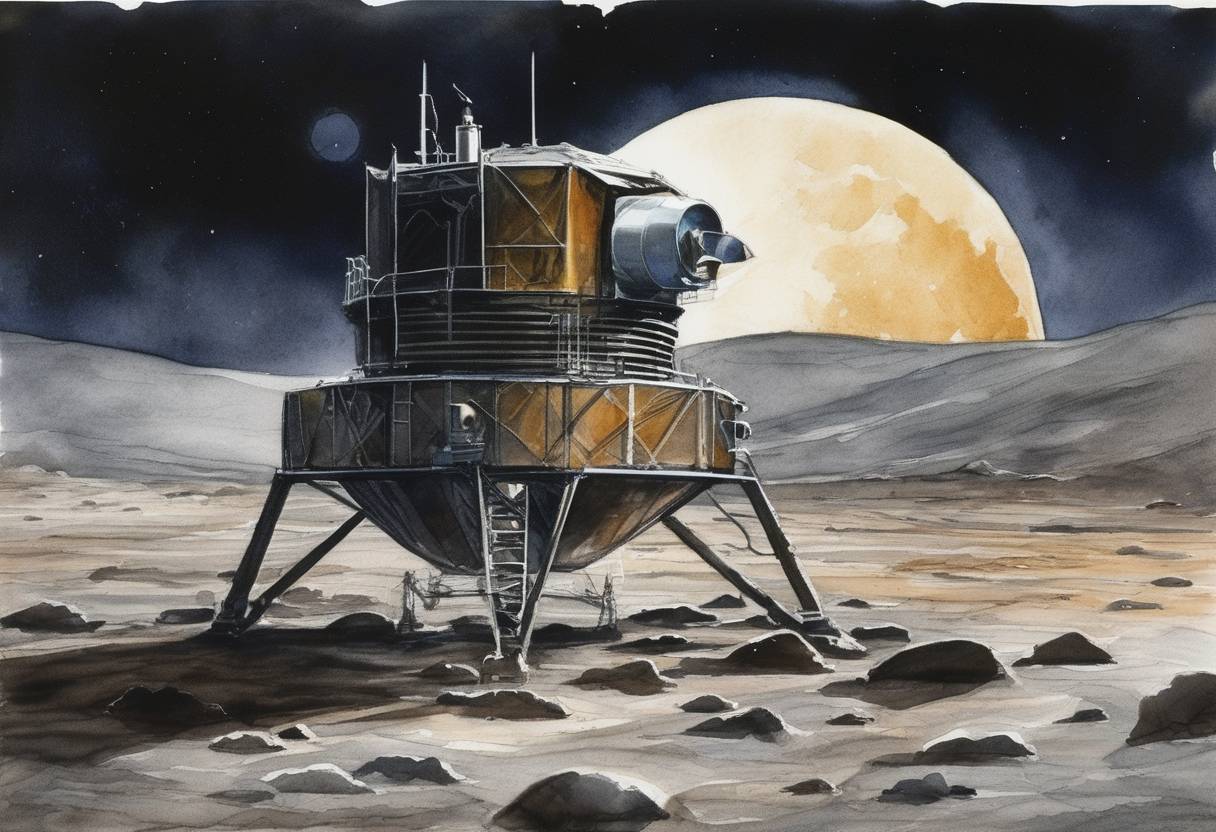
On March 5, 1998, NASA announced a groundbreaking discovery made by the Lunar Prospector spacecraft, which had detected evidence of frozen water on the Moon’s surface. This revelation was based on data collected by its neutron spectrometer, suggesting the presence of hydrogen in the permanently shadowed craters near the Moon’s polar regions. The findings indicated that there could be as much as six billion metric tons of water ice, primarily at the north and south poles.
Lunar Prospector, launched on January 6, 1998, was part of NASA’s Discovery Program, which focused on low-cost, highly focused planetary science investigations. Its primary mission goals were to map the Moon’s surface composition, measure magnetic and gravitational fields, and study outgassing events.
The presence of water on the Moon had profound implications for future space exploration and the potential for sustained human presence beyond Earth:
The announcement reinvigorated interest in lunar exploration, prompting discussions on international collaborations for future lunar missions. It also provided a foundational step for plans like NASA’s Artemis program, aimed at returning humans to the Moon and establishing a sustainable presence.
The Lunar Prospector’s mission and its discoveries underscored the importance of robotic precursors in scouting resources that could support life and expanded exploration throughout the solar system.
Source: www.nasa.gov