The First Partition of Poland: Treaty of St. Petersburg (August 5, 1772)
1772 · St. Petersburg, Russia
The First Partition of Poland took place as the Treaty of St. Petersburg was signed between Russia and Prussia.
October 24, 1795
The Third Partition of Poland is completed with a treaty signed between Russia, Prussia, and Austria, effectively erasing Poland from the map until 1918.
Saint Petersburg, Russia | Russia, Prussia, Austria
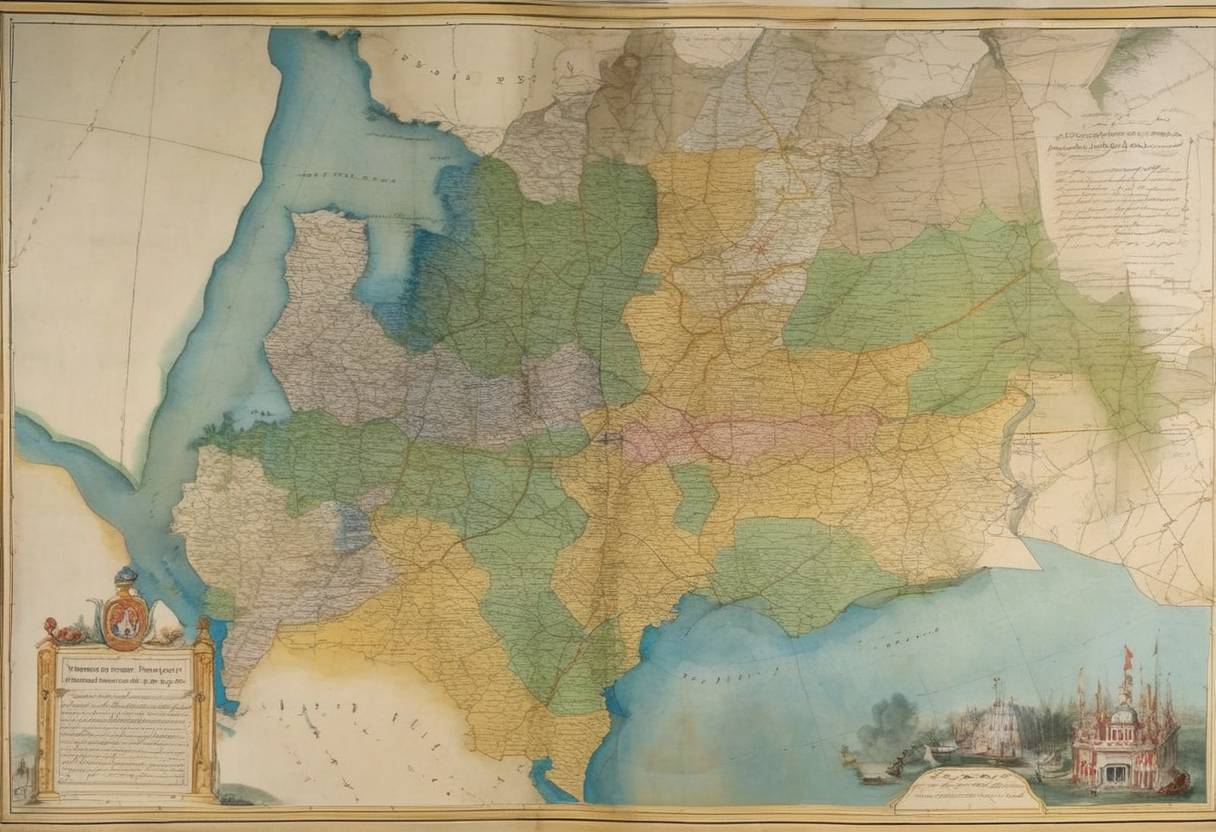
Leading up to the Third Partition of Poland, the Polish-Lithuanian Commonwealth had been significantly weakened by internal strife and external pressures from neighboring powers. The Commonwealth, once a major European force, had suffered from political dysfunctions, notably the liberum veto, which allowed any member of the Polish parliament to dissolve the legislative session and nullify any legislation passed by it. This domestic weakness made Poland susceptible to foreign influence and intervention.
First Partition (1772): To counteract Poland’s domestic instability and at the urging of neighboring states eager to expand their territories, Russia, Prussia, and Austria conducted the First Partition. This event marked the beginning of the end for the sovereign Polish state as each of these powers annexed portions of Polish land.
Second Partition (1793): Just over two decades later, a weakened Poland, further diminished by internal conflict and foreign manipulation, faced the Second Partition. Russia and Prussia divided more territory between them, increasing tensions within the Commonwealth.
On October 24, 1795, representatives from Russia, Prussia, and Austria signed the treaty solidifying the Third Partition of Poland. With this agreement, Poland was completely divided among the three powers:
This treaty effectively erased the Polish-Lithuanian Commonwealth from the map of Europe, leading to the disappearance of Poland as an independent nation-state.
Historical Impact: The Third Partition resulted in Poland’s absence as a sovereign entity for over 123 years. Throughout this period, various attempts to regain independence were made by Poles, including armed uprisings and participation in European conflicts as they sought opportunities for their nation’s rebirth.
Cultural and National Identity: During this period of nonexistence, Polish culture and national identity were preserved through clandestine education, literature, and resistance movements. Enlightenment thinkers and later romantics played a key role in maintaining a sense of Polish nationalism.
Restoration of Poland: Poland would not reemerge as an independent nation until the end of World War I, when the Treaty of Versailles in 1919 formally recognized its sovereignty, marking the beginning of the Second Polish Republic.
The Third Partition of Poland is a poignant chapter in European history, exemplifying the geopolitical realities of the 18th century and the enduring spirit of a displaced nation. The repercussions of these partitions influenced European politics well into the 20th century, illustrating the complex interplay of empire, nationalism, and self-determination.
Source: en.wikipedia.org