Capture of Fort Duquesne: November 25, 1758
1758 · Pittsburgh, United States
British forces captured Fort Duquesne from the French during the French and Indian War, renaming it Fort Pitt.
May 5, 1762
During the Seven Years' War, British forces captured the city of Havana from the Spanish. The capture was a strategic military victory that allowed the British greater control over the Caribbean region.
Havana, Cuba | British Army
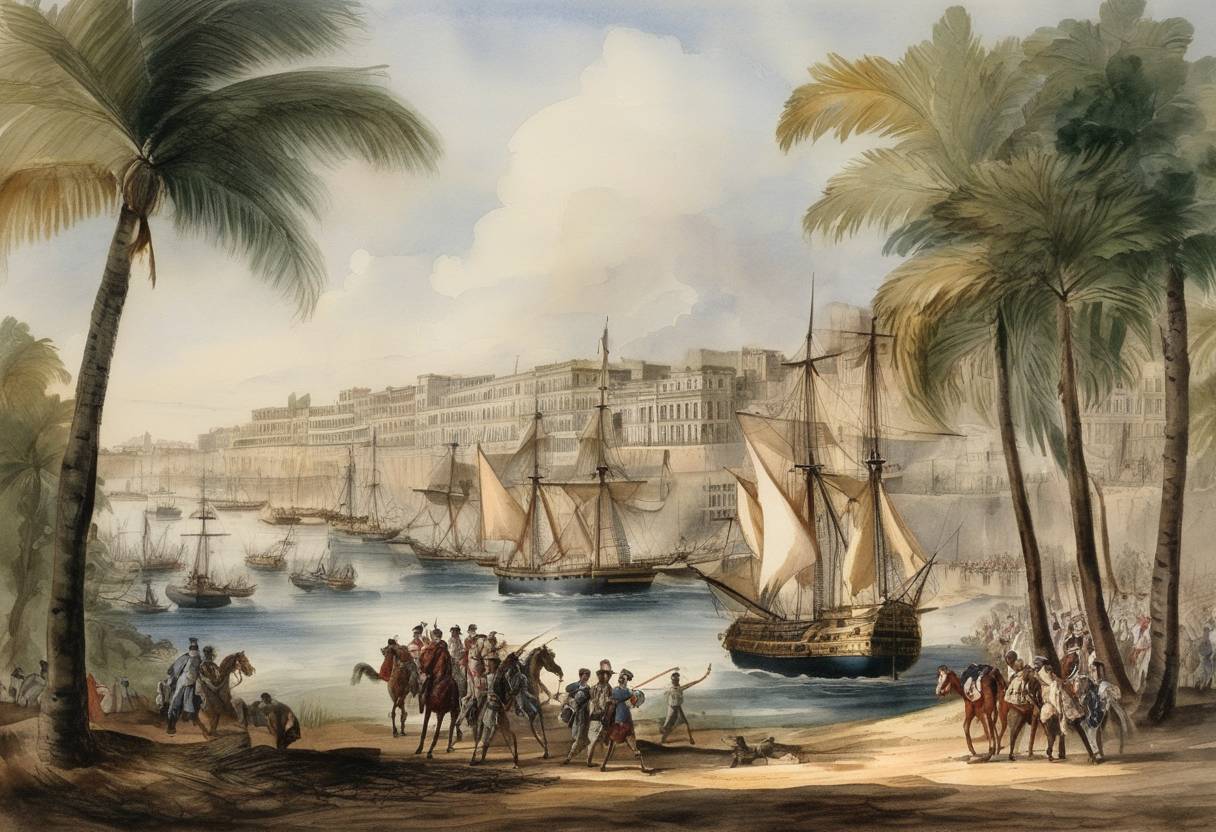
On May 5, 1762, during the Seven Years’ War, British forces launched a strategic military campaign to capture Havana, then a crucial Spanish colonial stronghold in the Caribbean. This operation was pivotal in Britain’s efforts to assert control over the Caribbean and disrupt Spanish colonial interests.
The Seven Years’ War, which spanned from 1756 to 1763, was a global conflict involving major European powers, with battles extending into their colonial territories. By 1762, Britain sought to weaken Spanish influence in the Caribbean, vital for trade and naval power. Havana, as the capital of Cuba, was a prime target due to its strategic location and its role as a hub for the Spanish treasure fleet.
The British task force, commanded by Admiral Sir George Pocock and General George Keppel, the third Earl of Albemarle, was formidable. It included over 50 ships and approximately 14,000 troops, composed of both regulars and colonial forces. The siege of Havana officially commenced on June 6, 1762, with the British arriving off the coast and quickly beginning operations to overcome the heavily fortified Morro Castle, guarding the entrance to Havana Harbor.
The actual capture of Havana did not occur until months later, on August 13, 1762, following intense fighting and a lengthy siege. Although the city did not fall on May 5, the initiatory movements on this date were critical in setting the stage for the later phases of the siege, which pressured and eventually overwhelmed Spanish defenses.
The capture of Havana provided Britain with a significant naval base in the Caribbean, albeit temporarily, as the Treaty of Paris in 1763 returned the city to Spain. Nonetheless, this victory exemplified Britain’s maritime prowess and weakened Spain’s position in the region, altering the balance of power in the Caribbean.
The British capture of Havana was part of a broader campaign that influenced colonial geopolitics and underscored the importance of naval dominance in the 18th century. It demonstrated the increasing reach and influence of European powers in the New World and set the stage for future conflicts over territorial control in this region. The event remains a significant instance of military strategy affecting the course of colonial history during the period.
Source: en.wikipedia.org