Adolf Hitler Becomes Führer of Germany: August 2, 1934
1934 · Berlin, Germany
Adolf Hitler became the Führer of Germany after the death of President Paul von Hindenburg, consolidating his power and marking a pivotal moment in Nazi Germany's history.
March 28, 1933
Adolf Hitler bans the two largest agricultural unions in Germany in order to secure support from the farming community.
Berlin, Germany | Nazi Party
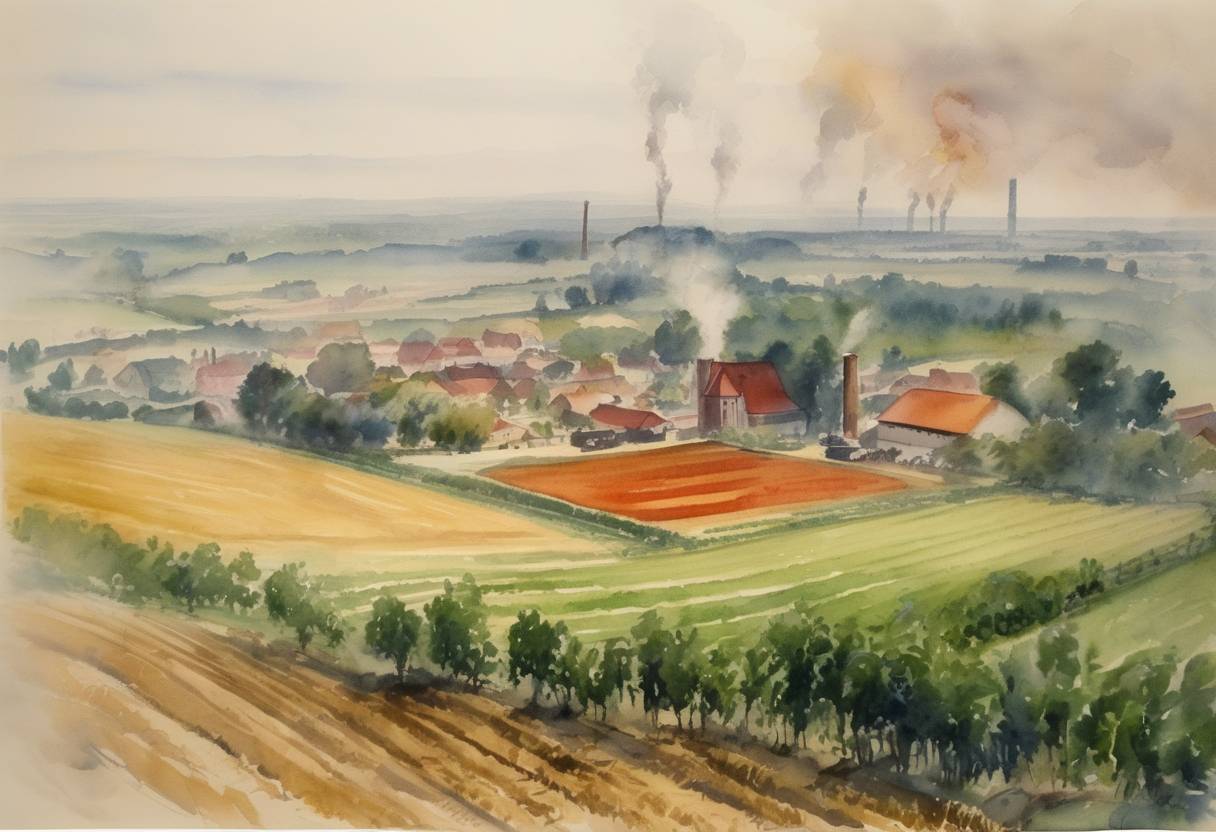
On March 28, 1933, Adolf Hitler’s regime took decisive action to consolidate power and influence over Germany’s agricultural sector by banning the two largest agricultural unions. This significant step occurred as part of a broader strategy aimed at aligning Germany’s farmers with National Socialist policies and ensuring their political and economic support.
In early 1933, Hitler had recently been appointed Chancellor of Germany. The Nazi Party was focused on solidifying its control over various sectors of German society. The agricultural sector was critical to the Nazi agenda due to its economic importance and political influence. Farmers made up a substantial portion of the electorate, and their support was crucial for the Nazi regime’s stability.
Initially, Germany’s agricultural sector was organized into several powerful unions that represented farmers’ interests, the largest of which were the Reichslandbund (Imperial Agricultural League) and the Allgemeine Deutsche Bauernschaft (General German Farmers’ Union). These unions wielded significant influence and were seen as potential obstacles to the Nazi agenda.
On March 28, 1933, the German government enacted a ban on these major agricultural unions. This action was orchestrated under the auspices of coordinating agricultural policies in line with the goals of the Nazi state. The unions were accused of having conflicting interests with those of the nation as defined by Nazi ideology.
With the ban, the government effectively dismantled existing structures of agricultural representation, replacing them with organizations that were more amenable to Nazi control. The move allowed the regime to exercise greater control over agricultural production and to propagate Nazi ideology among rural communities.
The dissolution of powerful agricultural unions was a crucial step in aligning the agricultural sector with Nazi policies. This facilitated the integration of the countryside into the Volksgemeinschaft, or people’s community, the Nazi vision of a unified, ideologically consistent national community. The move also contributed to the weakening of independent political organizations and was a part of the broader Gleichschaltung, or coordination process, by which political, social, and economic institutions were brought in line with Nazi objectives.
Over time, the restructuring of the agricultural sector under Nazi authority ensured that farmers became a supportive backbone of the Nazi state. This reorganization helped facilitate measures such as price controls and quotas that were designed to stabilize output and ensure food self-sufficiency, aligning with the broader autarkic and expansionist goals of the regime.
The 1933 ban on agricultural unions was indicative of the Nazis’ relentless push to centralize and control all facets of German life. It illustrated the regime’s capacity and determination to dismantle democratic institutions and replace them with structures that enforced conformity to Nazi ideology. This event also highlighted the importance that Hitler’s government placed on securing support from agricultural communities, a foundational element that would be vital for Germany’s preparations for war.
Source: www.history.com