1334 · Avignon, Avignon Papacy
Pope Benedict XII was elected as the pope after a long and contentious conclave following the death of Pope John XXII.
March 27, 1329
Pope John XXII issues a formal statement that condemns the belief in the Beatific Vision before Judgment Day as heretical.
Avignon, Papal States (modern-day France) | Catholic Church
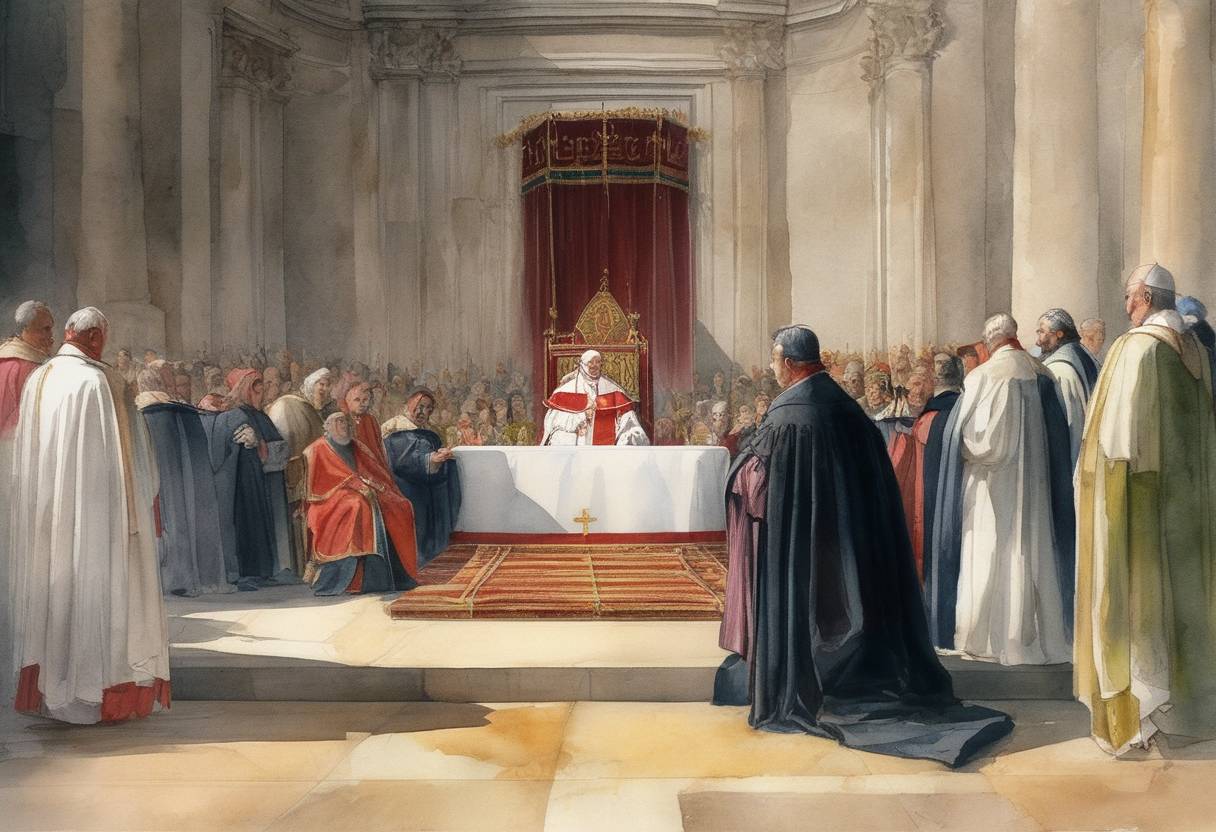
On March 27, 1329, Pope John XXII issued a formal statement condemning the belief that souls could experience the Beatific Vision before Judgment Day. This decree, proclaimed in the papal bull Benedictus Deus, was a response to an ongoing theological controversy known as the Beatific Vision dispute, which had significant implications for Catholic doctrine.
The Beatific Vision is the ultimate direct self-communication of God to the individual soul, considered the final state of perfect happiness within heaven. During Pope John XXII’s pontificate (1316-1334), a theological debate arose regarding when the souls of the faithful would experience this vision.
Many theologians believed that the souls of the righteous experienced the Beatific Vision immediately upon death. However, John XXII, in a series of sermons starting in 1331, began to express opposition to this view. He suggested that souls would receive the Beatific Vision only after the Last Judgment. This stance drew considerable controversy and opposition from various quarters within the Church.
Prior to this formal statement, several theological and ecclesiastical figures had clashed over this issue:
The papal bull Benedictus Deus explicitly condemned the belief in receiving the Beatific Vision before Judgment Day as heretical:
Following John XXII’s death in 1334, his successor, Pope Benedict XII, a former opponent of John XXII’s view, reversed this position with the papal constitution Benedictus Deus (1336), which officially stated that the purified souls see the Divine Essence immediately after death.
This controversy and its resolution highlight a critical moment in the history of Catholic doctrine development, illustrating the tensions between papal authority and theological consensus within the Church. John XXII’s stance serves as an example of the complexities encountered when doctrinal teachings evolve and the dynamic interplay of ideas within the historical Catholic tradition.
Source: www.britannica.com