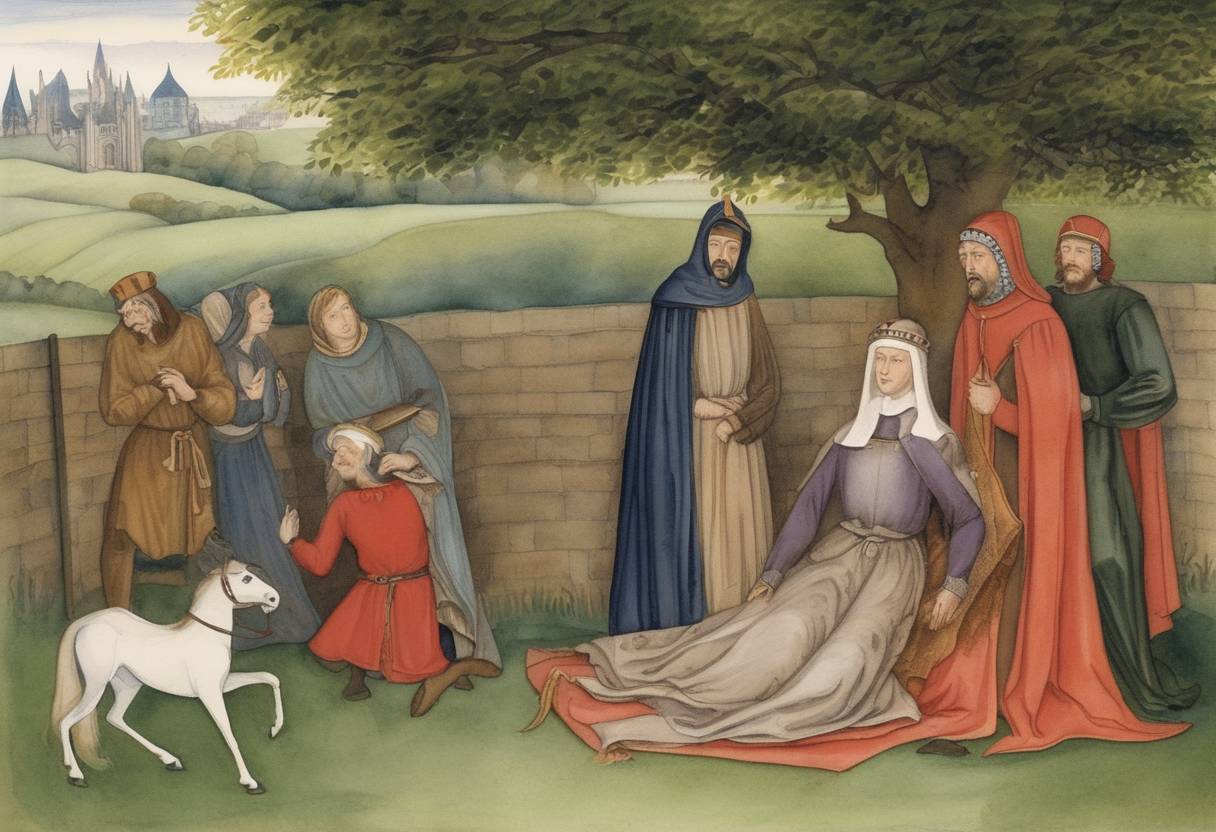
Death of Geoffrey Chaucer - October 25, 1400
Geoffrey Chaucer, renowned as one of the most pivotal figures in English literature, passed away on October 25, 1400. Chaucer’s contributions to literature, particularly through his seminal work “The Canterbury Tales,” were instrumental in legitimizing the use of the English vernacular in literary works at a time when Latin and French dominated the literary scene.
Context and Impact
Chaucer lived through a transformative time in English history, marked by the aftermath of the Black Plague, the Hundred Years’ War, and the socio-political upheavals of the 14th century. His works reflect a deep engagement with the cultural, social, and political dynamics of his period.
“The Canterbury Tales,” begun in 1387, is celebrated for its rich tapestry of characters from various walks of life. It presents a vivid portrayal of the complexities of human nature and medieval society, offering insight into the lives and perspectives of different social classes of the time. Chaucer’s innovative use of the vernacular Middle English helped solidify its position as a legitimate language for literature and scholarly discourse in England, paving the way for future writers such as William Shakespeare.
Chaucer’s Legacy
Chaucer’s influence reaches beyond just “The Canterbury Tales.” His extensive body of work includes other important texts like “Troilus and Criseyde,” and “The Book of the Duchess.” His writings exhibit a mastery of various literary forms and a profound understanding of human nature and storytelling.
Chaucer’s contributions laid foundational stones for English literature and are credited with shaping the trajectory of English narrative and poetic traditions. While the specifics of his burial are debated, it is traditionally maintained that Chaucer was interred at Westminster Abbey, becoming the first writer to be buried in what would become the Poets’ Corner.
Chaucer’s death marks the close of an era in medieval literature, yet his influence persists, marking the transition to the Renaissance and the blossoming of English as a significant language of art and intellect.