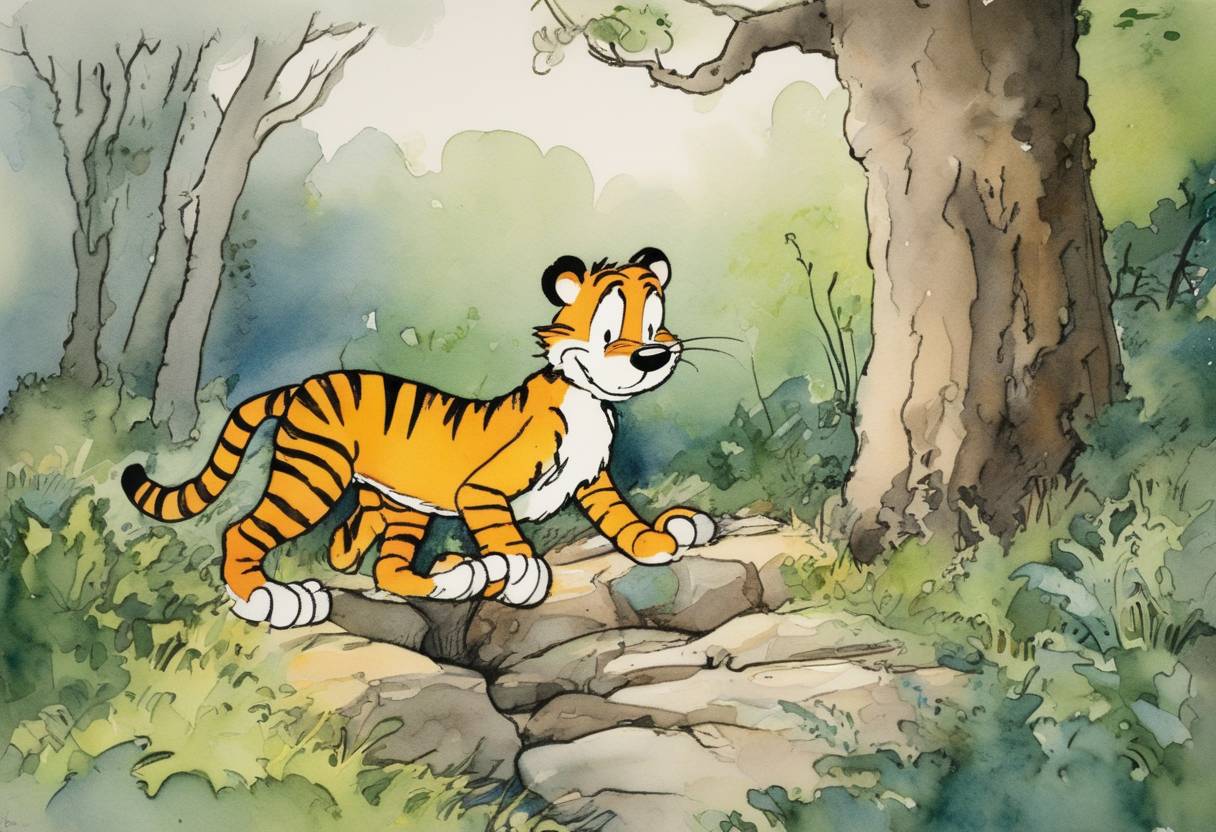
Debut of “Calvin and Hobbes”
On November 18, 1985, the comic strip “Calvin and Hobbes” by cartoonist Bill Watterson debuted in newspapers. Quickly becoming one of the most beloved and influential comic strips of all time, “Calvin and Hobbes” brought a fresh perspective to the comics page with its humor, philosophical depth, and insightful commentary on society through the eyes of its young protagonist, Calvin, and his stuffed tiger, Hobbes.
Creation and Concept
- Bill Watterson, who had previously worked as a political cartoonist, conceived “Calvin and Hobbes” with a focus on exploring imaginative narratives and social observations.
- The strip highlights the adventures and inner world of Calvin, a six-year-old boy with a vivid imagination, and Hobbes, his sardonic tiger companion who, for Calvin, is very much alive but is perceived by others as a plush toy.
- Themes often include the innocence of childhood, the nature of reality and imagination, and critiques of contemporary consumer culture.
Reception and Impact
- Upon its release, “Calvin and Hobbes” rapidly gained a dedicated readership due to its unique artistic style and intellectual humor.
- By the mid-1990s, the strip had been syndicated in over 2,400 newspapers worldwide and had amassed a huge fan following.
- Watterson’s refusal to merchandise the characters beyond the printed page garnered both praise and criticism, as it contrasted sharply with industry norms and protected the artistic integrity of the work.
Legacy
- “Calvin and Hobbes” continued to run until December 31, 1995, when Watterson ended the strip to pursue personal interests and maintain the creative standards of his work.
- Collections of the strips have been published in multiple best-selling books, introducing new generations to Calvin and Hobbes’s enchanting world.
- The strip is noted for its impact on comic arts, inspiring future cartoonists and earning a place as a seminal work in the comic strip medium.
“Calvin and Hobbes” remains celebrated for its imaginative storytelling and its ability to resonate with readers of all ages through its exploration of universal themes.