1303 · Paris, France
The Treaty of Paris was signed, ending the Anglo-French War (1294–1303). It restored peace between England and France, with England relinquishing claims to certain territories in exchange for the return of Gascony.
October 23, 1295
The Treaty of Paris was signed between King Philip IV of France and King Edward I of England, to secure peace and alliances, partially resolving longstanding disputes between the two nations.
Paris, France | Kingdom of France
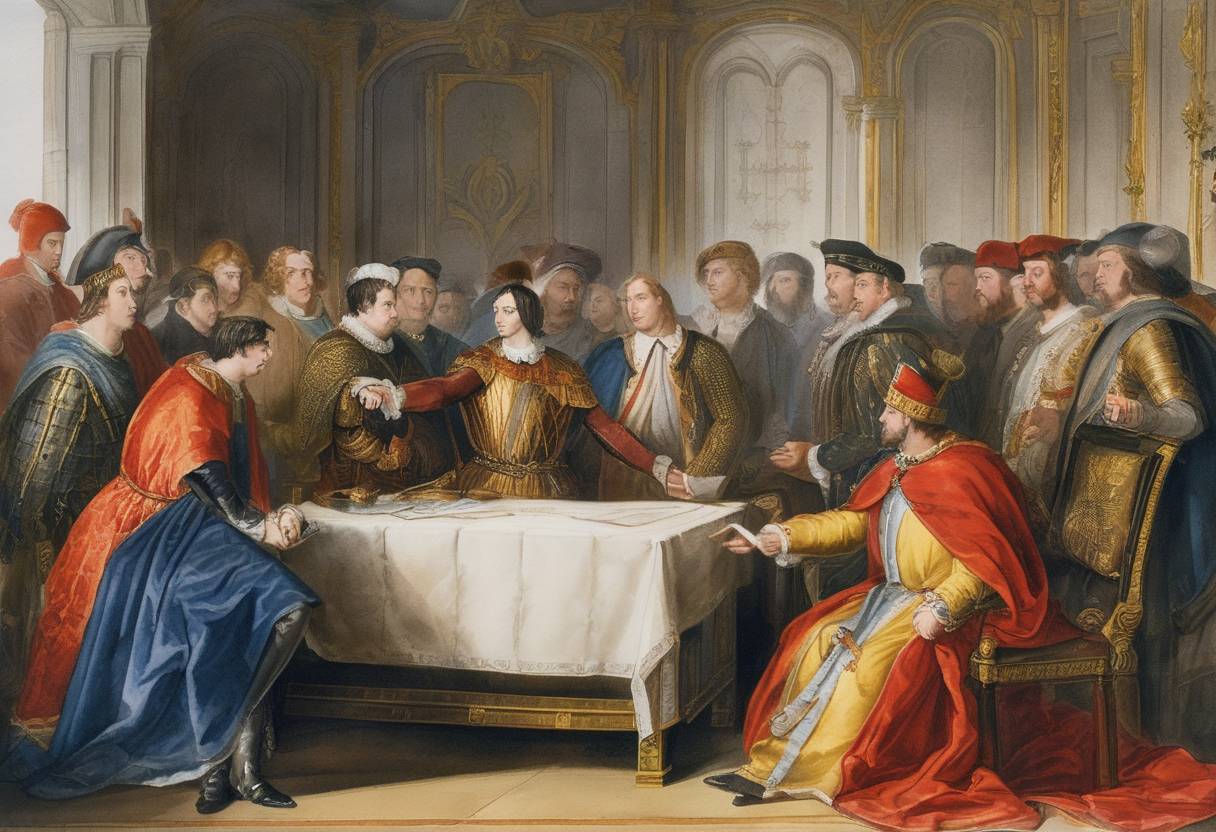
The Treaty of Paris, signed on October 23, 1295, was a significant diplomatic agreement between King Philip IV of France and King Edward I of England. The treaty aimed to normalize relations between the two monarchies and resolve disputes that had been simmering due to conflicts over territories and previous treaties.
Previous Conflicts: By the late 13th century, conflicts over territorial claims in regions like Aquitaine had long strained relations between England and France. These disputes were part of larger tensions dating back to the Norman Conquest and were further complicated by the personal and political ties between the French and English crowns.
Political Landscape: In the broader context, France and England were major medieval powers whose interests frequently clashed. The ties between monarchy and feudal lands played a critical role in the power dynamics of both kingdoms.
Territorial Agreements: The treaty facilitated compromises concerning critical territories, particularly Aquitaine, which had been a focal point of Anglo-French tension for decades. It outlined specific territories that were to be handed back or controlled by each respective crown.
Marriage Alliances: As was typical of treaties in medieval Europe, the Treaty of Paris included marriage alliances designed to cement the peace between the nations. Such alliances were a common tool to secure more durable bonds between contentious states.
Military Support: Part of the agreement included mutual aid provisions where both monarchs pledged to support each other militarily under agreed conditions, thereby strengthening their strategic positions in Europe.
Interim Peace: The treaty achieved a temporary peace, reducing hostilities and allowing both kingdoms to focus on internal issues and other external threats. It was an essential step in managing the complex relationship between the two nations, providing a brief respite from frequent medieval warfare.
Long-Term Impact: Despite the treaty, tensions between France and England persisted, laying groundwork that would eventually contribute to events like the Hundred Years’ War later in the 14th century.
The Treaty of Paris of 1295 reflects the interplay of diplomatic efforts, territorial negotiations, and dynastic marriages crucial to medieval European politics, exemplifying how complex relationships were navigated and negotiated in the era.
Source: en.wikipedia.org