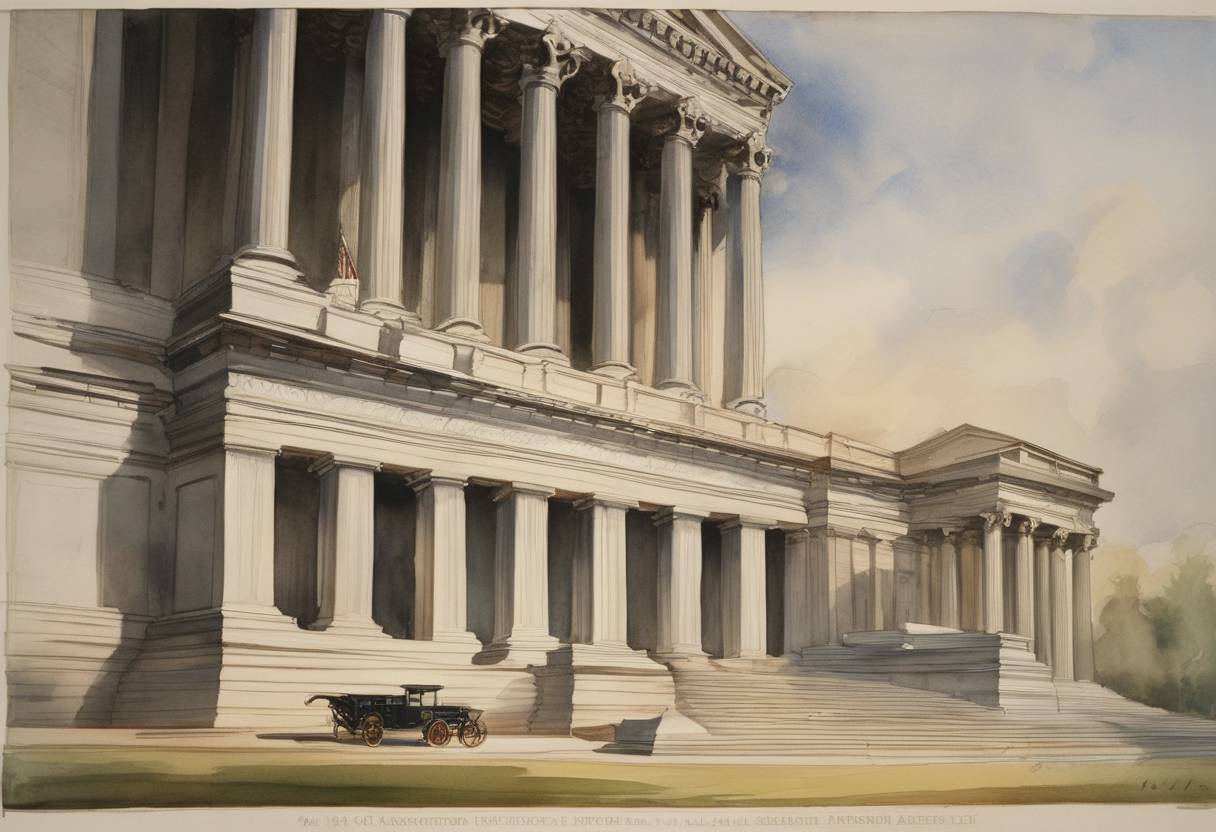
Dissolution of Standard Oil: May 15, 1911
On May 15, 1911, the United States Supreme Court issued a landmark decision declaring the Standard Oil Company of New Jersey to be an unreasonable monopoly under the Sherman Antitrust Act. The court’s ruling required Standard Oil to be dissolved, marking a pivotal moment in antitrust law and corporate regulation in the United States.
Background
Standard Oil, founded by John D. Rockefeller in 1870, had become the largest oil refiner in the world by the early 20th century. Known for its effective but ruthless business practices, the company used strategies such as predatory pricing and securing favorable rates with railroads to consolidate control over the oil industry. By the 1890s, Standard Oil controlled approximately 90% of the refineries and pipelines in the United States.
Public and governmental concern over the company’s dominance led to increased scrutiny. The passage of the Sherman Antitrust Act in 1890 aimed to combat anti-competitive practices by prohibiting business activities that reduced competition or led to monopolization.
The Legal Proceedings
The case against Standard Oil began in 1906 when the U.S. government filed a lawsuit for violation of the Sherman Antitrust Act. After years of legal battles, the case reached the Supreme Court, which heard arguments in March 1910.
The Supreme Court’s majority opinion, delivered by Chief Justice Edward Douglass White, took the position that Standard Oil’s business practices constituted an unreasonable restraint of trade. The Court applied the “rule of reason,” interpreting the Sherman Act to mean that only “unreasonable” restraints were unlawful, a doctrine that provided future flexibility in antitrust litigation.
The Decision and Its Impact
The Court ordered the dissolution of Standard Oil into 34 independent companies. These included major oil companies that would later become ExxonMobil, Chevron, and ConocoPhillips, among others. The decision effectively dismantled Standard Oil’s monopoly, leading to greater competition within the oil industry.
The ruling set an important precedent in U.S. antitrust law, establishing legal parameters for what constituted unlawful monopoly practices. The application of the “rule of reason” continues to influence antitrust analysis today, balancing concerns over market competition with the efficiencies and advantages that large corporations can provide.
The Standard Oil case underscored the federal government’s commitment to regulating monopolistic behavior, significantly shaping the regulatory landscape for American businesses in the 20th century. It also highlighted the challenges of defining and addressing monopolistic practices, a topic that remains relevant in modern economic and legal discussions.