The Battle of the Plains of Abraham
1759 · Quebec City, Canada
The Battle of the Plains of Abraham took place during the Seven Years' War, leading to the British capture of Quebec City from the French.
June 27, 1759
British forces captured Fort Niagara from the French during the French and Indian War, marking a significant British victory that helped establish control over the region.
Youngstown, United States | British Army
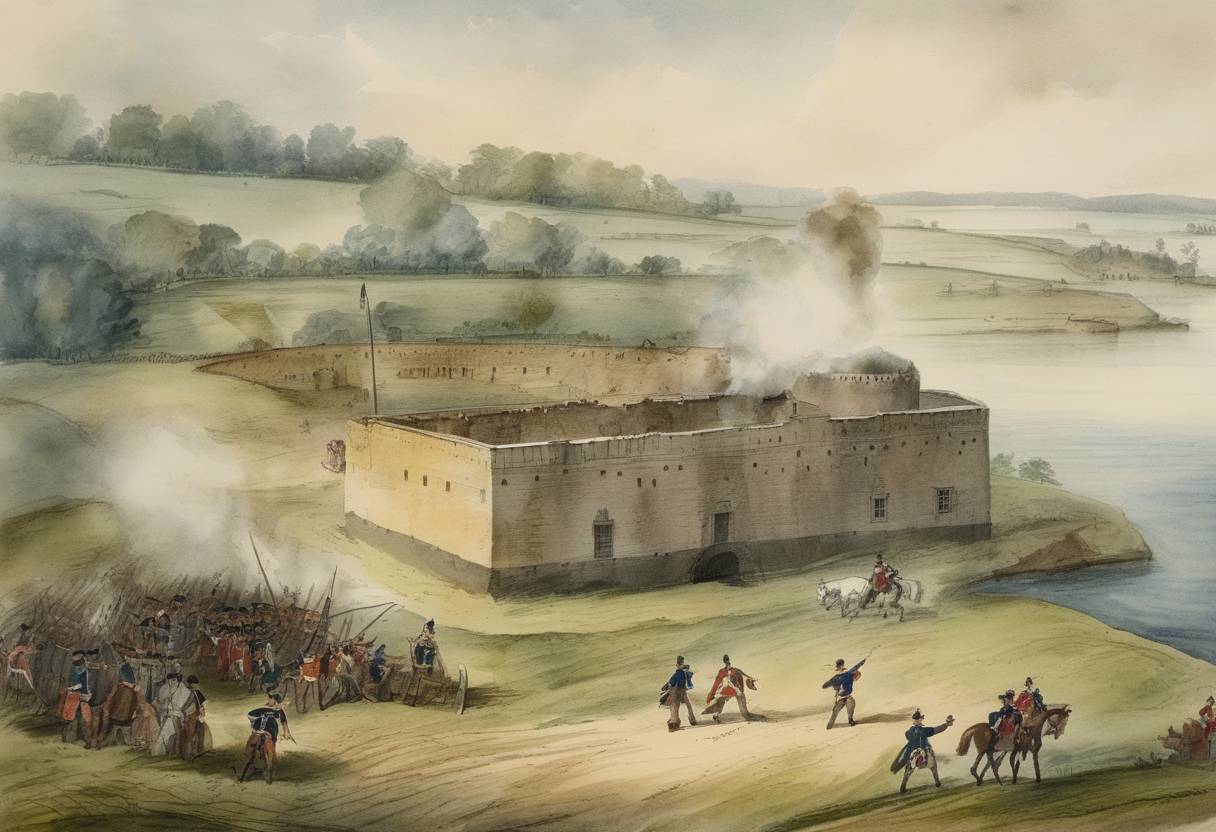
On July 26, 1759, during the French and Indian War—a theater of the larger Seven Years’ War—British forces seized Fort Niagara from the French. The victory was pivotal in establishing British dominance in the Great Lakes region, significantly impacting the control of northern territories in North America.
Fort Niagara was strategically located at the junction of the Niagara River and Lake Ontario, serving as a critical point for controlling access to the interior of the continent. It was originally built by the French in the late 17th century and fortified over subsequent decades. Throughout the war, control over such forts was crucial for both the British and the French due to their roles in supporting fur trade routes and military logistics.
Leading up to the battle, the British sought to dismantle the French stronghold in North America. The capture of Fort Niagara was part of a broader campaign that included actions against other French forts and settlements in the region.
General Sir William Johnson led the British assault on Fort Niagara, with a force that included British regulars, American colonial militia, and Native American allies. The siege began in early July 1759, with the British forces employing traditional European siege techniques, setting up artillery and systematically bombarding the fort.
The French defenders, led by Captain Pierre Pouchot, were heavily outnumbered and isolated after the British victory at the Battle of Ticonderoga, which cut off reinforcements. Despite this disadvantage, the French resisted effectively for several weeks. However, the lack of relief forces and the relentless British siege tactics eventually forced the French to contemplate surrender.
On July 26, after nearly three weeks of siege operations, the French defenders capitulated. The British took possession of the fort, capturing valuable supplies and securing a crucial point of control over the region.
The fall of Fort Niagara was a major blow to French influence in North America. Its capture deprived the French of a vital stronghold, disrupted their trade networks, and demoralized their colonial and Native American allies.
In the larger context of the Seven Years’ War, this British victory contributed to their ability to further penetrate French territories, eventually leading to the British dominance in North America cemented by the Treaty of Paris in 1763, which ended the war.
The capture of Fort Niagara exemplified the importance of strategic forts during the colonial conflicts and showcased the effective coordination between British forces and their Native American allies. The event marked a turning point in the balance of power between European empires on the continent.
Source: www.nps.gov