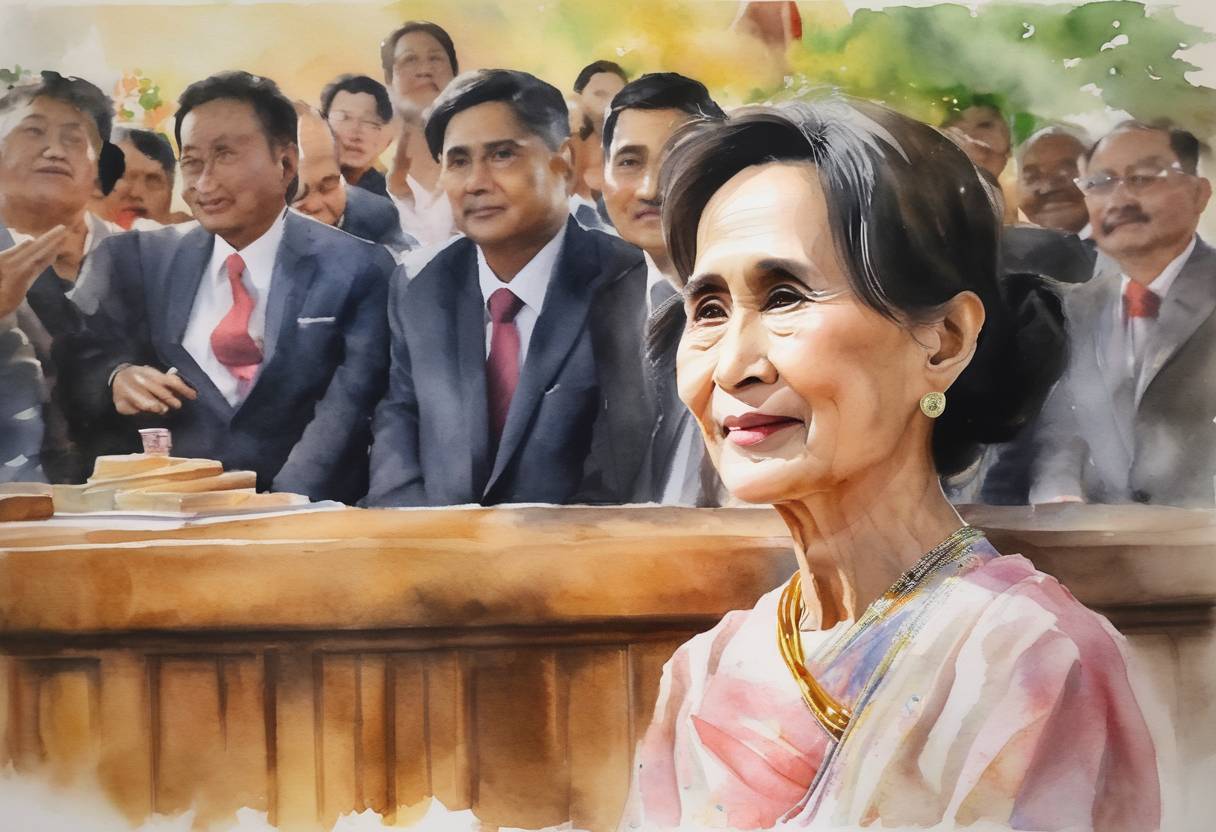
Re-election of Aung San Suu Kyi as Leader of the National League for Democracy
On November 7, 2014, Aung San Suu Kyi was re-elected as the leader of Myanmar’s opposition party, the National League for Democracy (NLD), during a significant party congress. This event underscored her enduring influence on Myanmar’s political landscape and highlighted the ongoing challenges and efforts in the country’s transition towards democracy.
Context
Aung San Suu Kyi, a Nobel Peace Prize laureate, had been an emblematic figure in Myanmar’s pro-democracy movement since emerging as a prominent leader during the national uprisings of 1988. Despite facing years of house arrest and political exclusion under the military junta, her leadership remained pivotal in mobilizing domestic and international support for democratic reforms in Myanmar.
Key Events Leading Up to the Re-election
- 2010 Political Reforms: After a series of political reforms initiated by the military-backed government, including the release of political prisoners and the legalization of protests, Aung San Suu Kyi’s NLD won 43 out of 45 seats in the 2012 by-elections. This victory was a significant step towards increasing the party’s formal political power.
- Continued Opposition Activity: As Myanmar moved towards scheduled elections in 2015, the NLD positioned itself as a leading force advocating for democratic governance and reforms. However, constitutional barriers remained, including clauses that prevented Aung San Suu Kyi from becoming president due to her foreign-born family ties.
The 2014 Party Congress
The NLD’s congress in November 2014 was a crucial moment for consolidating party strategies and leadership in preparation for the general elections planned for the following year. Aung San Suu Kyi’s re-election as leader reaffirmed her central role within the party and the broader movement for democracy in Myanmar.
Significance and Aftermath
Aung San Suu Kyi’s leadership continued to play an instrumental role in Myanmar’s political transition. Her re-election reinforced her status as a unifying figure for those advocating for democratic change. The NLD, under her leadership, went on to secure a resounding victory in the 2015 general elections, marking a significant shift in Myanmar’s political history with the transition to a government led by a civilian party after decades of military rule.
Despite this progress, the challenges of democratic governance, ethnic conflicts, and addressing military influence persisted, underscoring the complexity of Myanmar’s political journey.