The Third Lateran Council: Conclusion on November 1, 1179
1179 · Rome, Papal States
The Third Lateran Council, convened by Pope Alexander III, concluded. It addressed issues such as the election of popes and the condemnation of simony.
April 20, 1139
The Second Lateran Council, convened by Pope Innocent II, concluded in Rome. This council addressed various church reforms, reconfirmed the illegitimacy of the antipopes, and specifically condemned clerical marriage, concubinage, and the ordination of sons of priests.
Rome, Papal States | Catholic Church
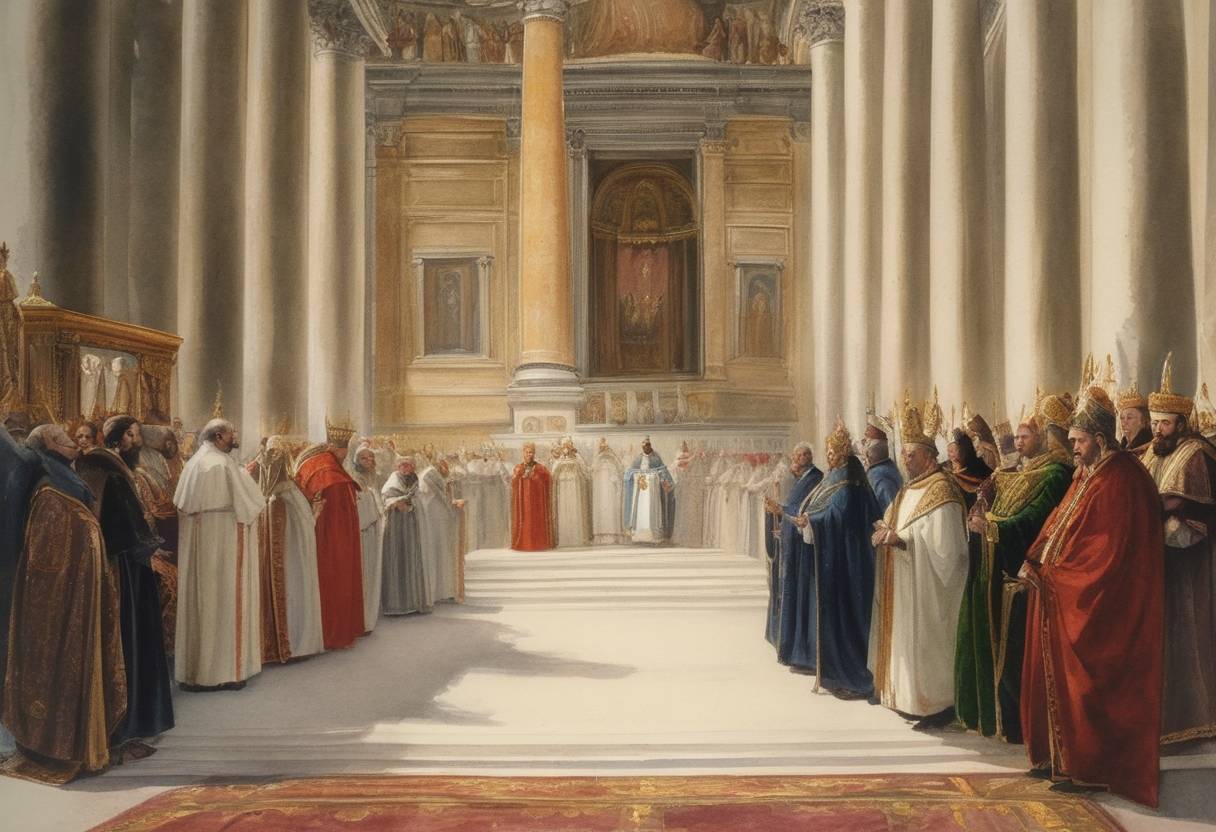
The Second Lateran Council, convened by Pope Innocent II, concluded its sessions on April 20, 1139, in Rome, marking a significant moment in the history of the Catholic Church. This council is noteworthy for addressing critical issues within the church and affirming the authority of Pope Innocent II over the antipapacy challenges.
The council was primarily convened to address the schism and conflicts that had arisen following the election of Antipope Anacletus II. Anacletus II had been a rival claimant to the papacy, creating significant division within the church. With the death of Anacletus II in 1138, Pope Innocent II sought to solidify his position and resolve the disputes that had plagued his pontificate.
Condemnation of the Antipapacy: The council explicitly rejected the claims of Anacletus II and any subsequent antipapacies. This was a crucial step in restoring the church’s unity and reaffirming the legitimacy of Pope Innocent II.
Clerical Reform: One of the most significant issues addressed by the Second Lateran Council was the state of clerical discipline. The council enacted reforms aimed at eliminating clerical marriage and concubinage, underscoring a commitment to clerical celibacy. These decrees were pivotal in shaping the future expectations of clergy behavior.
Ordination Rules: The council also decreed against the ordination of the sons of priests, a practice that was seen as perpetuating clerical dynasties and undermining ecclesiastical standards.
Simony and Church Positions: The council took a strong stance against simony, the practice of buying and selling church offices, thereby addressing corruption and ensuring that church positions were allocated based on merit rather than financial considerations.
The Second Lateran Council was the tenth ecumenical council recognized by the Roman Catholic Church. Its decisions had a far-reaching impact on the administration and spiritual focus of the church. By addressing issues of corruption, clerical discipline, and schismatic challenges, the council played a vital role in shaping the medieval church’s direction and consolidating its power. The affirmation of Pope Innocent II’s reign helped to stabilize the papal authority, allowing the church to move forward with greater unity and purpose.
These reforms and declarations laid a foundation for future ecclesiastical policies and set a precedent for subsequent church councils, influencing the development of canon law and the governance of the church for centuries to come.
Source: en.wikipedia.org