The Treaty of Edinburgh-Northampton: Ratification on May 26, 1328
1328 · Edinburgh, Scotland
The Treaty of Edinburgh-Northampton was ratified, recognizing the independence of Scotland from England.
November 5, 1289
The Treaty of Salisbury is ratified, establishing peace between England and Scotland and reinforcing the status of Margaret, Maid of Norway, as Queen of Scotland.
Salisbury, England | English and Scottish kingdoms
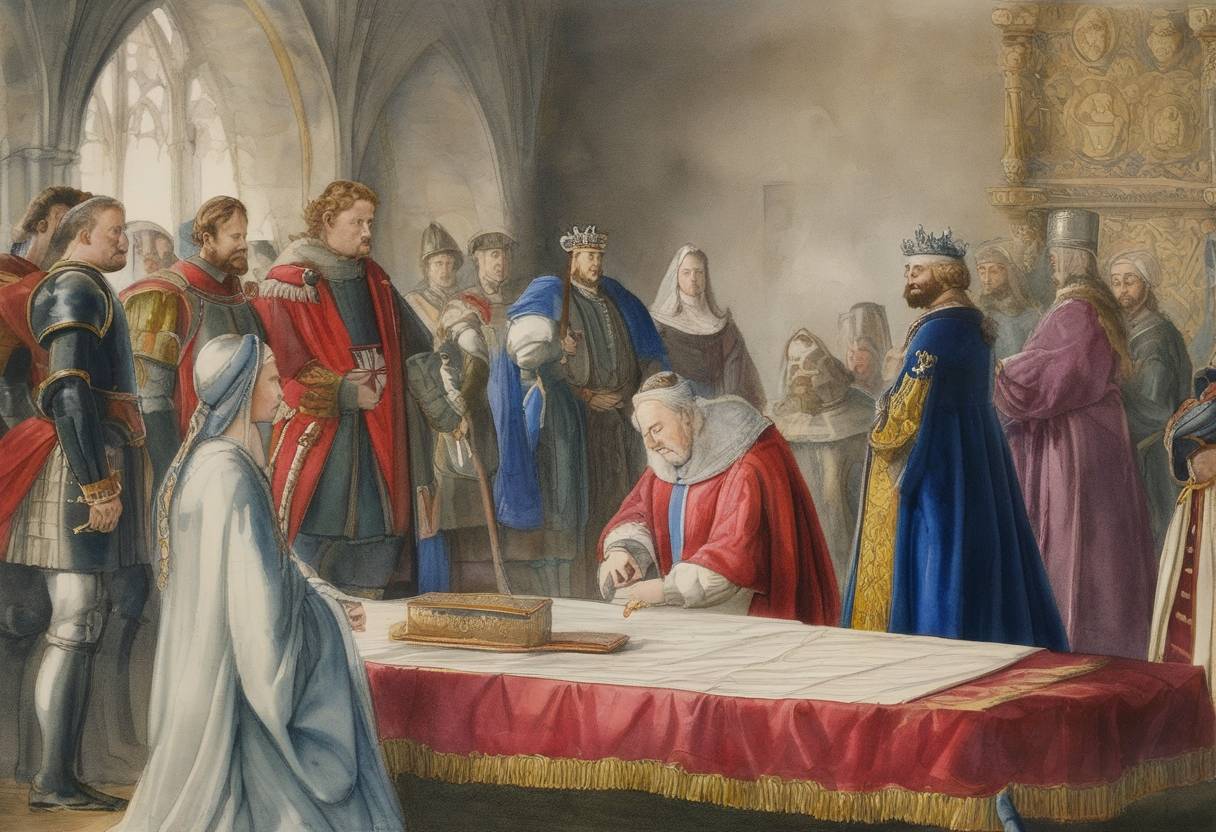
The Treaty of Salisbury was a pivotal moment in late 13th-century British Isles politics. It sought to address dynastic uncertainty and maintain peace between England and Scotland. Margaret, the Maid of Norway, was the granddaughter of the late King Alexander III of Scotland and the designated heir to the Scottish throne. Her status became critical following the death of her grandfather in 1286, which led to a succession crisis as Alexander left no living male heirs.
On November 5, 1289, the Treaty of Salisbury was ratified. This treaty primarily established an agreement between England and Scotland concerning the peaceful succession of Margaret, Maid of Norway, as Queen of Scotland. Key aspects of the treaty included:
The Treaty of Salisbury is significant due to its attempt to navigate the complexities of a succession crisis diplomatically. However, the peace it sought to maintain was short-lived; Margaret died before being crowned, leading to the Scottish interregnum and eventually the Wars of Scottish Independence. The treaty reflects the intricate monarchic politics of medieval Europe, highlighting the broader challenges of dynastic succession and international relations during the period.
The Treaty serves as an example of medieval diplomacy, focusing on the stability and governance of regions through strategic marriage alliances and treaties to prevent conflict. This particular agreement illustrated the interlocking dependencies and concerns that shaped the political landscape of the time.
Source: en.wikipedia.org