1849 · Brescia, Italy
The Austrian army led by General Julius Jacob von Haynau captures Brescia in Italy, marking a decisive victory during the First Italian War of Independence.
November 23, 1848
The Austro-Sardinian War comes to an end with the signing of the Armistice of Vignale, effectively concluding the First Italian War of Independence.
Vignale, Italy | Kingdom of Sardinia
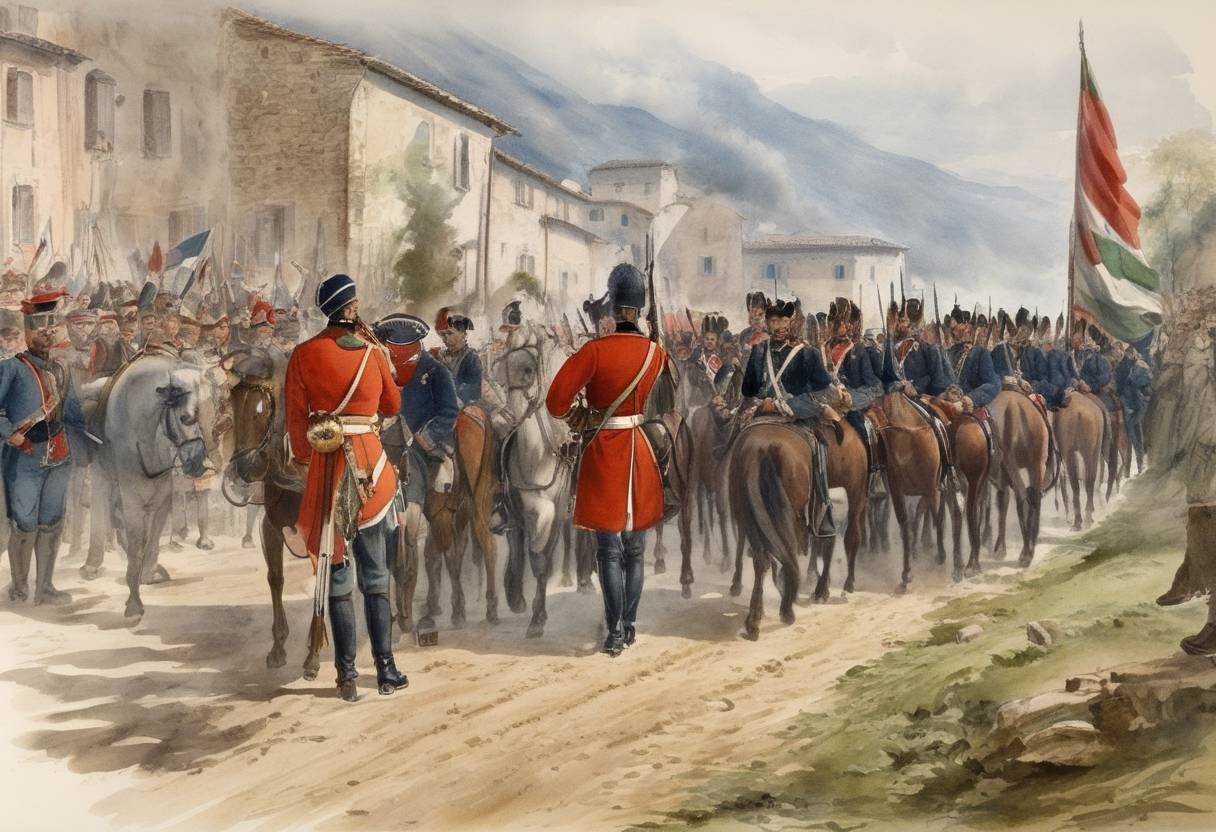
On November 23, 1848, the Austro-Sardinian War, a pivotal conflict within the broader context of the First Italian War of Independence, came to a conclusion with the signing of the Armistice of Vignale. This agreement marked a significant halt in hostilities between the Austrian Empire and the Kingdom of Sardinia-Piedmont, setting the stage for future political transformations in Italy.
The First Italian War of Independence (1848–1849) was part of the larger Revolutions of 1848, characterized by a wave of liberal and nationalist upheavals across Europe. In Italy, these revolts were aimed at ending Austrian dominance and unifying disparate Italian states. The Kingdom of Sardinia-Piedmont, under King Charles Albert, led the Italian campaign against Austrian control in Lombardy and Venetia.
Following initial successes, the Piedmontese forces suffered a crucial defeat at the Battle of Custoza in July 1848. Subsequently, an armistice was signed in August, but fighting resumed in March 1849 after Charles Albert attempted a renewed offensive, which proved unsuccessful.
The armistice was negotiated in Vignale, a village near Alessandria in Piedmont. Austrian General Josef Radetzky and Sardinian General Enrico Cialdini represented their respective nations. The armistice effectively ended the current phase of warfare, recognizing the military superiority of Austria at that moment.
Key terms of the armistice included:
This agreement represented a major setback for Italian unification efforts and highlighted the challenges faced by nationalist movements across the continent. The immediate result was a period of Austrian-dominated stability in Northern Italy. However, the spirit of nationalism continued to persist, and lessons from this conflict contributed to future efforts that eventually led to Italian unification in 1861.
The First Italian War of Independence, while not successful in achieving its ultimate goals, set the stage for the Risorgimento, the broader movement that eventually resulted in the unification of Italy. The events and outcomes of the war underscored the difficulties of confronting established powers and the importance of diplomatic strategy and military alliances in achieving long-term national objectives.
Source: en.wikipedia.org