George W. Bush's Inauguration as the 43rd President of the United States
2001 · Washington, D.C., United States
George W. Bush was inaugurated as the 43rd President of the United States.
June 13, 1893
Grover Cleveland, the 22nd and 24th President of the United States, underwent a secret surgery aboard a yacht to remove a cancerous tumor from his mouth. The operation was kept secret to avoid a financial panic.
New York, United States | U.S. Government
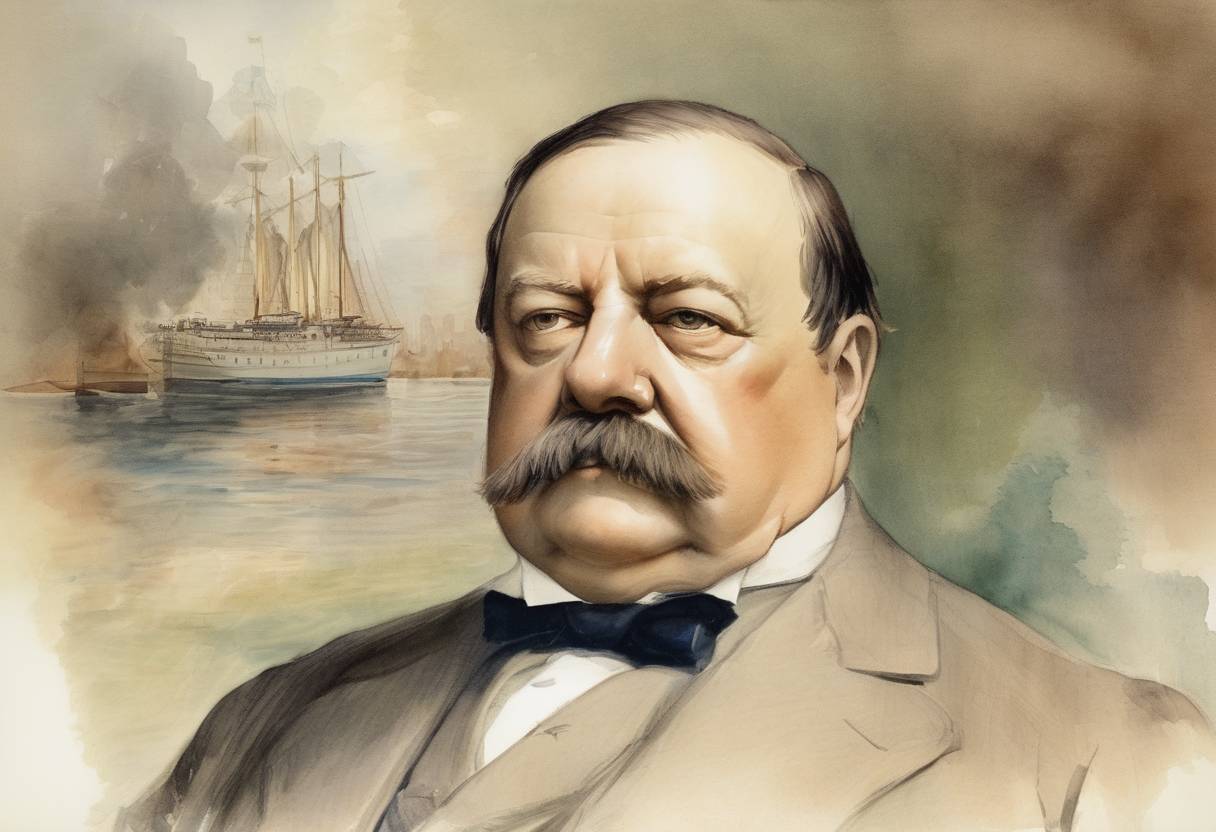
On June 13, 1893, Grover Cleveland, the 22nd and 24th President of the United States, underwent a clandestine surgical procedure to remove a cancerous tumor from his mouth. This event is notable not only for its medical aspects but also for the secrecy surrounding it, which was deemed necessary to prevent a potential financial panic during a period of economic instability.
Economic Climate: In 1893, the United States was in the throes of a severe economic depression, known as the Panic of 1893. This financial crisis was marked by bank failures, high unemployment, and a collapse in the stock market. The public’s confidence in the economy was fragile, and any additional uncertainty could exacerbate the situation.
Cleveland’s Health: Grover Cleveland, who had recently begun his second non-consecutive term as President, was diagnosed with a tumor on the roof of his mouth. The diagnosis was serious, as the tumor was suspected to be malignant.
Location and Execution: To maintain secrecy, the surgery was performed aboard a yacht named the Oneida, which sailed in the Long Island Sound. The operation took place away from the public eye, with only a select group of medical professionals and close aides present.
Medical Team: The surgical team was led by Dr. Joseph Bryant, a trusted friend and physician of Cleveland. The team included six doctors, who worked meticulously to remove the tumor and a portion of Cleveland’s upper jaw.
Outcome: The surgery was successful, and Cleveland recovered without any major complications. A prosthetic device was later fitted to restore the appearance and function of his mouth.
Rationale for Secrecy: The decision to keep the surgery secret was driven by concerns that news of the President’s health issues could further destabilize the already fragile economy. Cleveland and his advisors feared that public knowledge of his condition might lead to a loss of confidence in his leadership during a critical time.
Public Narrative: To cover up the President’s absence and recovery, the administration released a statement claiming that Cleveland was on a fishing trip. The true nature of his condition and the surgery remained undisclosed to the public for many years.
Revelation: The full details of the surgery were not revealed until 1917, when one of the doctors involved, Dr. William W. Keen, published an account of the operation.
Legacy: This event is a significant example of presidential health being kept from the public, highlighting the lengths to which administrations may go to protect national stability. It also underscores the evolving relationship between public figures and media transparency.
Grover Cleveland’s secret surgery is a fascinating episode in American history, illustrating the intersection of health, politics, and public perception during a time of national crisis.
Source: en.wikipedia.org