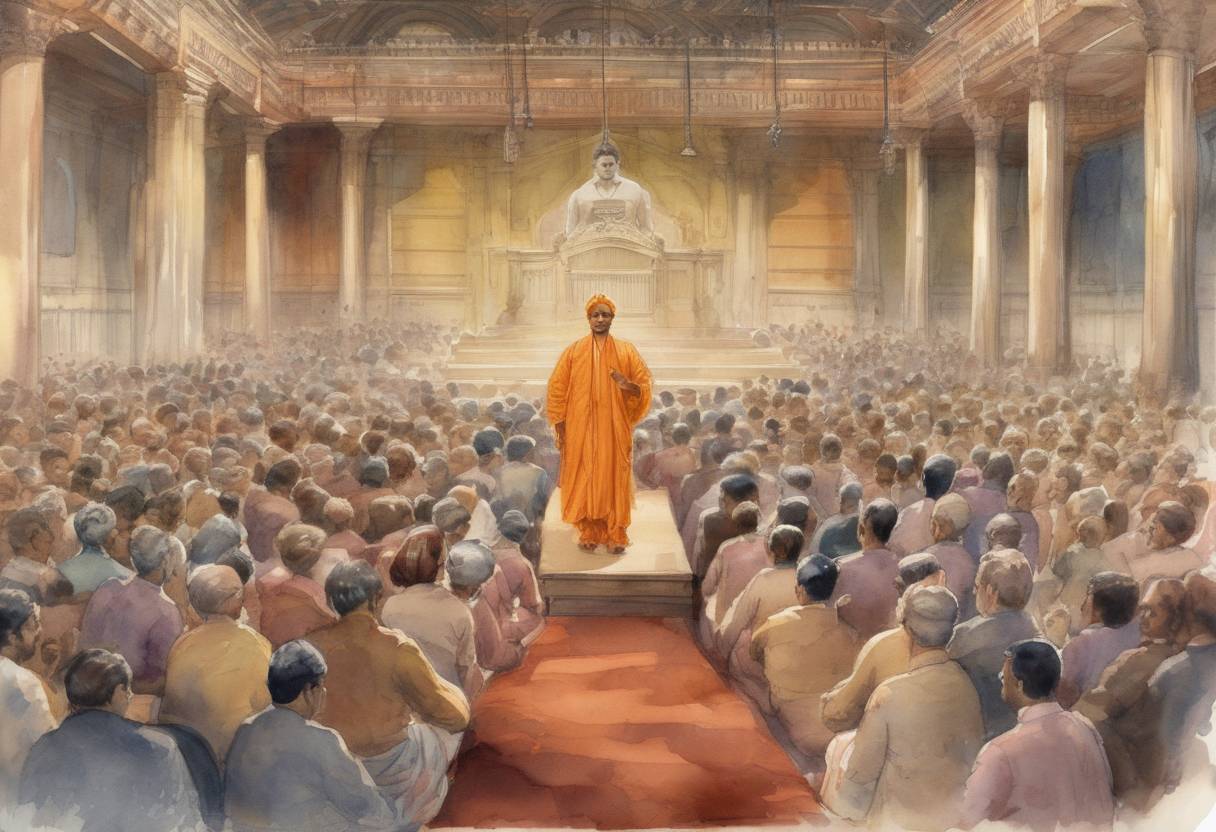
Swami Vivekananda’s Speech at the Parliament of the World’s Religions
On September 11, 1893, Swami Vivekananda delivered a landmark speech at the Parliament of the World’s Religions in Chicago, marking a pivotal moment in the introduction of Hinduism to the Western world. This event was part of the World’s Columbian Exposition, a grand fair held to celebrate the 400th anniversary of Christopher Columbus’s arrival in the Americas.
Context and Background
- Parliament of the World’s Religions: This was the first formal gathering of representatives from Eastern and Western spiritual traditions. It aimed to foster dialogue and understanding among the world’s religious communities.
- Swami Vivekananda: Born as Narendranath Datta in 1863 in Calcutta, India, Vivekananda was a chief disciple of the Indian mystic Ramakrishna. He was a key figure in the introduction of Indian philosophies of Vedanta and Yoga to the Western world.
Key Events Leading Up to the Speech
- Preparation: Vivekananda arrived in the United States without a formal invitation to the Parliament. However, his charismatic personality and profound knowledge quickly garnered attention.
- Support: He received support from Professor John Henry Wright of Harvard University, who recognized Vivekananda’s intellectual prowess and helped him gain entry to the Parliament.
The Speech
- Opening Address: Vivekananda began his address with the words “Sisters and Brothers of America,” which received a standing ovation from the audience of over 7,000 people. This greeting exemplified his message of universal brotherhood and acceptance.
- Core Message: He emphasized the importance of religious tolerance and the acceptance of all faiths as different paths to the same truth. He highlighted the ancient Indian philosophy of pluralism and the spiritual unity of all beings.
Aftermath and Significance
- Immediate Impact: Vivekananda’s speech was widely acclaimed and established him as a prominent spiritual leader in the West. His message resonated with the audience, promoting a greater understanding of Eastern spiritual traditions.
- Long-term Influence: The speech marked the beginning of a global interfaith dialogue and contributed significantly to the spread of Hindu philosophy in the Western world. It also laid the foundation for the establishment of the Vedanta Society in America.
- Legacy: Swami Vivekananda’s teachings continue to inspire millions worldwide, advocating for religious harmony, spiritual enlightenment, and social service.
In summary, Swami Vivekananda’s address at the Parliament of the World’s Religions was a defining moment in the history of interfaith dialogue, bridging Eastern and Western spiritual traditions and promoting a message of universal acceptance and unity.