The Dreyfus Affair: December 22, 1894
1894 · Paris, France
The Dreyfus Affair began in France when Alfred Dreyfus, a Jewish French army officer, was convicted of treason in a highly controversial trial.
July 14, 1889
The Second International, an organization of socialist and labor parties, is founded at a congress in Paris.
Paris, France | Second International
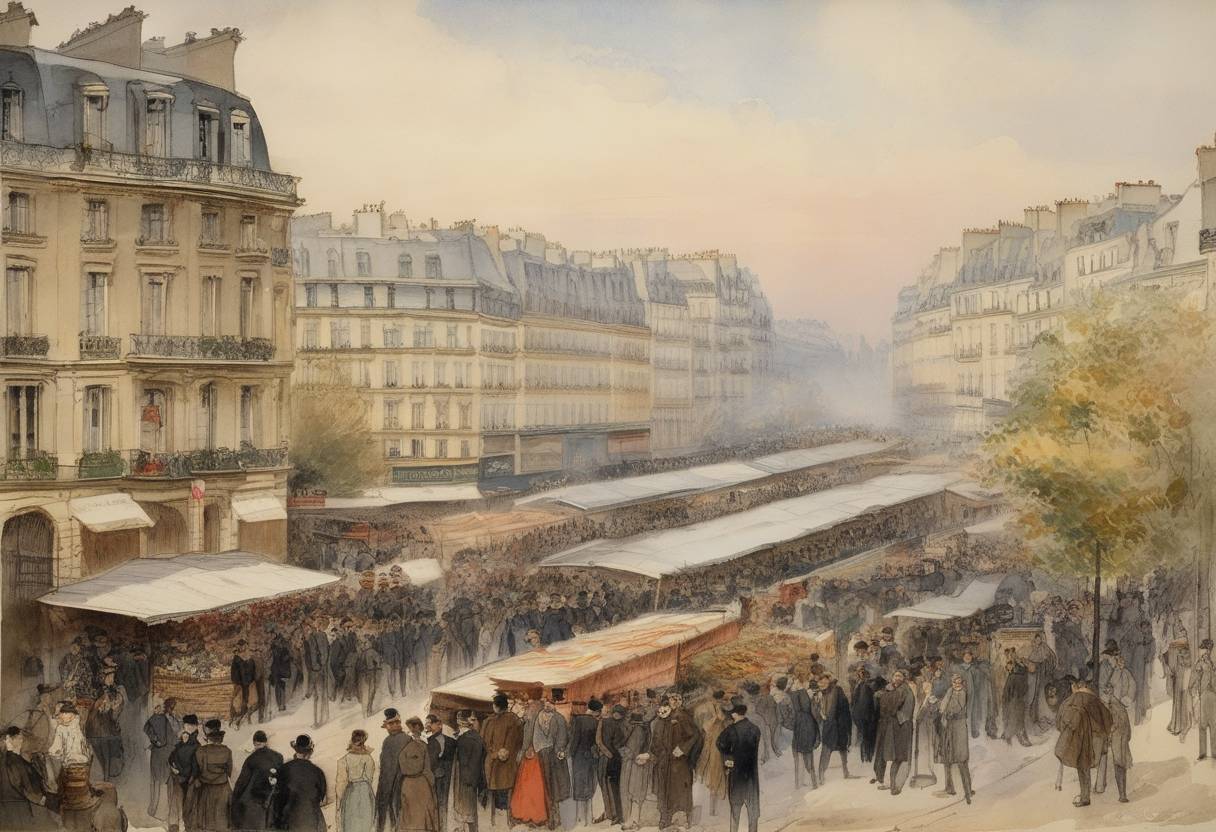
On July 14, 1889, the Second International, an organization comprising socialist and labor parties, was officially founded during a congress in Paris, France. This date was notably chosen to coincide with the centennial anniversary of the French Revolution, symbolizing a renewed commitment to revolutionary principles and the fight for workers’ rights.
The late 19th century was a period marked by the rapid industrialization and the expansion of capitalist economies. This socio-economic backdrop led to increased worker exploitation, prompting various socialist groups to seek international cooperation to exert political influence and promote workers’ rights globally.
After the collapse of the First International (International Workingmen’s Association) in the 1870s, there was a burgeoning need for a new organization to unify the international socialist and labor movement. Socialist parties from various countries sought to consolidate their efforts to effectively campaign for labor laws, social justice, and political reforms.
The founding congress convened in Paris, bringing together representatives from 20 countries, including notable figures such as Friedrich Engels, the co-author of “The Communist Manifesto.” The congress focused on drafting a cohesive ideological framework and strategy for international labor unions and socialist parties.
The foundation of the Second International spurred greater international cooperation among socialist groups and left a significant mark on subsequent labor movements. It played a pivotal role in spreading socialist ideas and coordinated international activities, such as the annual celebration of International Workers’ Day. Although the organization itself was dissolved at the outbreak of World War I due to nationalistic divisions, its legacy influenced later movements and organizations, including the formation of the Third International (Comintern).
The formation of the Second International represented a milestone in the global labor movement and set the stage for future political alliances and socialist policies worldwide.
Source: en.wikipedia.org