Jean-Baptiste Bernadotte Ascends to the Throne of Sweden
1818 · Stockholm, Sweden
Jean-Baptiste Bernadotte ascends to the throne of Sweden as King Charles XIV John.
February 12, 1771
Gustav III ascended the throne as the King of Sweden following the death of his father, King Adolf Frederick, leading the country through a period of Enlightenment-inspired reforms.
Stockholm, Sweden | Swedish monarchy
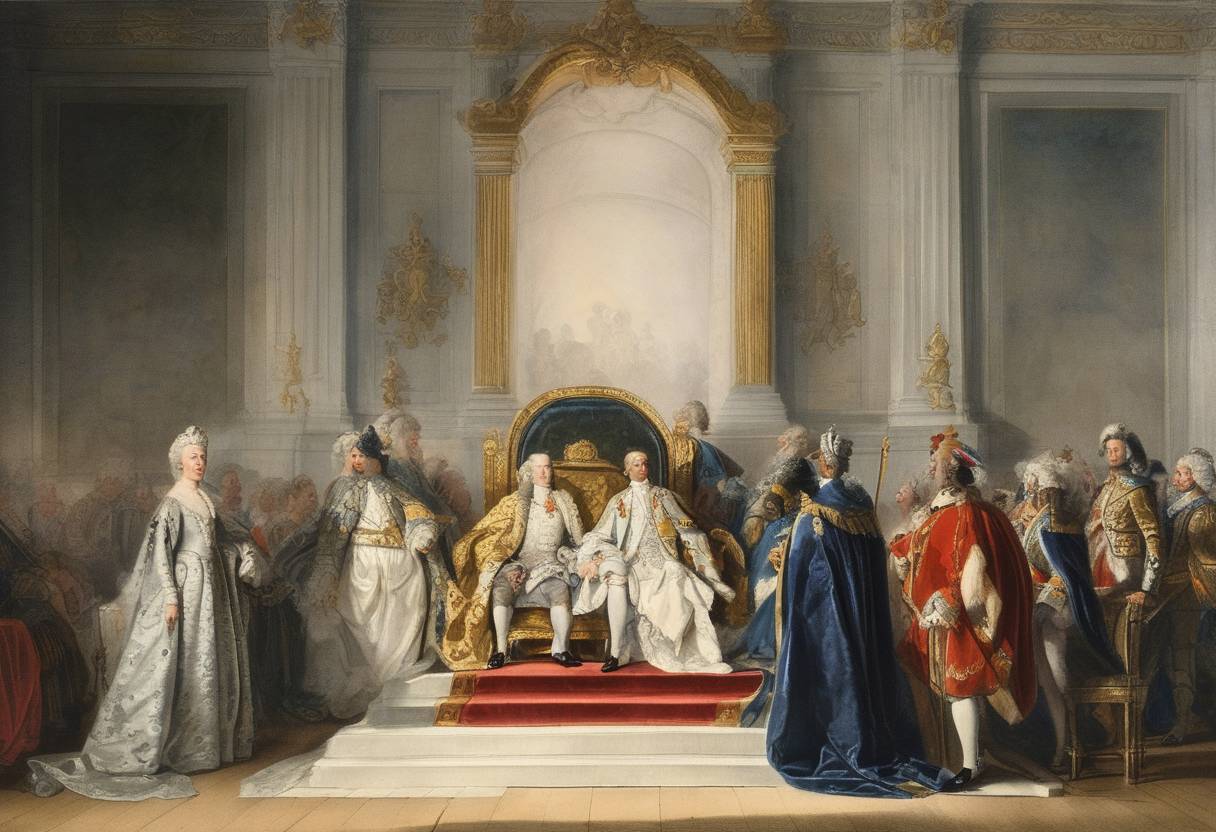
On February 12, 1771, Gustav III ascended to the throne as the King of Sweden following the death of his father, King Adolf Frederick. His reign marked a significant period in Swedish history characterized by Enlightenment-inspired reforms.
Gustav III was born on January 24, 1746, into the House of Holstein-Gottorp. As the son of King Adolf Frederick and Queen Louisa Ulrika, a sister of Frederick the Great of Prussia, Gustav was well-educated and exposed to Enlightenment ideas from a young age. His upbringing instilled in him a profound appreciation for the arts, literature, and philosophy, which later influenced his policies as king.
Before Gustav III’s reign, Sweden was governed by a parliamentary system with limited royal power, following the Age of Liberty that began in 1719. This era saw significant power held by the Swedish Riksdag of the Estates and the emergence of political factions, mainly the Hats and Caps parties, which often led to gridlock and instability.
Upon the death of Adolf Frederick, Gustav III became the king at 25 years old. He inherited a nation divided by factionalism and characterized by a weakened monarchy. Determined to strengthen royal authority, Gustav initiated a series of reforms aimed at consolidating power and modernizing the state.
Gustav III’s reign is best remembered for his efforts to implement Enlightenment-inspired reforms. These included reorganizing the administrative structure, promoting religious tolerance, and furthering cultural and economic development. His notable reforms comprised:
Gustav III’s reign laid the groundwork for a more centralized Swedish state, although his methods also sowed dissent among the nobility, which later culminated in his assassination in 1792. Nevertheless, his contributions to the arts, governance, and modernization influenced Sweden’s development well into the 19th century.
Source: www.britannica.com