Geneva Accords and the Indochina Conflict
1954 · Geneva, Switzerland
The first part of the Geneva Accords is signed, aimed at resolving the ongoing conflict in Indochina.
January 9, 1991
Representatives from the United States and Iraq met at the Geneva Peace Conference to discuss the Gulf War.
Geneva, Switzerland
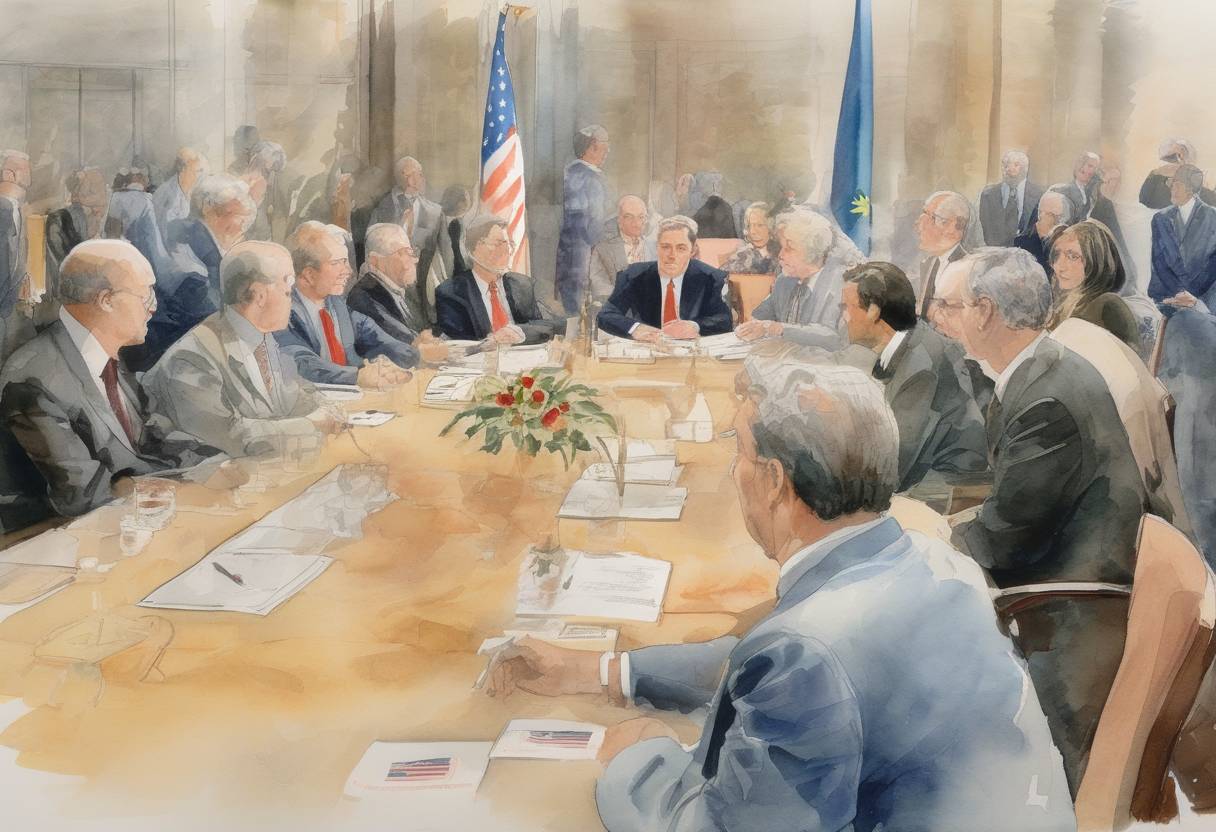
On January 9, 1991, a significant diplomatic meeting took place in Geneva, Switzerland, as representatives from the United States and Iraq convened in an attempt to avert the escalation of the Gulf War. This meeting was a critical moment in the lead-up to the conflict that would soon unfold in the Persian Gulf region.
The Gulf War, also known as Operation Desert Storm, was primarily triggered by Iraq’s invasion of Kuwait on August 2, 1990. Iraqi President Saddam Hussein’s aggressive move was met with international condemnation and led to the formation of a coalition force spearheaded by the United States. The United Nations Security Council passed Resolution 678, which authorized the use of force if Iraq did not withdraw from Kuwait by January 15, 1991.
The Geneva meeting was a last-ditch effort to find a peaceful resolution to the crisis. The discussions were intense and lasted for several hours. The primary objective of the United States was to persuade Iraq to comply with the UN resolutions and withdraw its forces from Kuwait.
The meeting ended without a breakthrough. Iraq refused to agree to the terms set forth by the United States and the international community. Saddam Hussein’s government maintained its position, leading to the failure of the diplomatic talks.
The unsuccessful negotiations in Geneva set the stage for military intervention. On January 17, 1991, Operation Desert Storm was launched, marking the beginning of the Gulf War. The coalition forces, led by the United States, initiated a massive air campaign against Iraq, followed by a ground assault that eventually liberated Kuwait.
The Geneva Peace Conference underscored the complexities of international diplomacy and the challenges of resolving conflicts through negotiation. It highlighted the determination of the international community, particularly the United States, to uphold international law and order. The Gulf War had significant implications for the Middle East and global geopolitics, influencing U.S. foreign policy and military strategy in the region for years to come.