Bahram Chobin Crowned as King Bahram VI of Persia
590 · Ctesiphon, Sasanian Empire
Bahram Chobin is crowned as King Bahram VI of Persia, marking a significant moment in the Sasanian Empire's history.
February 15, 0590
Khosrow II is crowned King of Persia, marking the beginning of his reign over the Sasanian Empire.
Ctesiphon, Sasanian Empire | Sasanian Empire
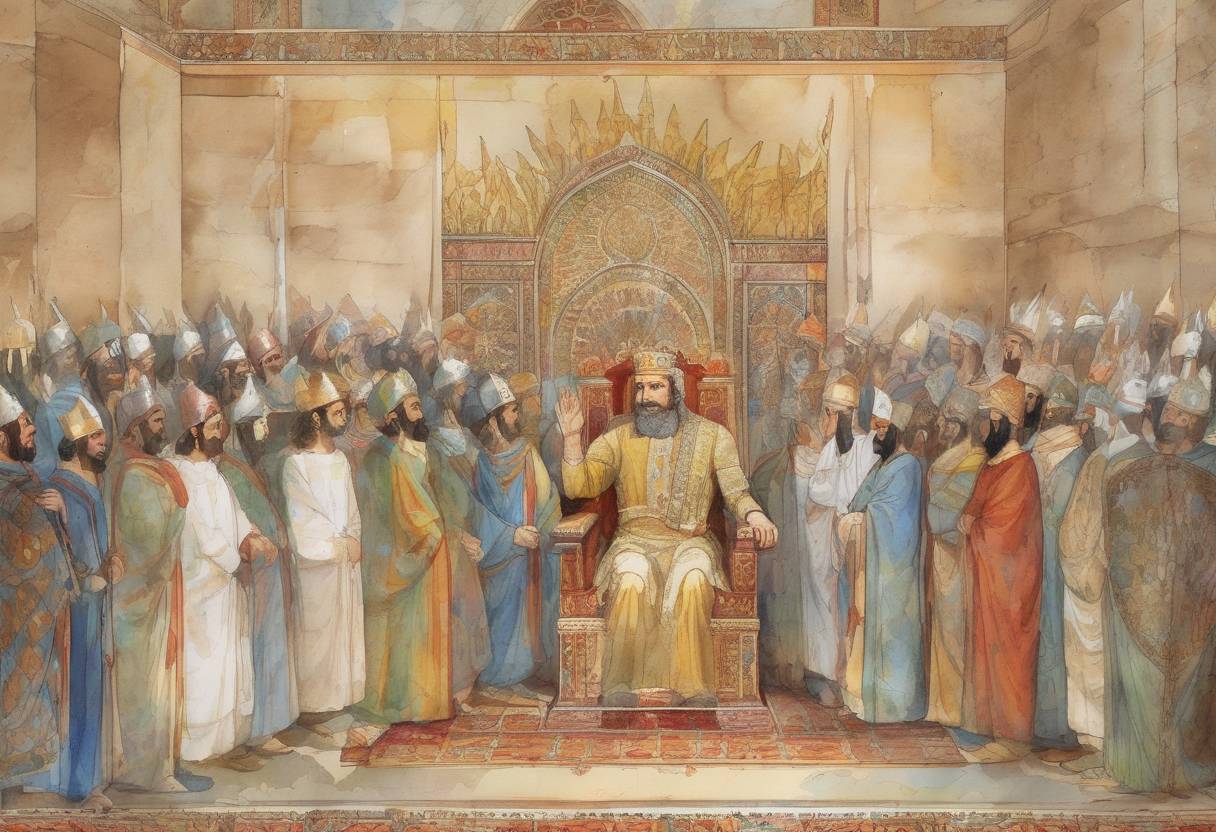
On February 15, 590, Khosrow II, also known as Khosrow Parviz, was crowned King of Persia, marking the beginning of his reign over the Sasanian Empire. His ascension to the throne was a significant event in the history of the Sasanian dynasty, which was one of the leading powers in the region during late antiquity.
Khosrow II was the son of Hormizd IV, the previous Sasanian king. His rise to power was marked by a period of internal strife and external threats. The Sasanian Empire, at the time, was facing challenges both from within its borders and from neighboring powers, particularly the Byzantine Empire.
Rebellion Against Hormizd IV: Discontent with Hormizd IV’s rule culminated in a rebellion led by the general Bahram Chobin. This rebellion weakened Hormizd’s position and eventually led to his overthrow and assassination.
Khosrow II’s Ascension: Following the assassination of his father, Khosrow II was proclaimed king. However, his initial reign was challenged by Bahram Chobin, who declared himself king, leading to a civil war.
Support from the Byzantines: To reclaim his throne, Khosrow II sought assistance from the Byzantine Empire. Emperor Maurice provided military support, which was instrumental in Khosrow’s eventual victory over Bahram Chobin.
Khosrow II’s reign, which lasted until 628, is often remembered for its initial prosperity and subsequent decline:
Cultural Flourishing: Under Khosrow II, the Sasanian Empire experienced a cultural renaissance. The arts, architecture, and literature flourished, with the construction of grand palaces and the promotion of Persian culture.
Military Campaigns: Khosrow II initially achieved military successes, expanding the empire’s territories. However, prolonged conflicts, particularly with the Byzantine Empire, eventually drained the empire’s resources.
Decline and Fall: The later years of Khosrow II’s reign were marked by military defeats and internal instability. His eventual overthrow and execution in 628 signaled the beginning of the end for the Sasanian Empire, which would fall to the Islamic Caliphate in the mid-7th century.
Khosrow II’s reign is a pivotal chapter in the history of the Sasanian Empire. It highlights the complexities of leadership during a time of both cultural achievement and military challenge. His interactions with the Byzantine Empire also underscore the intricate diplomatic and military relationships between the great powers of the era.
Khosrow II’s legacy is a testament to the Sasanian Empire’s influence in shaping the cultural and political landscape of the Middle East prior to the rise of Islam.
Source: en.wikipedia.org